


What Story Is the Material Telling?
Before you even consider form or colour, look closely at the materials. Experimental textile artists often push boundaries by using unconventional items. Are you seeing traditional silk and wool, or is the artist incorporating recycled plastics, metal
wire, or even paper yarn? The choice is rarely accidental. An artist using discarded materials might be commenting on sustainability and waste, like Vanessa Barragão who uses textile waste for her coral reef sculptures. Conversely, an artist who painstakingly hand-spins their own yarn from raw fibres might be exploring themes of tradition, labour, and connection to the land. The material is the first word in the story the artwork is telling. Ask yourself: Why this material? What does it evoke? Does its texture appear soft or harsh, natural or industrial? This initial question grounds the artwork in a physical reality that often holds the key to its conceptual core.
How Does It Challenge Tradition?
Textile creation is an ancient craft with deep-rooted techniques like weaving, embroidery, and dyeing. Contemporary artists often engage in a direct dialogue with this history. When you look at a piece, consider how it honours or subverts these traditions. Is a tapestry woven in a familiar pattern but with an unexpected, jarring image? Is an embroidery piece, historically seen as delicate 'women's work', used to depict a powerful or provocative political statement? Some artists, like Erin M. Riley, use the ancient tradition of tapestry to depict very modern scenes, forcing a confrontation between the old and the new. The exhibition 'Worlds Within Cloth' itself is designed to explore handlooms beyond their traditional form, highlighting this very intersection of craft and contemporary art. Ask: Am I seeing a technique used in a new way? Is this piece a rebellion against, or an evolution of, historical textile methods?
What Is the Dialogue Between Form and Function?
Historically, most textiles were functional. They were clothes, blankets, or banners. Experimental textile art often plays in the grey area between utility and pure aesthetics. Some pieces might look like garments but be completely unwearable, questioning our ideas about clothing and the body. Others might be sculptural forms that have no obvious purpose other than to be contemplated as art. Consider the scale. A massive, immersive installation creates a very different experience than a small, framed piece of intricate embroidery. One invites you into its world, while the other asks for intimate, close-looking. Ask yourself if the piece references a functional object. If so, how does it disrupt that function? Is it art for the wall, an object for the floor, or something that hangs in space, and how does that placement change its meaning?
How Does This Piece Engage Your Senses?
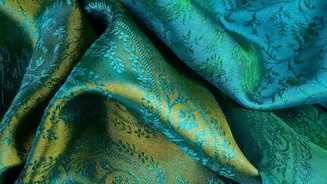
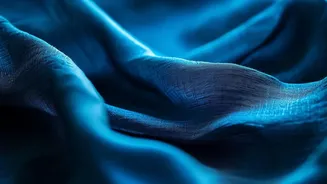
Art is a sensory experience, and textiles are perhaps the most tactile of all mediums. Even if you cannot touch the work, your eyes can read its texture. Does the surface look plush and inviting, or sharp and repellent? Notice how it interacts with light. Does it absorb it, creating deep shadows, or does it reflect it with metallic threads or a glossy finish? Colour is another powerful tool. Are the dyes natural and earthy, or synthetic and vibrant? The artist's palette can create harmony or dissonance, calm or chaos. Think about how the piece exists in the gallery space. Does it have a scent? Does it command the room or ask for quiet contemplation? Engaging all your available senses will give you a much richer understanding of the work than a purely intellectual analysis.
What Is the Artist's Point of View?
Finally, try to connect the work to a broader context. Read the artwork's title and the artist's statement if available. These are direct clues from the creator. The ‘Worlds Within Cloth’ exhibition, for instance, explicitly aims to explore issues of identity, sustainability, and community. Many contemporary textile artists use their work to tell personal or political stories. For example, some artists explore migration and memory, while others use their medium to reflect on gender, identity, and history. Does the work seem to be making a statement about society, the environment, or the human condition? By considering the artist's potential motive, you move from simply looking at an object to engaging in a conversation. You are considering their perspective and, in doing so, clarifying your own reaction to it.