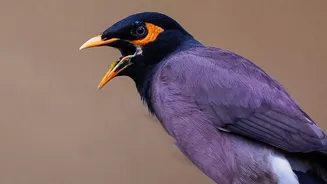






That chirpy, boisterous bird in your garden is more than just a noisy neighbour. The common myna, a familiar sight across India, possesses a surprising and remarkable talent: the ability to mimic human speech and a host of other familiar sounds.
An Unexpected Talent
The myna,
particularly the Common Myna and the Hill Myna, belongs to the starling family and is known for its intelligence and boldness. While many birds have their own distinct calls, a select few are 'vocal learners', meaning they learn sounds by hearing and imitating them. This group includes parrots, hummingbirds, and certain songbirds, with mynas standing out for their exceptional clarity. They are often considered acoustic chameleons, capable of blending into the soundscape of human environments by copying noises with startling precision. This isn't limited to just a few squawked words; they can reproduce full sentences, capturing the specific tone and cadence of a person's voice.
The Science of Sound Mimicry
How does a bird with a small beak produce sounds that sound so human? Unlike humans who use a larynx (voice box), birds produce sound using a unique vocal organ called the syrinx, located at the base of their trachea. In mynas, the syrinx is incredibly flexible and controlled by sophisticated muscle pairs that allow for complex sound manipulation. This structure enables them to control each side of the syrinx independently, effectively blending two different sounds at once to create a rich and complex vocalization. But anatomy is only part of the story. This physical ability is paired with highly developed brain regions linked to auditory memory and motor control, which are particularly active in vocal learners like mynas.
A Catalogue of Copied Noises
The repertoire of a myna is not limited to human speech. Their talent extends to a wide array of environmental sounds they hear frequently. In urban and suburban areas across India, mynas have been observed perfectly replicating the sound of mobile phone ringtones, car alarms, ambulance sirens, and even microwave beeps. They can also imitate the calls of other birds and animals, like the barking of a dog or the meow of a cat. This ability seems to be context-specific; a myna living near a school might learn to mimic the bell, while one in a workshop might copy the sound of a chainsaw. In captivity, they can learn a vocabulary of up to 100 words or more.
Why Do They Bother Mimicking?
Scientists believe vocal mimicry serves several purposes. In the wild, it can be a way to fit in with the flock, as young birds learn calls from their neighbours to facilitate social bonding and communication. A wider and more complex range of sounds can also make a male bird more attractive to potential mates. When living among humans, this innate drive to learn and replicate simply adapts to the new 'flock'. The sounds they hear most often are not from other birds, but from us and our technology. While they are incredibly skilled imitators, most researchers agree that mynas do not understand the meaning of the words they say in the same way humans do. They are masters of imitation, not conversation, associating sounds with specific situations or as a way to get attention.
Mynas vs. Parrots: The Great Debate
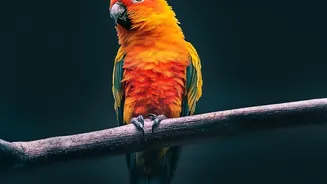
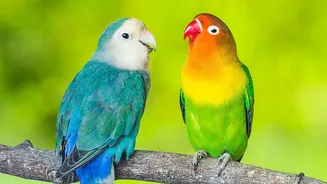
When people think of talking birds, parrots often come to mind first. Parrots, particularly African Greys, are renowned for their large vocabularies and cognitive skills. They are aided by a thick, mobile tongue that helps them shape sounds. However, mynas often surpass parrots in one key area: clarity. The Hill Myna, in particular, is famous for its ability to replicate human speech with such accurate pitch and tone that it can be mistaken for a person. While parrots might have a 'bird-like' quality to their speech, a myna’s imitation can be uncannily human. Both are exceptional vocal learners, but they achieve their remarkable results through slightly different biological and neurological toolkits.