




The Allure of the Curve
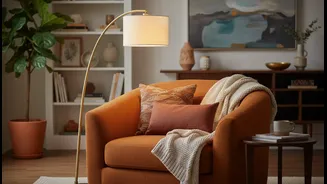
It’s easy to see why curved furniture has become a major trend in interior design. Sofas with gentle arcs, round coffee tables, and chairs with domed backs bring a sense of softness and flow into a room. These organic shapes feel welcoming and can make
a space more inviting, encouraging conversation by subtly turning people towards each other. In a world full of sharp angles and digital screens, these pieces offer a natural, calming presence. They can serve as sculptural focal points, breaking up the monotony of straight lines and adding a touch of elegance. However, this popular style comes with a significant challenge, especially for those living in apartments and smaller homes common in Indian cities.
The Small-Space Dilemma
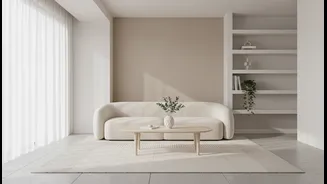
The main issue with rounded furniture in a compact room is simple geometry. A curved sofa, for example, cannot sit flush against a straight wall. This inevitably creates awkward, wasted space behind it—a dead zone that collects dust and serves no purpose. The piece physically takes up more of the room's footprint than a comparable straight-lined sofa, even if the seating area is the same. This can obstruct natural pathways, making it difficult to move around freely. In a small living room, where every square inch counts, sacrificing space and hindering movement for the sake of a trend is a poor trade-off. The very sense of flow the curve is meant to create can be destroyed by poor placement.
Rule 1: Float, Don't Push
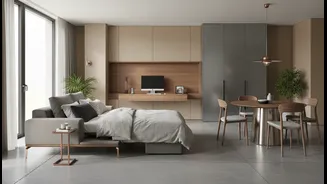
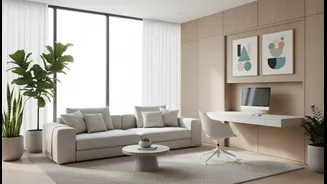
Instead of fighting the shape, embrace it. One of the golden rules for arranging furniture in a small room is to avoid pushing everything against the walls. This is especially true for curved pieces. 'Floating' a curved sofa or chairs in the room—pulling them away from the walls—creates a more dynamic and open layout. This allows for clear pathways behind the furniture and turns the piece into a deliberate island that defines a zone, such as a conversation area. If you have an open-plan living and dining area, a curved sofa can act as a natural, soft divider between the two zones without needing a wall. This approach makes the room feel larger and more thoughtfully designed.
Rule 2: Master the Scale
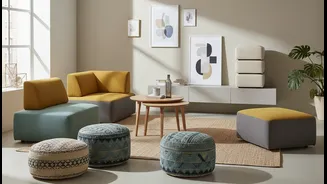
In a small space, scale is everything. A massive, bulky, curved sectional will overwhelm a compact room, making it feel cramped and unbalanced. Instead, opt for smaller, more delicate curved pieces. Consider a compact loveseat with a subtle curve, an armchair with rounded arms, or a round ottoman that doubles as storage. These smaller items introduce the desired softness without dominating the floor plan. Another smart strategy is to choose pieces that are visually light. Furniture with visible legs allows you to see the floor underneath, which creates an illusion of more space and airiness. Similarly, a glass or acrylic coffee table can provide a functional surface without adding visual weight.
Rule 3: Prioritise Smart Placement
Think carefully about where a curve will be most effective. Rounded furniture can be excellent for utilising tricky corners. A curved desk or a small, rounded accent chair can fit neatly into a corner that might otherwise be unused. A round dining table is often a better choice for a small dining nook than a rectangular one, as it has no sharp corners to bump into and often facilitates easier conversation. However, be mindful of function. A curved-front dresser pushed against a wall might look stylish, but it creates unusable gaps on either side. Always consider the primary purpose of the room and ensure your furniture choices support easy circulation and practicality.
Rule 4: Mix and Match Shapes
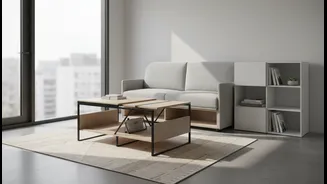
A room filled exclusively with curved furniture can feel unsettled and lack structure. The most successful designs create a balance between curved and straight lines. Let your main curved piece, like a sofa, be the hero and support it with rectangular elements. For example, pair a curved sofa with a rectangular rug and a linear bookshelf. This contrast provides visual interest and harmony. Experts often suggest a rough balance of 70% straight-lined pieces and 30% curved ones for an ideal composition. This allows you to enjoy the softness of curves without sacrificing the stability and order that straight lines provide.