



Getting Started: The Bare Essentials
The best tool for stargazing is simply a pair of patient eyes. The post-monsoon period of October and November offers some of the clearest skies of the year for observers in India. To begin, find the darkest spot you can, away from streetlights and buildings.
Give your eyes at least 20 minutes to fully adjust to the darkness; avoid looking at your phone screen, as the white light will ruin your night vision. Many smartphone apps can help you identify stars and planets by simply pointing your phone at the sky. A pair of binoculars can dramatically enhance your view, revealing craters on the moon and the moons of Jupiter, but they are not essential for enjoying the month's main events.
Meteor Showers: October's Shooting Stars
October hosts two notable meteor showers. First are the Draconids, active from October 6-10 and peaking on the evening of October 8-9. This is a minor shower, with only about 5-10 meteors per hour, but viewing conditions are perfect this year as the peak occurs just before the New Moon, meaning skies will be very dark. Unusually, the best time to watch is in the early evening, just after nightfall. Later in the month, look for the Orionids, which peak on the morning of October 21-22. Produced by debris from Halley's Comet, this shower can produce up to 20 fast, bright meteors per hour. A bright waxing gibbous moon will interfere in the evening, but it sets a few hours before dawn, creating a dark window for optimal viewing.
Planet Watch: A Tour of Our Neighbours
Several planets are putting on a fine display this October. The star of the show is Saturn, which reaches opposition on October 4. This is when Earth is directly between Saturn and the Sun, making the ringed planet appear at its brightest and largest for the year. It will be visible all night long, rising around sunset in the east and setting around sunrise in the west. While you need a telescope to see its famous rings, Saturn will be easily visible to the naked eye as a steady, bright point of light. Jupiter and Mars are also on display in the early morning sky. Look for them in the east before sunrise. On the morning of October 6, the waning crescent Moon will pass close to Jupiter, creating a lovely pairing. Venus and Mercury will be very low on the western horizon just after sunset, making them difficult to spot.
Mark Your Calendar: Moon Phases
The Moon's phase dictates how dark the night sky will be. October begins with a Waning Gibbous moon leading to the Last Quarter on October 3. This is great news for the Draconid meteor shower, as the New Moon falls on October 10, providing moon-free, dark skies for the peak. The Moon then enters its waxing phases, with the First Quarter on October 18. The Full Moon, known as the Hunter's Moon, rises on October 26. Its bright light will wash out fainter stars for a few nights on either side of this date, making deep-sky observing more challenging. Planning your stargazing nights around the New Moon window will always yield the best results for seeing faint objects like galaxies and distant star clusters.
Beyond the Events: Spot a Constellation
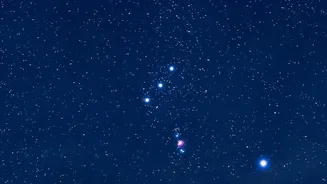
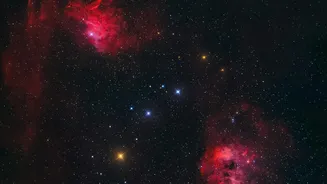
While you're out, take a moment to learn a few constellations. High overhead in the evening, you can find the Summer Triangle, made of three bright stars: Vega, Deneb, and Altair. Look to the northeast for the great square of Pegasus and the 'W' shape of Cassiopeia. As the night progresses, you will see the famed hunter, Orion, rising in the east, a sign of the approaching winter sky. The Andromeda Galaxy, the most distant object visible to the naked eye, is also in a prime position for viewing on dark, moonless nights. It appears as a faint, fuzzy patch of light in the constellation Andromeda. Using a stargazing app can help you trace these patterns and discover the stories behind them.