


A New Chapter in Saturn's Story
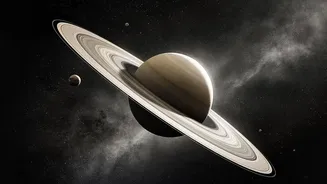
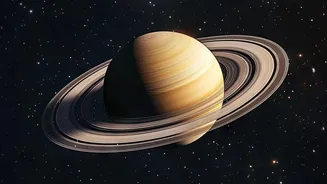
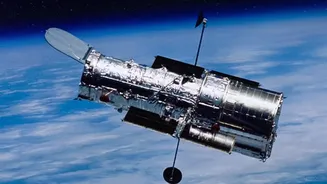
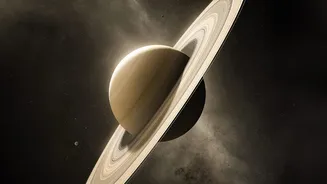
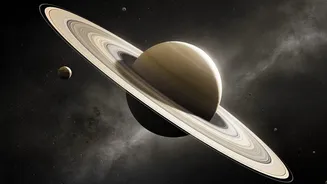
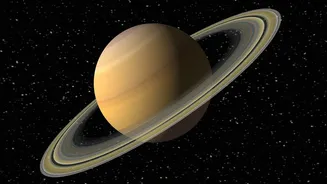
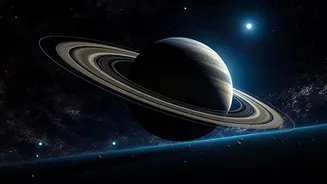
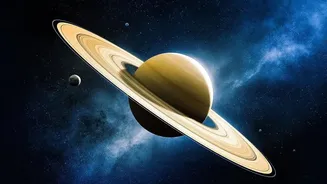
The latest images of Saturn come from a long-running project called the Outer Planet Atmospheres Legacy (OPAL) program. This initiative uses the Hubble Space Telescope to conduct yearly check-ups on our solar system's outer giants—Jupiter, Saturn, Uranus,
and Neptune—to monitor their complex and ever-changing atmospheres. The most recent observations of Saturn, captured in August 2024, provide a crucial snapshot of the planet as it transitions between its long seasons. Each season on Saturn lasts for about seven Earth years, and these new images are helping scientists track the profound changes that occur during these periods.
Decoding the Atmospheric Dance
By observing Saturn annually, scientists can track shifts in its cloud bands, the behavior of powerful storms, and changes in the color and composition of its atmospheric layers. The recent data shows subtle variations in the planet's cloud bands and changes in its famous north polar hexagon. These observations are part of a multi-wavelength effort, often combined with data from the James Webb Space Telescope (JWST). While Hubble captures stunning detail in visible light, showing color variations, Webb's infrared vision can peer deeper into different atmospheric layers to sense clouds and chemicals at various altitudes. Together, they allow scientists to essentially peel back the layers of Saturn's atmosphere like an onion, creating a three-dimensional picture of how the system works.
Building on a Legacy of Discovery
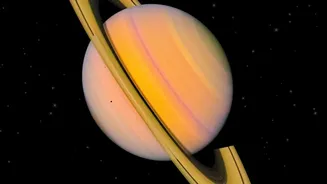
Hubble's OPAL program effectively picked up where NASA's Cassini mission left off. Cassini orbited Saturn from 2004 to 2017, providing an unprecedented wealth of information. Now, Hubble’s long-term monitoring is crucial for understanding trends that span decades. For instance, the new images are being compared to data from Cassini and even the Voyager flybys in the 1980s. This long baseline allows researchers to distinguish between short-term weather and long-term seasonal or climate changes on the gas giant. For example, scientists are tracking remnants of the massive "Great Springtime Storm" from 2011-2012, which are still visible as small spots in the atmosphere.
Why These Observations Matter
Studying Saturn’s atmosphere is not just about understanding one distant planet. It serves as a natural laboratory for fluid dynamics under extreme conditions, helping us understand how large, planet-sized storms form and persist. The insights gained from Saturn can be applied to our understanding of Jupiter, the other gas giants, and even the thousands of exoplanets discovered orbiting other stars. By observing the seasonal shifts and atmospheric processes on Saturn, scientists can refine their models of how planetary atmospheres work in general. This includes understanding the role of sunlight, internal heat, and chemical composition in driving weather patterns on worlds vastly different from our own.