





Decoding 'On-Time Performance'
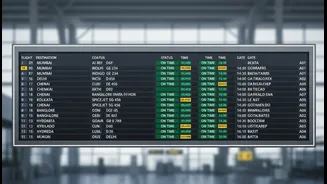
In the aviation world, being “on time” has a specific definition. Global data providers like Cirium and government bodies like India's Directorate General of Civil Aviation (DGCA) generally consider a flight to be on time if it arrives at the gate or departs
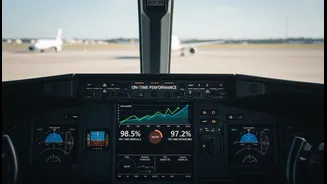
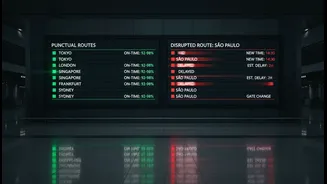
from the gate within 15 minutes of its scheduled time. This 15-minute window is the globally accepted standard for measuring punctuality. On-Time Performance, or OTP, is the percentage of flights that meet this strict criterion. It’s the single most important metric for judging the operational reliability of both airlines and airports, and it’s tracked relentlessly by the industry. These figures aren't just for show; they influence everything from an airline's reputation to its financial health.
India's Punctuality Champions
Recent data paints a dynamic picture of punctuality in India. According to a June 2026 report from analytics firm Cirium, Air India made headlines by ranking as the world's fourth most on-time airline, with an on-time arrival rate of 86.85%. This marked a significant improvement for the carrier, placing it ahead of many global competitors and reflecting its investments in operational efficiency. Within India, the DGCA’s monthly reports consistently show a tight race. For domestic operations in May, IndiGo led the pack with an 82.8% OTP at major metro airports, closely followed by Akasa Air at 78.3%. These airlines often credit their success to disciplined scheduling and, in Akasa's case, a young fleet with fewer maintenance issues. On the airport front, Chennai International Airport was ranked India's most punctual in May 2026 and also placed fifth globally in June, showcasing strong operational coordination.
The Blame Game: Airline, Airport, or Atmosphere?
While it’s easy to blame the airline for a delay, the reality is far more complex. Punctuality is a shared responsibility, and many factors are outside an airline’s direct control. Airports themselves play a huge role. Congestion on the ground, runway availability, and the efficiency of baggage handling and air traffic control (ATC) can all create bottlenecks. Weather is another major culprit; fog, heavy rain, and thunderstorms can lead to widespread delays that cascade through the system. Airlines also face internal challenges like technical issues, crew scheduling, and the efficiency of their turnaround processes—the sequence of cleaning, refueling, and boarding that has to happen in minutes. A delay on a flight's previous leg is also a primary cause of lateness, creating a domino effect that can disrupt schedules for the entire day.
Reading Between the Data Lines
While OTP figures provide a useful benchmark, they don't always tell the whole story. For instance, the definition of an “on-time departure” is typically when the aircraft pushes back from the gate. A plane could push back on time but then wait on the tarmac for an hour for takeoff clearance, and it would still not be counted as a departure delay. Furthermore, an airline's “completion factor”—the percentage of scheduled flights that are actually operated—is another crucial metric. A carrier could theoretically boost its OTP by cancelling its most delay-prone flights, which is why looking at both punctuality and cancellation rates together gives a more honest assessment of its reliability.
The High Cost of Being Late
Flight delays aren't just an inconvenience; they have significant economic consequences for everyone. For airlines, delays mean burning extra fuel, paying crew overtime, and covering maintenance costs. These disruptions can cost the industry billions of dollars annually, representing a significant portion of their revenue. For passengers, the costs are measured in lost productivity, missed connections, and unplanned expenses for accommodation and food. Beyond the direct financial hit, delays have a ripple effect on the broader economy, impacting tourism and business engagements. There's also an environmental cost, as delayed planes circling in holding patterns or idling on the tarmac burn millions of gallons of extra fuel, releasing unnecessary carbon emissions.