




A Threat from 93 Million Miles Away
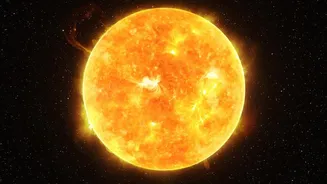
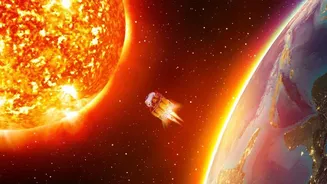
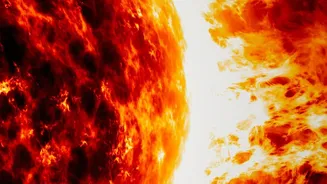
The primary threats are not the beautiful flashes of light we see, but what follows them. Solar flares are intense bursts of radiation that reach Earth in about eight minutes. They are often, but not always, accompanied by Coronal Mass Ejections (CMEs),
which are massive clouds of plasma and magnetic fields hurled into space. While flares can disrupt radio communications on the sunlit side of Earth, it's the CMEs that pose a more significant threat to our infrastructure. Traveling at speeds from 250 to over 3,000 km/s, these particle clouds can take anywhere from 15 hours to several days to reach us. When a powerful, Earth-directed CME hits our planet's magnetic field, it can trigger a geomagnetic storm.
The Skeletons of Modern Life Are Vulnerable
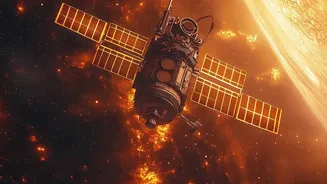
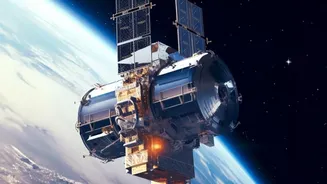
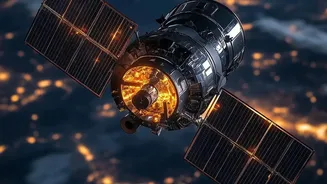
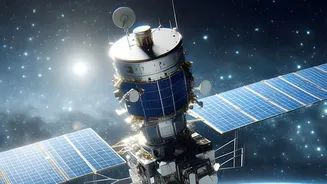
Our modern world is built on two primary systems: satellite networks in space and power grids on the ground. Both are uniquely vulnerable to geomagnetic storms. For satellites, the storm can heat the upper atmosphere, causing it to expand. This increases atmospheric drag on satellites in low-Earth orbit, causing them to lose altitude and requiring maneuvers to stay in orbit; a recent storm caused the loss of 40 new Starlink satellites. The high-energy particles can also damage sensitive electronics and disrupt GPS signals, affecting everything from aviation to agriculture. For power grids, the danger lies in Geomagnetically Induced Currents (GICs). These are low-frequency DC currents that flow through long transmission lines during a geomagnetic storm. Our AC-based grids are not designed for this, and GICs can overload and severely damage large, hard-to-replace transformers, potentially leading to widespread, long-lasting blackouts.
The Sun Watchers
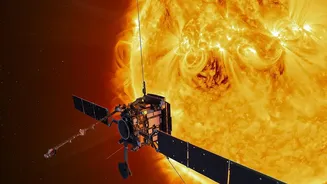
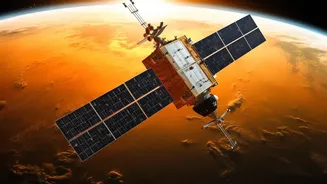
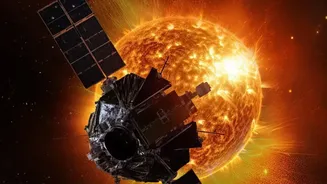
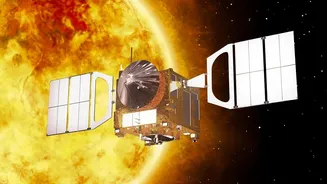
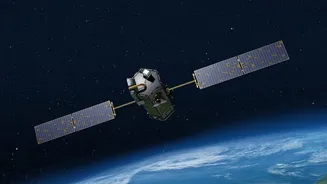
A global network of observatories constantly watches the Sun, acting as our planetary defense system. In the United States, the primary agency responsible for this is NOAA's Space Weather Prediction Center (SWPC). Operating 24/7, SWPC forecasters use data from a host of ground- and space-based instruments. Satellites like the GOES series provide real-time imagery of the Sun's activity, allowing scientists to spot flares and CMEs as they happen. Crucially, spacecraft like the Deep Space Climate Observatory (DSCOVR), positioned about a million miles from Earth, monitor the solar wind—the stream of particles constantly flowing from the Sun. When a CME passes DSCOVR, it gives forecasters a vital heads-up of 15 to 60 minutes before the storm hits Earth's magnetic field.
From Prediction to Protection
The process from observation to action is a race against time. Once a potentially hazardous event is detected, forecasters analyze its speed, direction, and magnetic orientation to predict its likely impact. Based on these models, the SWPC issues a series of watches, warnings, and alerts, much like the National Weather Service does for hurricanes. These alerts are scaled to communicate the severity of the expected event, allowing different industries to assess their specific risks. This gives critical infrastructure operators the lead time they need—from hours to days for a CME—to prepare for the incoming storm. This advance notice is what turns a potential catastrophe into a manageable event.
Taking Action to Avert Disaster
With a warning in hand, operators can take concrete steps to protect their assets. Satellite operators can put their spacecraft into a safe mode, powering down non-critical, sensitive electronics to prevent damage from radiation. They can also plan for potential orbital adjustments if increased atmospheric drag is expected. For energy grids, operators can proactively manage the system to reduce stress. They might reroute power, reduce the load on vulnerable transformers, or temporarily take certain equipment offline to prevent the destructive effects of GICs. These measures are designed to maintain the grid's integrity and prevent cascading failures. Studies estimate that NOAA's forecasting services help the electric power industry avoid losses ranging from over $100 million for minor storms to as much as $27 billion for severe ones.