


Not Your Average Dust
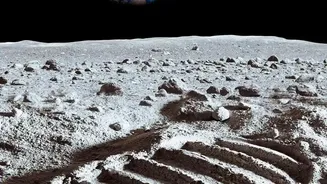
The fine, powdery material covering the Moon, known as regolith, is fundamentally different from the dust on Earth. On our planet, wind and water erode particles over millennia, smoothing their edges. The Moon has no such weather. Instead, its surface
has been relentlessly bombarded for billions of years by micrometeorites, shattering rock into microscopic, glass-like shards with razor-sharp edges. Furthermore, constant exposure to solar radiation gives these particles an electrostatic charge, causing them to cling stubbornly to every surface they touch, from spacesuits to sensitive electronics. This combination of sharpness and stickiness is what makes lunar dust a pervasive and formidable challenge for exploration.
Abrasive Menace to Equipment
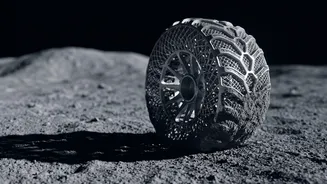
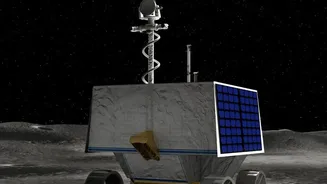
The experiences of the Apollo astronauts provided the first warnings about lunar dust's destructive capabilities. They reported that the abrasive powder clogged mechanisms, scratched helmet visors, and wore through layers of their spacesuit boots. The dust’s abrasive nature acts like sandpaper at a microscopic level, degrading seals, connectors, and fabrics. This poses a critical risk to the integrity of spacesuits and the seals on habitats and rovers, which are essential for maintaining life-supporting atmospheres. The dust also coats solar panels, reducing their ability to generate power, and can infiltrate cooling systems, leading to overheating and potential system failure. For the long-duration missions planned under the Artemis program, this constant wear and tear could lead to catastrophic equipment failures.
Infiltrating Habitats and Workspaces
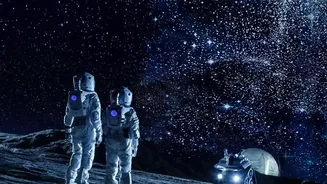
Despite their best efforts, Apollo astronauts inevitably tracked significant amounts of dust back into their lunar module. Once inside, the particles became airborne in the low gravity, creating a hazardous environment. Astronauts reported the dust smelled like spent gunpowder and caused vision problems inside the cabin. For a permanent lunar base, keeping this contaminant out is a monumental engineering challenge. Every time an astronaut enters or exits, there's a risk of introducing more of this abrasive material. Once inside, it can damage life support systems, short-circuit electronics, and contaminate scientific experiments. NASA and other agencies are actively developing new technologies, like electrodynamic dust shields that use an electric field to repel particles, to mitigate this infiltration.
A Hidden Health Hazard
Perhaps the most serious long-term threat posed by lunar dust is to human health. All 12 astronauts who walked on the Moon experienced symptoms like sneezing, watery eyes, and sore throats after exposure, a reaction dubbed 'lunar hay fever'. While these symptoms were temporary for the short Apollo missions, the risk from prolonged exposure is a major concern. Studies using simulated lunar soil have shown that the fine, sharp particles can damage lung and brain cells. Because the particles are so small, they can travel deep into the lungs, potentially causing chronic respiratory issues like bronchitis or even increasing the risk of cancer, similar to the effects of inhaling silicate or asbestos dust on Earth. Protecting astronauts from inhaling this toxic dust is a top priority for ensuring their health on extended missions.