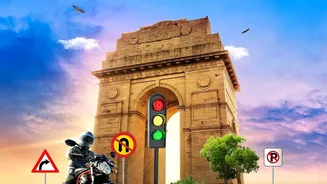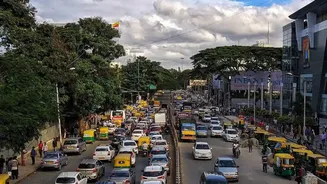


As winter approaches, Delhi is bracing for its annual battle with air pollution. Starting November 1, 2026, authorities are rolling out strict new enforcement measures for all vehicles entering the city, impacting millions of commuters.
The Two Key Rules to Know
To combat vehicular
pollution, the Delhi government is enforcing two primary rules that every driver heading towards the capital must know. First, a strict 'No PUC, No Fuel' policy will be in effect. This means vehicles without a valid Pollution Under Control (PUC) certificate will be denied petrol, diesel, or CNG at fuel stations across the city. Secondly, and more significantly for those coming from outside, there is a ban on certain vehicles entering Delhi altogether. From November 1, 2026, until January 31, 2027, petrol and diesel vehicles registered outside Delhi that do not meet Bharat Stage VI (BS-VI) emission norms will be barred from entering the city. This restriction is a key part of Delhi's Winter Action Plan aimed at curbing pollution during the season when air quality typically plummets.
Who is Affected and Who is Exempt?
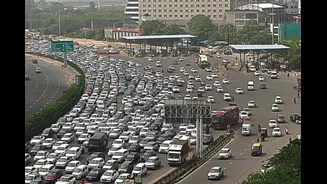
The entry ban specifically targets older, more polluting vehicles registered in neighbouring cities like Gurugram, Faridabad, Noida, and Ghaziabad. It is estimated that over 10 lakh vehicles in these NCR cities do not meet the BS-VI standard and could be affected. This includes both private cars and commercial vehicles. However, there are crucial exemptions. All electric vehicles (EVs) and vehicles running on CNG are permitted to enter Delhi regardless of their registration date or location. Additionally, vehicles that are BS-VI compliant are allowed, provided they have a valid PUC certificate. Essential service vehicles, such as ambulances and fire tenders, are also exempt from the entry ban.
Understanding the Penalties
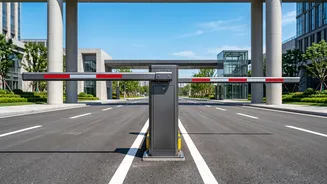
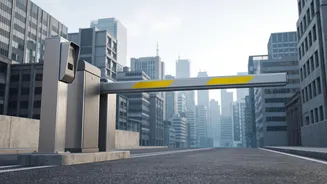
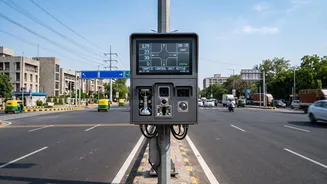
Non-compliance comes with a hefty price tag. Driving a vehicle in Delhi without a valid PUC certificate can result in a fine of ₹10,000. For commercial vehicles or goods carriers that violate the border entry rules, penalties can be even steeper, potentially reaching up to ₹20,000. Furthermore, under the Graded Response Action Plan (GRAP), if air quality deteriorates to the 'Severe' category (Stage III), a blanket ban on plying BS-III petrol and BS-IV diesel cars within Delhi and specific NCR districts is enforced, with violators facing a fine of ₹20,000. Enforcement teams are being deployed at 13 major border points with Automatic Number Plate Recognition (ANPR) cameras to identify and penalize non-compliant vehicles.
How to Check Your Vehicle's Compliance
Before you travel, it's essential to verify your vehicle's status. To check your emission standard, you can use the official Parivahan Vahan portal. By entering your vehicle's registration number, you can find its 'Emission Norm' details, which will specify if it is BS-IV, BS-VI, or another standard. This information can also be found on your vehicle's Registration Certificate (RC). For your PUC certificate, ensure it is up_to_date. These certificates must be renewed at regular intervals at authorized testing centres. Remember, a vehicle needs a valid PUC certificate one year after its initial registration. Having these documents in order is now crucial for anyone planning to drive into or within Delhi.
The Bigger Picture : GRAP and Winter Pollution
These stringent measures are not arbitrary. They are part of a larger , coordinated strategy called the Graded Response Action Plan (GRAP), which is a set of emergency measures that activate as air quality worsens. Vehicular emissions are a major contributor to Delhi's infamous winter smog. The entry ban on older , more polluting vehicles and the strict enforcement of PUC norms are designed to cut a significant source of particulate matter and other toxins from the air. By coordinating with neighbouring states and deploying hundreds of enforcement personnel , the Delhi government aims to manage traffic and pollution more effectively at the source , hoping to provide its citizens with cleaner air during the critical winter months.