



Welcome to a Planet from Hell
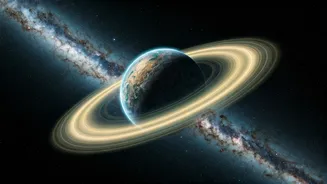
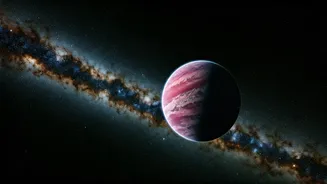
Located 41 light-years away in the constellation of Cancer, 55 Cancri e is what astronomers call a 'super-Earth'. This doesn't mean it's habitable; rather, it refers to its size—larger than Earth but smaller than Neptune. Discovered in 2004, it orbits
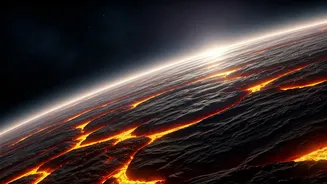
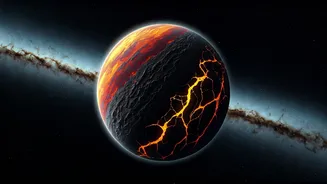
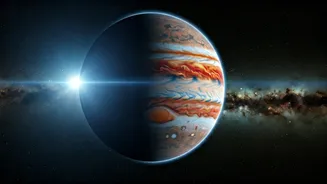
a star similar to our sun, but that's where the similarities end. This planet is likely tidally locked, meaning one side is permanently baked by its star while the other faces the endless dark of space. Its year is less than 18 hours long because it orbits a staggering 25 times closer to its star than Mercury does to our sun. This extreme proximity has turned the planet into a true vision of a planetary inferno.
Why It's 'Roasted'
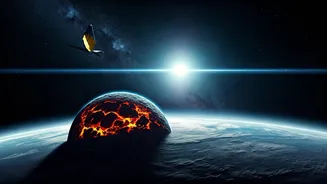
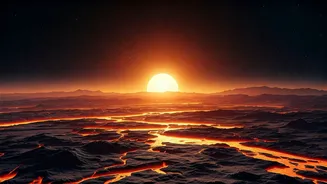
The term 'roasted' is an understatement. Initial theories suggested the dayside, which is perpetually facing the star, could reach temperatures around 2,200 degrees Celsius, hot enough to melt rock. The entire surface is believed to be a global magma ocean. Early in its study, some scientists theorized its carbon-rich composition could mean a significant portion of the planet is made of diamond under the immense pressure and heat. While the 'diamond planet' theory is debated, the key takeaway is the sheer violence of its environment. The heat is so intense that any original atmosphere would have been blasted away long ago. And yet, something strange is happening.
The Surprising Science Hook
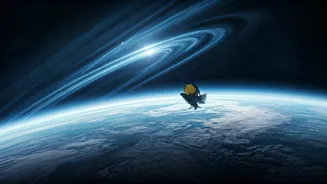
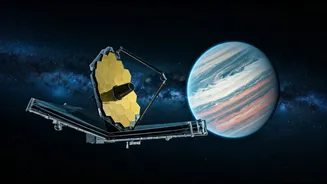
Here's the twist that has scientists buzzing. Despite the hellish conditions, new data from NASA's James Webb Space Telescope provides the best evidence to date that 55 Cancri e has an atmosphere. This is a huge deal. It was long thought impossible for a rocky planet this close to its star to retain any atmosphere at all. The star's intense radiation should have stripped it clean. The Webb telescope's data, however, showed a dayside temperature of around 1,540 degrees Celsius—scorching, but cooler than expected if there were no atmosphere to distribute the heat. This suggests energy is being moved from the dayside to the nightside, something a substantial atmosphere would do.
An Atmosphere from the Deep
So where is this mysterious atmosphere coming from? Scientists believe it's not a leftover from the planet's formation but a 'secondary' atmosphere that is actively being replenished. The leading theory is that the atmosphere is constantly being fed by the magma ocean itself. Gases like carbon dioxide or carbon monoxide could be bubbling out of the molten rock, creating a dynamic and volatile atmospheric layer that would be unlike anything in our solar system. This process, known as 'outgassing', gives astronomers an unprecedented opportunity to study the geology of an exoplanet by analyzing the gases in its sky. Webb’s powerful instruments were able to detect the chemical signatures in the light from the planet, hinting at this carbon-rich blanket of gas.
Why This Extreme World Matters
Why should we care about a distant, uninhabitable lava world? Because planets like 55 Cancri e are cosmic laboratories. They push our understanding of how planets form and evolve to its limits. Studying this world helps scientists test theories about planetary geology, atmospheric science, and the sheer diversity of worlds that exist in our galaxy. By figuring out how 55 Cancri e can sustain an atmosphere under such brutal conditions, we learn more about the dividing line between rocky, barren worlds and those that might hold onto atmospheres for billions of years—a key ingredient for potential habitability. Every bizarre exoplanet we find and study, no matter how hostile, adds another crucial piece to the puzzle of our own place in the universe.