



A Small Hop for a Rocket
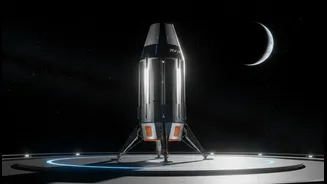
On July 11, at its Noshiro Testing Center, JAXA conducted the first successful flight of its Reusable Vehicle eXperiment, or RV-X. The sleek, 7.3-meter-tall prototype performed a carefully choreographed maneuver: it ascended approximately 11 meters, slid
horizontally for about 16 meters, and then descended to a soft, upright landing on its four shock-absorbing legs. The entire flight was over in less than a minute. While the scale is modest compared to a full orbital launch, this 'hop test' is a foundational step in the complex and expensive journey to build a reusable rocket. According to JAXA's reusable rocket project manager, Takashi Ito, the test went exactly as planned, providing crucial data for the program's future.
More Than Just a Landing
The headline event is reusability, but the real star of the show was precision. Landing a rocket upright is less about brute force and more about intricate, high-speed calculations. The RV-X test was, at its core, a demonstration of JAXA’s advanced navigation, guidance, and control systems. To keep the vehicle stable while it moves both vertically and horizontally, the engine and control systems must make thousands of micro-adjustments per second. This isn't just about coming back to Earth; it's about returning to a specific, pre-determined spot with pinpoint accuracy. This capability is the cornerstone of reusability, as it ensures the vehicle can be recovered safely and efficiently, paving the way for the quick turnarounds and lower costs that have defined the modern space industry.
The Global Race for Reusability
JAXA is not operating in a vacuum. The successful RV-X test places Japan in a small but growing group of nations chasing the technology that SpaceX pioneered with its Falcon 9 rocket. The ability to reuse the most expensive part of a rocket—the first stage—has dramatically lowered the cost of accessing space and reshaped the commercial launch market. JAXA's achievement came just one day after China announced its own successful recovery of a rocket booster, highlighting the intense international competition. For Japan, developing this capability is a matter of both economic competitiveness and national security, ensuring it has a stable and cost-effective way to launch its own satellites and missions. This program is seen as the path toward developing a successor to its current flagship, the expendable H3 rocket.
What's Next for JAXA
This 11-meter hop is just the beginning. JAXA has already announced plans for future tests that will push the RV-X prototype to higher altitudes, aiming for around 100 meters. Each test will allow engineers to gather more data and refine the complex algorithms that control the rocket's flight and landing. The RV-X itself is a pathfinder, a precursor to a more ambitious international project called CALLISTO. In partnership with the French and German space agencies, JAXA aims to develop a larger, single-stage reusable rocket. The lessons learned from the RV-X's short flights in northern Japan will be instrumental in designing the next generation of launch vehicles that could one day make trips to orbit and back a routine event for Japan.