

The Science of a Calmer Mind
The teenage brain is still developing, particularly the prefrontal cortex, which manages focus and impulse control. This makes adolescents more vulnerable to stress, which can shrink working memory and make thinking clearly during an exam feel impossible.
Yoga helps by calming the body's stress response systems. Practices like deep breathing and gentle postures increase blood and oxygen supply to the brain, which enhances cognitive function. Studies show that regular yoga can reduce symptoms of anxiety, improve emotional regulation, and even lead to better memory retention by lowering stress hormones like cortisol. Even a single 20-minute session has been shown to improve speed and accuracy on cognitive tests.
Building Your 15-Minute Focus Routine
You don’t need a full hour to reap the benefits. Just 15-20 minutes a day is enough to start making a difference. The key is consistency. Find a quiet corner and use these stretches as a study break to reset your mind and body. These poses are chosen for their simplicity and powerful effect on concentration and relaxation. Remember to breathe deeply and consciously throughout each movement.
Tree Pose (Vrikshasana) for Balance
This classic balancing pose is excellent for training the mind to be patient and present. Holding the pose requires one-pointed concentration, which directly translates to mental discipline during long study sessions. To do it, stand tall and shift your weight onto one foot. Place the sole of your other foot on your inner ankle or calf, avoiding the knee. Bring your hands together at your chest or reach them up like branches. Find a fixed point to gaze at to help you stay steady. Hold for five deep breaths, then switch sides. Remember that wobbling is part of learning to balance.
Seated Cat-Cow for Spine Health
Sitting for long hours can lead to a stiff back and poor posture, which restricts breathing and energy. This gentle spinal movement connects breath with motion, releasing tension in the back, neck, and shoulders. Sit at the edge of your chair with your feet flat on the floor. Place your hands on your knees. As you inhale, gently arch your spine and look up, lifting your chest (Cow Pose). As you exhale, round your spine and tuck your chin to your chest, looking at your belly (Cat Pose). Repeat this fluid movement for five to ten breaths, matching your pace to your breath.
Standing Forward Bend (Hastapadasana) to Relax
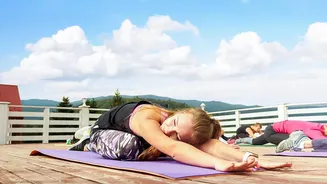
This pose is a fantastic way to calm the nervous system and increase blood flow to the brain, which helps with relaxation. Stand with your feet hip-width apart. As you exhale, hinge from your hips and fold your torso over your legs. Keep a slight bend in your knees to protect your lower back. Let your head and neck hang heavy, releasing all tension. You can let your arms dangle or gently hold opposite elbows. Stay here for several slow, deep breaths, feeling the release in your spine and hamstrings before slowly rolling back up to standing.
The Power of Conscious Breathing
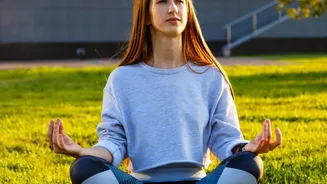
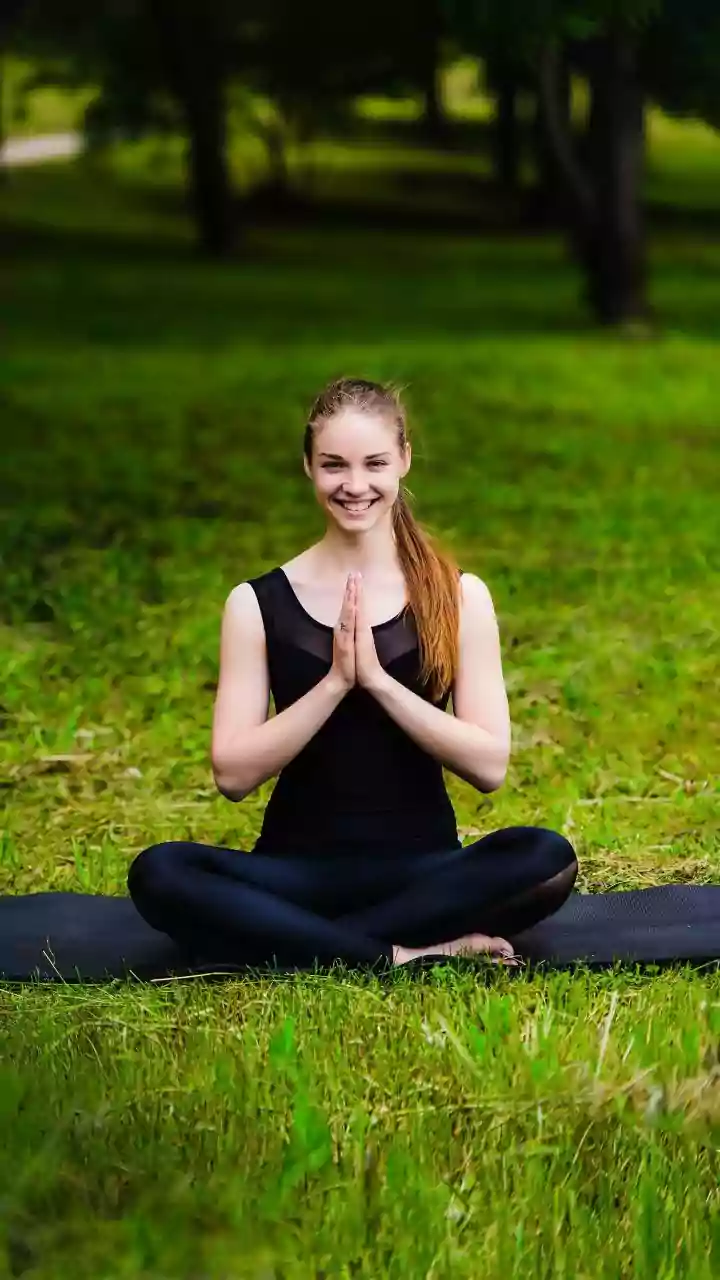
Beyond the physical postures, the most portable tool yoga provides is conscious breathing, or pranayama. A simple technique to try is the Humming Bee Breath (Bhramari). Sit comfortably, close your eyes, and place your index fingers on the cartilage of your ears. Inhale deeply, and as you exhale, gently press the cartilage and make a low humming sound like a bee. This practice is known to instantly calm the nervous system, quiet mental chatter, and relieve anxiety, making it perfect for the moments right before an exam.