
A Network of Digital Eyes
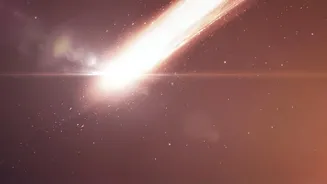
The first step in solving a meteor’s origin story is to capture its brief journey through our atmosphere. This isn't left to chance. Scientists use global networks of automated, wide-angle cameras that watch the sky all night, every night. Projects like
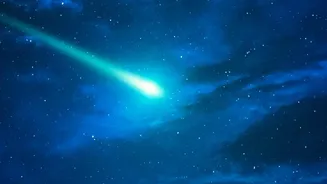
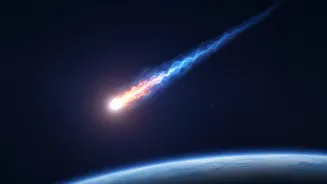
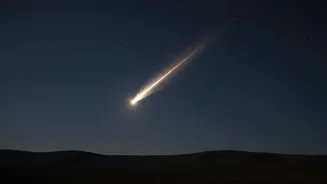
CAMS (Cameras for All-sky Meteor Surveillance) and FRIPON in Europe operate hundreds of cameras. When a bright meteor, or fireball, streaks across the sky, multiple cameras from different locations record it simultaneously. This provides the crucial first pieces of evidence: the meteor's path and its brightness as it vaporises high above the ground.
Recreating the Fiery Plunge
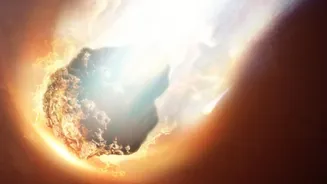
With observations from at least two different stations, astronomers can perform a kind of cosmic triangulation. By comparing the apparent path of the meteor against the background stars from each viewpoint, they can precisely calculate its trajectory through the atmosphere. This process reveals the meteor's speed, its angle of entry, and how much it slowed down due to air resistance. The calculations must be incredibly precise, accounting for factors like Earth's rotation. This data allows scientists to build a 3D model of the meteor's final moments, a vital step before they can rewind the clock.
Calculating the Original Orbit
Once the atmospheric trajectory is known, the real detective work begins. Astronomers use the velocity and direction of the meteor just before it hit the atmosphere to calculate its original path through space. By mathematically removing the effects of Earth's gravity, they can reconstruct the object's orbit around the Sun. This orbit is the meteoroid's true home, the path it followed for millions of years. This calculation reveals key orbital characteristics: its shape, its tilt, and how close it came to the Sun. It's this orbital 'address' that helps astronomers find the meteoroid's family.
Decoding the Chemical Fingerprint
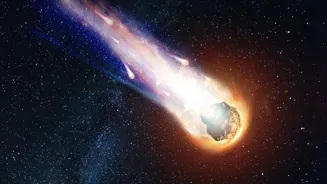
As a meteoroid burns up, it leaves more than just a trail of light; it leaves a chemical signature. The intense heat causes the elements within the rock to vaporise and glow, each element emitting light at specific, unique wavelengths. By using a technique called spectroscopy, which splits the meteor’s light into a rainbow-like spectrum, astronomers can read these signatures. The presence of lines indicating iron, magnesium, sodium, and nickel acts as a chemical fingerprint, telling scientists what the space rock was made of. This compositional data is another crucial clue for matching the meteor to a potential source.
Finding the Parent Body
The final step is to match the clues. Astronomers take the calculated orbit and the chemical composition and search databases of known celestial objects. They look for a match with an asteroid or comet that has a similar orbit and, if known, a similar composition. This is how famous meteor showers are linked to their parents; the Perseids come from Comet Swift-Tuttle, and the Geminids originate from the asteroid 3200 Phaethon. For individual fireballs, finding a parent can be harder, but successful matches provide invaluable information, linking a rock that fell to Earth directly to its home in the asteroid belt or beyond.