







For generations, Coimbatore has been famously called the 'Manchester of South India'. But this isn't just a catchy phrase; it's a title woven from a rich history of cotton, enterprise, and innovation that defines the city's very fabric.
The Ancient Roots of a Cotton Kingdom
Long before the
first industrial mills whirred to life, Coimbatore's destiny was tied to cotton. The region, known as Kongunadu, is blessed with rich black soil, perfect for cultivating cotton. Historical records show that this area was part of ancient trade routes, with its fine textiles reaching as far as the Roman Empire. For centuries, skilled weavers in the region produced high-quality cotton fabrics. The migration of weavers and cotton farmers from the Vijayanagar Empire in the 14th and 15th centuries further cemented the area's reputation as a premier textile hub, known for its quality sarees and turbans.
The Dawn of the Industrial Era
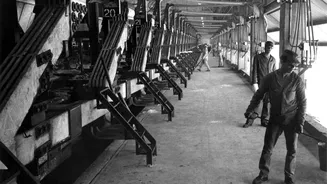
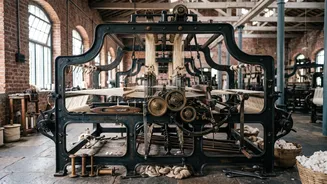
The transformation into an industrial powerhouse began in the late 19th century. The moniker 'Manchester of South India' draws a direct parallel to Manchester, England, the heart of the world's textile manufacturing during the Industrial Revolution. Coimbatore earned this comparison due to its booming textile industry, which was similarly fed by vast surrounding cotton fields. The pivotal moment came in 1888 with the establishment of the Coimbatore Spinning and Weaving Mills, popularly known as Stanes Mill, by entrepreneur Sir Robert Stanes. This first mill catalysed an industrial boom. The commissioning of the Pykara hydro-electric project in 1932 provided abundant and cheap power, accelerating the growth and leading to a proliferation of textile mills in the 1930s. Local industrialists seized the opportunity, importing machinery at low prices during the Great Depression and establishing numerous spinning and weaving units.
Weaving the City's Economic and Social Fabric
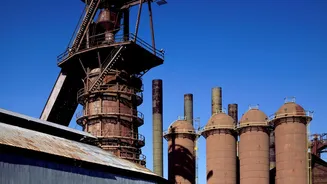
The textile boom profoundly shaped Coimbatore's identity. The industry became the city's economic backbone, creating thousands of jobs and spawning a host of ancillary industries. Foundries and workshops emerged in the 1930s, initially to repair textile machinery, which laid the groundwork for Coimbatore’s future as an engineering hub. The city's layout, workforce, and culture became intertwined with the rhythms of the mills. To represent their interests and drive policy, industry leaders established The Southern India Mills' Association (SIMA) in 1933, with Sir R.K. Shanmukham Chetty, who would later become independent India's first Finance Minister, as a key figure. SIMA remains a vital institution, advocating for the textile industry in South India.
A Heritage of Handloom and Innovation
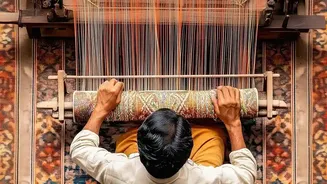
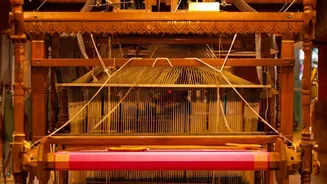
Beyond the large-scale mills, Coimbatore's textile heritage is also preserved in its unique handloom traditions. A prime example is the Kovai Cora Cotton saree, which received a Geographical Indication (GI) tag in 2014-15. This special fabric is a blend of silk and superior quality cotton yarn, woven on traditional hand-looms primarily in the Sirumugai area of the district. The GI tag ensures the authenticity of this lightweight, elegant saree, protecting the livelihood of the traditional weaving communities who have passed down their craft for generations. The sarees are known for their bright-coloured borders and occasional zari work, representing a beautiful fusion of materials and craftsmanship.
Navigating a Modern Global Market
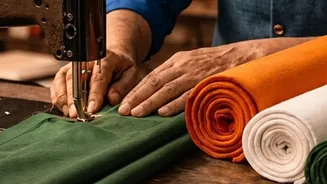
Today, Coimbatore’s textile industry, which houses over 25,000 small, medium, and large units, continues to be a major force. However, it faces modern challenges, including intense global competition, fluctuating yarn prices, and labour shortages. In recent years, the industry has contended with competition from countries like China and Pakistan. In response, the focus has shifted towards modernisation, sustainability, and technological adoption. The industry is exploring technical textiles, sustainable manufacturing, and value-added products to maintain its competitive edge. The establishment of a new textile technology centre in the region and significant state budget allocations aim to boost investments and innovation, ensuring the industry's resilience.