


The debate over India's greatest spin bowler is a timeless national conversation. It's a legacy built by generations of wizards who could make a cricket ball talk. But in the modern era, three names stand tallest: Kumble, Harbhajan, and Ashwin.
The Workhorse: Anil Kumble
Anil Kumble
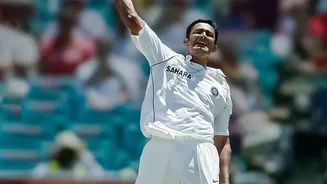
was not a classical leg-spinner; he was an unrelenting force of nature. Nicknamed 'Jumbo', he didn't rely on prodigious turn but on pace, bounce, and a flipper that deceived the world's best batsmen. His greatness lies in his sheer volume and persistence. Kumble is India's highest wicket-taker in both Tests (619) and ODIs (337). He is the bedrock upon which many Indian victories were built, especially at home. His most iconic moment, taking all 10 wickets in an innings against Pakistan in Delhi in 1999, is a testament to his match-winning ability and fighting spirit. He was a hard trier, a team man, and for a long period, India's lone spin warrior, bowling endless overs with unwavering accuracy. His captaincy in the latter part of his career further cemented his status as a colossal figure in Indian cricket.
The Turbanator: Harbhajan Singh
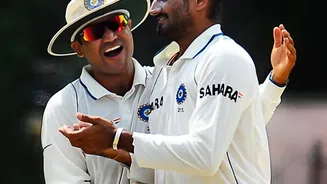
If Kumble was the stoic fighter, Harbhajan Singh was the fiery combatant. 'The Turbanator' brought aggression and drama to the art of off-spin. His career was defined by the monumental 2001 Test series against Australia. With Kumble injured, a young Harbhajan stepped up and single-handedly dismantled the seemingly invincible Aussies, taking an incredible 32 wickets in three matches, including India's first-ever Test hat-trick. This performance didn't just win a series; it transformed the attitude of the Indian team. For years, he and Kumble formed a formidable partnership, strangling batting lineups across the country. Harbhajan's skills included a well-disguised 'doosra' and the ability to generate sharp bounce. With 417 Test wickets and two World Cup wins (2007 T20 and 2011 ODI), his legacy is that of a big-match player who thrived under pressure.
The Modern Master: Ravichandran Ashwin
Ravichandran Ashwin is the thinking man's spinner, a modern-day master of craft and innovation. In an era of video analysis and batter-friendly rules, Ashwin has consistently evolved, adding new tricks to his armoury like the carrom ball. Statistically, his rise has been phenomenal. He is the fastest Indian to reach every milestone from 50 to 500 Test wickets. His record at home is particularly staggering, where his average and strike rate are superior to his predecessors. With 11 Player of the Series awards, he shares the all-time record with Muttiah Muralidaran, highlighting his immense impact on series outcomes. Beyond his bowling, Ashwin's contributions with the bat, including six Test centuries, place him in the elite category of all-rounders.
The Founding Fathers
No discussion of Indian spin is complete without honouring the legendary spin quartet of the 1960s and 70s: Bishan Singh Bedi, E.A.S. Prasanna, B.S. Chandrasekhar, and S. Venkataraghavan. They were the original architects of India's spin dominance. Together, they took a combined 853 Test wickets and were instrumental in securing India's first-ever series wins in England and the West Indies. Bedi was the artist with his graceful left-arm spin, Chandrasekhar the unorthodox and unpredictable leg-spinner, and Prasanna the master of flight and guile. They laid the foundation upon which every subsequent generation of Indian spinners has built.
The Final Verdict
Comparing these giants across different eras is a difficult, if not impossible, task. Kumble's case is built on longevity and being India's highest wicket-taker. Harbhajan's is built on big-match heroics and his role in two World Cup triumphs. Ashwin's claim rests on his incredible statistical efficiency, record-breaking speed, and all-round ability. Kumble and Harbhajan often bowled in tandem, forming one of India's most successful spin pairs. Ashwin, for his part, has formed an equally dominant partnership with Ravindra Jadeja. While Ashwin's away record has sometimes been debated, his home dominance is unmatched. Ultimately, each bowler was the master of his own era and circumstances. Kumble was the lone warrior, Harbhajan the aggressive partner, and Ashwin the strategic genius.