







The Race Against Wilting
Bengaluru, often called the 'Garden City of India', is a major hub for floriculture, with countless small-scale farmers cultivating roses for religious ceremonies, events, and daily sales. But the delicate nature of these flowers presents an immense economic
challenge. Roses are highly perishable, and once harvested, they begin a rapid decline. This leaves farmers at the mercy of daily market fluctuations, often forcing them to sell their entire stock immediately at whatever price is offered. The alternative is facing devastating financial losses. In India, post-harvest losses in floriculture can be as high as 30-40%, a staggering figure that represents lost income, wasted resources, and immense hardship for farming communities. This is not just a loss of petals, but a significant blow to the livelihoods of those who depend on these beautiful, yet delicate, crops.
The Missing Link in the Cold Chain
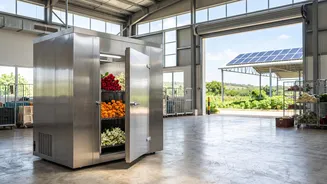
The key to extending the life of a harvested flower is temperature control. A robust 'cold chain'—a temperature-controlled supply chain—can dramatically slow the wilting process, preserving freshness and value. For large agricultural corporations, this is standard practice. However, for smallholder farmers, it has long been an unattainable dream. Traditional cold storage facilities are expensive to build and operate, often requiring tens of lakhs of rupees. Furthermore, they are typically located far from rural farms and rely on a consistent supply of grid electricity, which can be erratic and costly in agricultural areas. This lack of accessible and affordable cold storage creates a critical gap right at the farm gate, where the value of the produce is most vulnerable.
Innovation Powered by the Sun
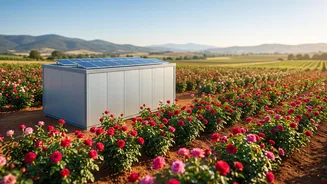
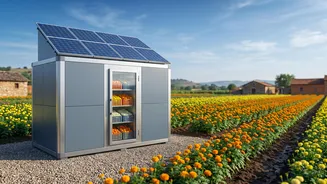
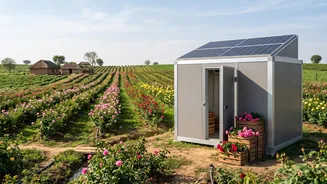
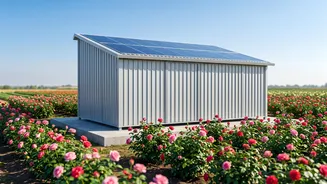
This is where solar-powered micro-warehousing is changing the game. Agri-tech startups and social enterprises are introducing small, decentralised cold storage units with capacities of 5 to 10 metric tonnes, placing them directly within farming communities. These units run primarily on solar power, harnessing the sun's energy to run compressors and maintain a cool environment, even providing backup power for cloudy days through innovative thermal storage instead of expensive batteries. By operating off-grid, they sidestep the problem of unreliable electricity and eliminate massive operational costs. This innovation brings the cold chain directly to the farmer, offering an affordable and sustainable solution that was previously out of reach for most.
From Lost Petals to Increased Profits
The impact on the ground has been transformative. With access to these solar cold rooms, rose farmers are no longer forced into distress sales. They can safely store their flowers for several days, allowing them to wait for more favourable market prices, especially during peak demand periods like festivals. This newfound flexibility can increase farmer incomes by a significant margin. Farmer Producer Organisations (FPOs) are playing a crucial role, often leasing or managing these units collectively, making them accessible even to the smallest farmers through pay-per-use models. In Sadali village in Karnataka, for example, a local FPO introduced a solar cold room where farmers could store produce like roses and marigolds for a fraction of the cost of traditional storage. This not only cuts waste but empowers farmers with greater control over their economic destiny.
A Sustainable Model for the Future
The success of solar-powered micro-warehousing among flower farmers in Karnataka is more than just a local victory; it's a blueprint for the future of Indian agriculture. The model is being replicated across the country for a variety of perishable goods, from fruits and vegetables to milk. By reducing post-harvest losses, these technologies contribute directly to national food security and reduce the environmental impact of food waste. Government subsidies and new financing models are making these solutions increasingly affordable, fostering a new generation of rural entrepreneurs. This blend of renewable energy, smart technology, and community-led adoption offers a powerful pathway toward a more resilient, profitable, and sustainable agricultural sector for India.