



The Science of Bodyweight Strength
How can you build muscle without lifting heavier weights? The secret lies in a principle called 'progressive overload'. Your muscles don't know the difference between a dumbbell and your own bodyweight; they only know resistance. To grow stronger, you must
consistently increase the demands placed upon them. Instead of adding more plates to a barbell, you can make bodyweight exercises harder by changing a few key variables. You can slow down the movement (increasing time under tension), add more repetitions or sets, shorten your rest periods between sets, or move on to a more challenging variation of the exercise. This approach ensures your muscles are always adapting and growing stronger, using the most accessible piece of equipment you own: your body.
Mastering the Classic Bodyweight Squat
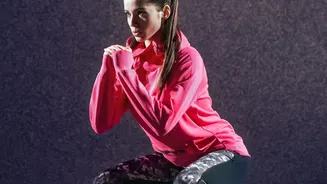
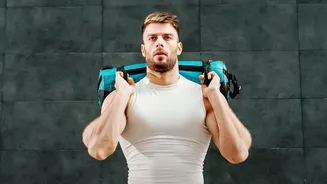
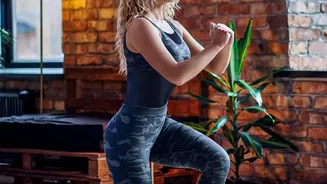
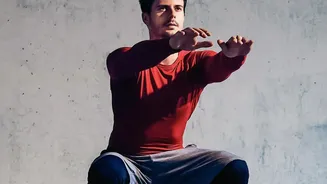
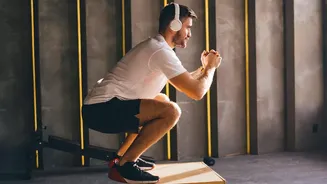
The squat is often called the king of all exercises for good reason: it's a compound movement that works your quadriceps, hamstrings, glutes, and core all at once. Mastering the form is crucial for both effectiveness and safety. Start by standing with your feet slightly wider than shoulder-width apart, with your toes pointing slightly outward. Keep your chest up and your back straight as you begin the movement by pushing your hips back, as if you're about to sit in a chair. Lower yourself until your thighs are parallel to the floor, ensuring your knees track in line with your toes and don't cave inward. Your weight should be in your heels. From the bottom position, drive through your heels to return to a standing position. For beginners, practicing squats over a chair can help build confidence and proper form; lower yourself until you gently touch the chair before standing back up.
Perfecting the Foundational Lunge
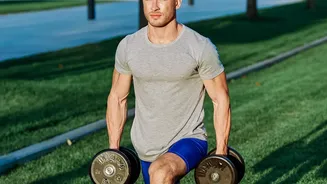
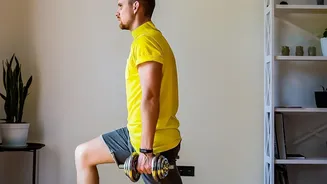
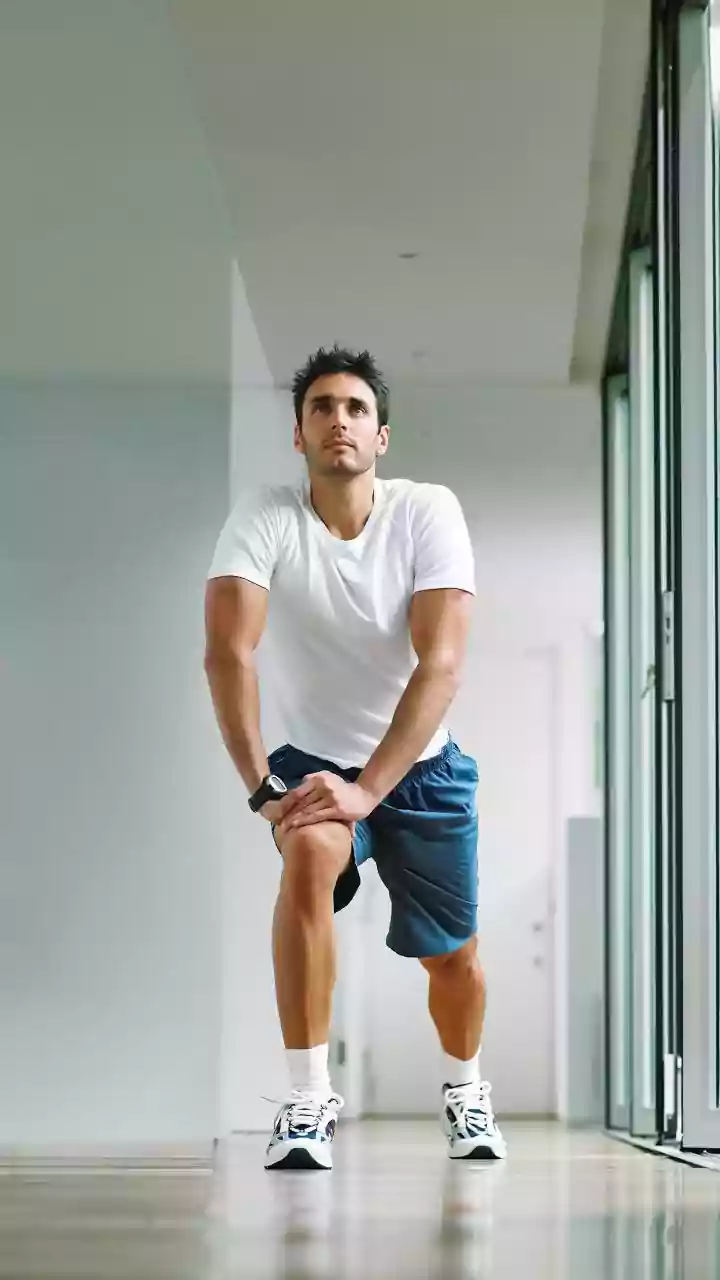
Lunges are exceptional for building single-leg strength, stability, and balance. To perform a basic forward lunge, stand tall with your feet together. Take a large step forward with your right leg. Lower your hips until both knees are bent at approximately a 90-degree angle. Your front knee should be directly above your ankle, not drifting past your toes, and your back knee should hover just above the floor without touching it. Maintain an upright torso and engage your core to keep your balance. Push off your front foot to return to the starting position, then repeat on the other side. If you feel wobbly, you can start with reverse lunges—stepping backward instead of forward—which many people find easier to balance. Holding onto a wall or chair for support is also a great way for beginners to practice the movement safely.
How to Progress and Get Stronger
Once you can comfortably perform 12-15 reps of basic squats and lunges with perfect form, it's time to increase the challenge. Don't just aim for endless repetitions; introducing more advanced variations will build more strength. For squats, try a 'pause squat' by holding the bottom position for three seconds before pushing up. You can also progress to single-leg variations like the Bulgarian split squat, where your back foot is elevated on a chair or couch. This move dramatically increases the load on your front leg. For lunges, try walking lunges, which add a dynamic component, or a curtsy lunge, where you step your back leg behind and across your body to target your glutes and hips differently. Explosive variations like jump squats and jump lunges can also be added to build power.
Structuring Your Thigh-Strengthening Workout
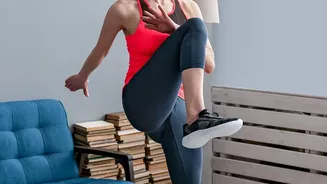
Consistency is key to seeing results. Aim to perform a lower-body workout two to three times per week, allowing at least one day of rest in between for your muscles to recover and grow. A simple and effective workout could consist of three to four sets of each exercise. Start with a variation you can perform with good form for 8-12 repetitions. When you can complete all your sets at 12 reps, it’s a signal that you are ready to move to a more difficult progression in your next session. A sample routine could be: Bodyweight Squats (3 sets of 12 reps), followed by Alternating Reverse Lunges (3 sets of 10 reps per leg), and finishing with Glute Bridges (3 sets of 15 reps) to ensure the entire posterior chain is activated. Always start your workout with a light warm-up, like a few minutes of jogging in place and some leg swings, to prepare your muscles and joints for the work ahead.