




The Sun’s Unseen Storms
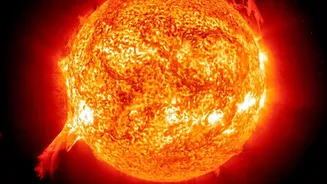
When we think of weather, we imagine rain or sunshine. But there's also 'space weather', driven by the Sun's activity. The Sun isn't a quiet ball of fire; it periodically erupts, blasting enormous amounts of energy and matter into space. The two main
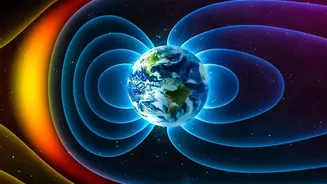
culprits are solar flares, which are intense bursts of radiation travelling at the speed of light, and Coronal Mass Ejections (CMEs), which are giant clouds of solar plasma and magnetic fields that take one to three days to reach Earth. These events create geomagnetic storms when they interact with our planet's magnetic field, leading to beautiful auroras but also posing a significant danger to our technology.
Satellites in the Firing Line
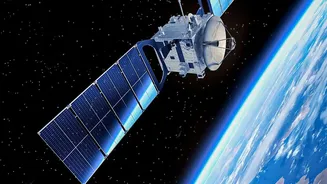
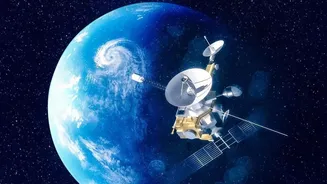
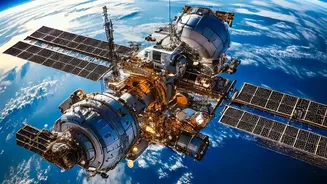
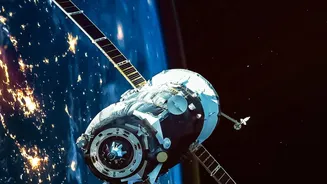
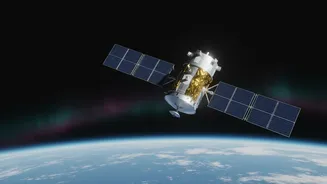
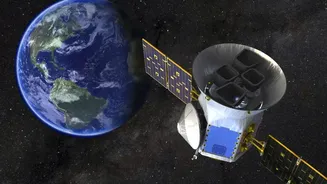
Satellites are particularly vulnerable to space weather because they operate outside the full protection of Earth's atmosphere. The impact can be threefold. Firstly, solar storms heat and expand the upper atmosphere, increasing the drag on satellites in Low Earth Orbit (LEO). This increased friction can cause them to lose altitude and fall out of orbit, as famously happened to a batch of Starlink satellites in 2022. Secondly, high-energy particles released during a solar event can bombard a satellite's sensitive electronics, causing malfunctions, phantom commands, or permanent failure. Thirdly, the disturbances in the ionosphere can disrupt the radio signals that satellites use to communicate with the ground, affecting everything from GPS accuracy to television broadcasts and data transmission.
More Than Just Dropped Calls for a Digital India
For a nation increasingly reliant on a digital backbone, the stakes are immense. India’s economy depends on satellite services for far more than entertainment. The entire logistics sector, from trucking fleets to food delivery apps, relies on precise GPS navigation. The Unified Payments Interface (UPI) and other financial services depend on synchronised timing signals from satellites to process millions of transactions securely. Furthermore, disaster management agencies need reliable satellite communication when terrestrial networks are down. With the rapid growth of LEO mega-constellations from companies like Starlink and OneWeb (which has a major Indian partner in Bharti Global), the number of critical, and vulnerable, assets in orbit is skyrocketing. A single extreme space weather event could have cascading economic consequences.
The Race for a Reliable Forecast
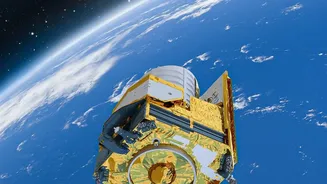
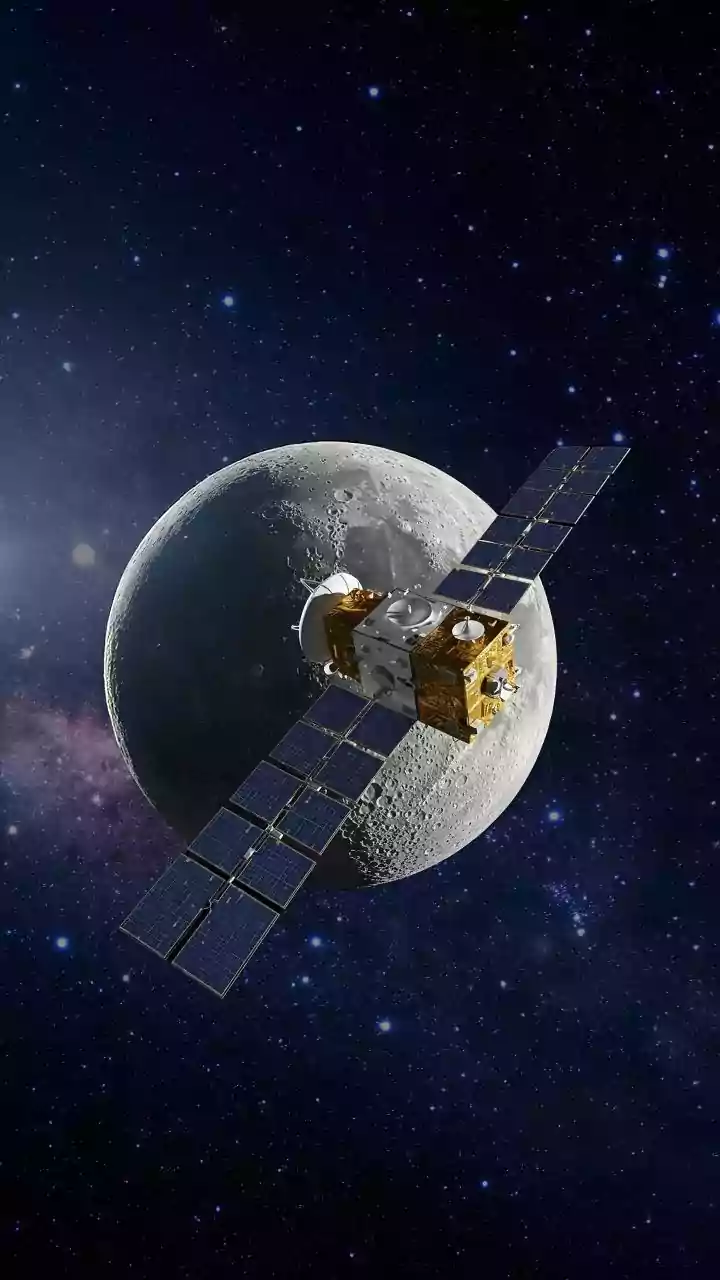
The challenge is that predicting space weather is incredibly difficult. Currently, our capabilities are often more like a 'now-cast' than a true forecast, giving us little time to react. This is where dedicated solar observatories become critical. India has made a significant leap in this domain with the Aditya-L1 mission. Positioned 1.5 million kilometres from Earth, Aditya-L1 has an uninterrupted view of the Sun, allowing it to monitor solar activity continuously. Its instruments are designed to study the origins of solar flares and CMEs, providing crucial data that will help scientists understand the physics behind these events and, ultimately, predict when they will occur. Recent findings from the mission have already helped decode how solar storms impact Earth's magnetic field.
AI Joins the Watch
Beyond dedicated missions, the future of space weather prediction lies in artificial intelligence. Scientists are now developing sophisticated machine learning models to sift through vast amounts of data from solar observatories. By identifying subtle patterns and precursors that are invisible to human analysts, AI can help issue earlier and more accurate warnings. An improved forecast could give satellite operators crucial lead time—perhaps hours or even days—to take protective measures. This might involve temporarily shutting down sensitive components, reorienting the spacecraft to present a smaller profile, or even adjusting its orbit to mitigate atmospheric drag. It transforms the situation from crisis management to proactive defence.