

Beyond the Written Recipe
In many Indian households, culinary tradition is a living, breathing thing, passed down not through precise measurements in a book, but through observation and sensory memory. It’s the ‘andaaz’ or intuitive estimation that guides a cook’s hand. This approach
has always valued technique over strict formulas, creating a cooking culture where flexibility isn't just common; it's essential. This inherent adaptability is what has allowed dishes to survive and thrive, evolving with the times, moving across regions, and accommodating the pantry of the day. Rather than seeing a recipe as a fixed set of rules, it is often viewed as a foundational idea—a starting point from which countless delicious variations can spring. This mindset is the secret behind the longevity and enduring appeal of everyday Indian food.
A Masterclass in Dal
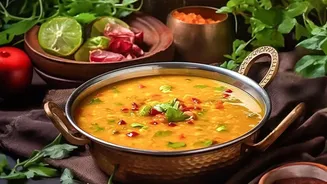
There is no better example of this principle than dal. A staple across the subcontinent, dal is a universe in itself. The same core concept—a cooked lentil soup—transforms entirely from one state to another. In Punjab, it might be the rich, slow-simmered Dal Makhani, a decadent mix of urad dal and rajma, laden with butter and cream. Travel east to Bengal, and you'll find Cholar Dal, made from chana dal with a surprising sweet note from coconut or raisins, often reserved for festive occasions. In Gujarat, the dal is a playful dance of sweet, sour, and spicy, combining toor dal with jaggery and kokum. Down south, dal is often the base for sambar or rasam, infused with tamarind, vegetables, and a tempering of curry leaves. Each version is a reflection of its region's palate and produce, showing how a single dish can tell a thousand different stories.
The Logic of the Land
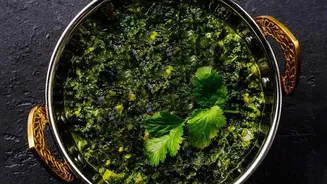
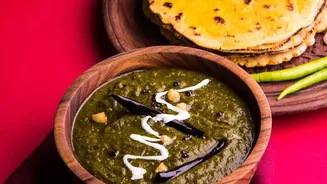
This flexibility is deeply rooted in seasonality and local availability. Before supermarkets offered every vegetable year-round, home cooks were masters of seasonal eating. The contents of a sabzi (vegetable dish) or curry were dictated by what was fresh at the market. Winter brings hearty greens like sarson ka saag in the north, while the arrival of spring might mean the inclusion of fresh fenugreek (methi) or drumsticks in coastal areas. This reliance on the season’s bounty is not just a romantic notion; it’s a practical and sustainable way of cooking that ensures ingredients are at their peak flavour and nutritional value. This practice encourages creativity, forcing the cook to innovate within a familiar framework and ensuring that the same dish can taste refreshingly different throughout the year.
The Comfort of Khichdi
Khichdi, a humble one-pot meal of rice and lentils, is another testament to adaptable tradition. Its history is ancient, with evidence of its preparation dating back 2,000 years. Described in Vedic texts and by travelers like Ibn Battuta, khichdi is perhaps India's most enduring comfort food. Yet, its simplicity is deceptive. In West Bengal, it becomes a rich bhog'er khichuri offered during pujas. In Karnataka, it is transformed into the spicy, tamarind-laced Bisi Bele Bath, loaded with vegetables. The Mughals elevated it with nuts and spices, while the British adapted it into their breakfast dish, kedgeree. From a light, digestible meal for someone who is unwell to a celebratory feast, khichdi’s composition changes to fit the occasion, the region, and the season, proving that even the simplest dishes have boundless potential.