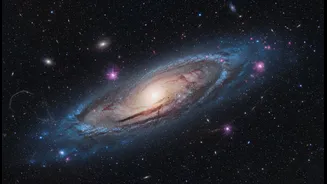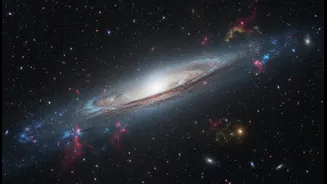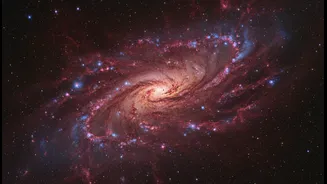




A Portrait of a Galactic Collision
Located about 11 to 13 million light-years away, Centaurus A is not your average spiral or elliptical galaxy. It’s what astronomers call a 'peculiar' galaxy, bearing the dramatic scars of a past cosmic event. Around two billion years ago, a large elliptical galaxy collided
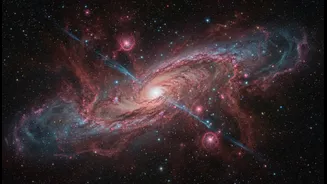
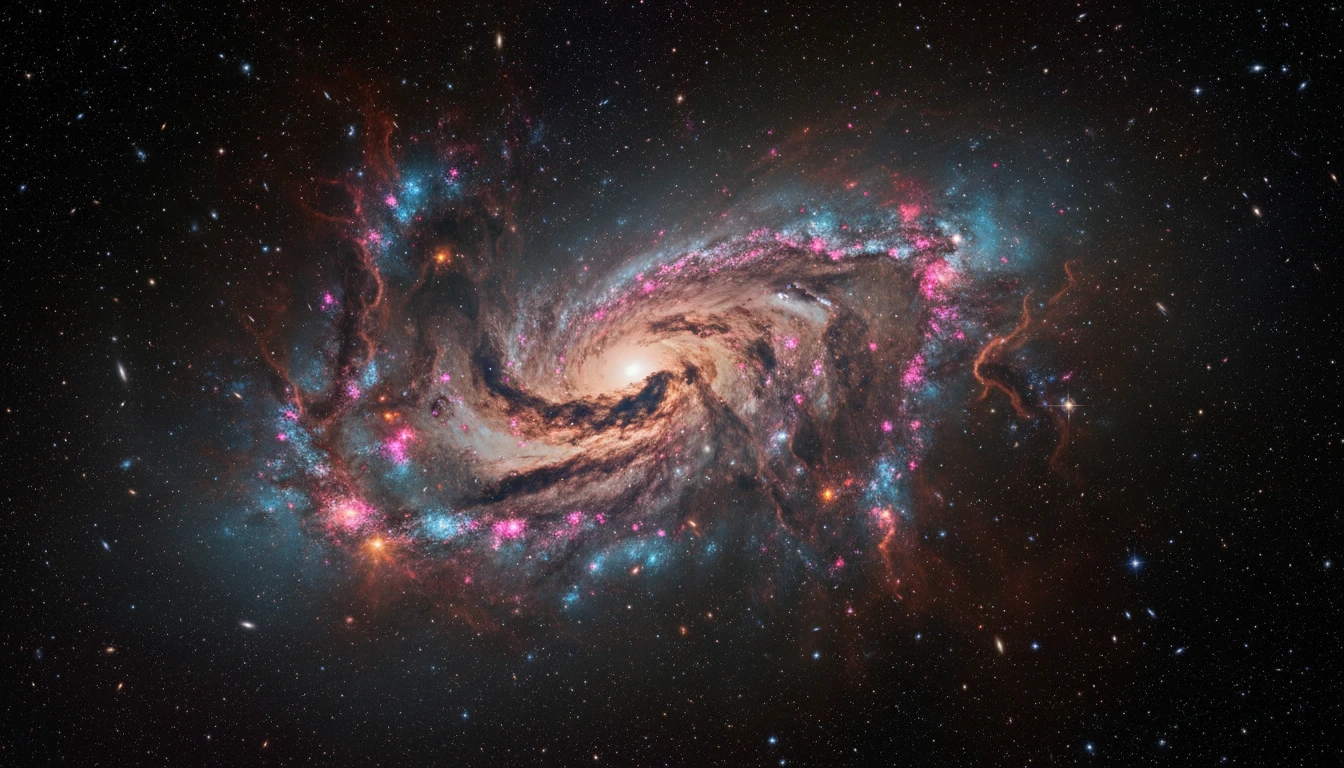
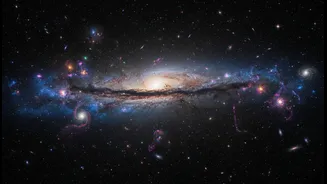
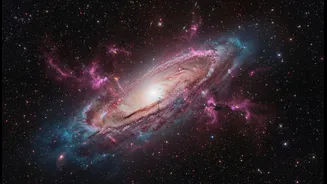
with and consumed a smaller, gas-rich spiral galaxy. The result is a stunning and chaotic scene: a bright, oval-shaped glow of older, redder stars is bisected by a dark, thick belt of dust and gas—the remnants of the consumed spiral galaxy. This striking dust lane, which once hid the galaxy's core from telescopes like Hubble, is precisely what gives Centaurus A its unique character. New images from the James Webb Space Telescope (JWST) have pierced through this veil, transforming our understanding of this celestial marvel.
The Texture of Dust and Stars
The word 'textured' perfectly describes what the JWST has uncovered. Where previous infrared telescopes saw large, blurry structures, Webb’s powerful Mid-Infrared Instrument (MIRI) resolves the dust lane into a breathtaking tapestry of filaments, knots, and glowing clouds. This is not just inert dust; it's a dynamic region of intense star formation. The collision violently stirred and compressed the gas, triggering a 'starburst' that continues today. Webb's images show these stellar nurseries as glowing reddish dots, places where new stars are being born and old stars are shedding their material back into the cosmos. What might look like 'graininess' in the combined images from Webb's cameras is actually the light of millions of individual stars, now visible for the first time. Astronomers can now perform a kind of galactic archaeology, studying different generations of stars to piece together the galaxy's violent and beautiful history.
The Monster in the Middle
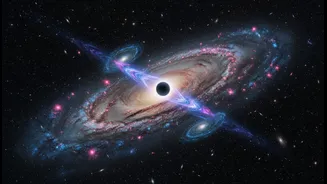
At the heart of all this chaotic beauty lies a monster: a supermassive black hole with a mass of about 55 million times that of our sun. Centaurus A is what's known as an 'active galaxy,' meaning its central black hole is actively 'feeding' on the surrounding gas and dust, leftover from its galactic meal. This process is incredibly energetic, releasing vast amounts of radiation. Webb's instruments can now measure the motion of gas swirling around this engine of creation and destruction. Early findings show a complex interplay: the black hole’s activity seems to compress some gas, triggering star birth, while simultaneously blasting other material away, which could halt it. It’s a rare, close-up look at the powerful feedback loop between a black hole and its host galaxy.
Invisible Jets Painting the Void
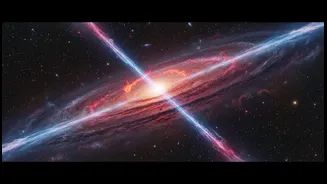
The galaxy's texture isn't just limited to what we see in visible or infrared light. As the supermassive black hole feeds, it launches colossal jets of high-energy particles that travel at nearly half the speed of light. While the infrared jets are thousands of light-years long, in radio wavelengths, these jets extend over a million light-years into space, far beyond the visible confines of the galaxy. They are enormous, invisible brushstrokes painting the void. These jets slam into the surrounding intergalactic gas, creating shockwaves and further shaping the environment around Centaurus A. The ability to study these jets across the entire electromagnetic spectrum, from radio waves to X-rays and gamma rays, makes Centaurus A a crucial laboratory for understanding the most extreme physics in the universe.