


What Exactly Is a Planetary 'Parade'?
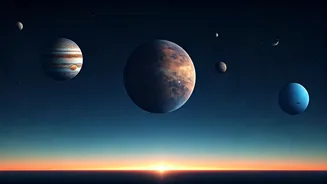
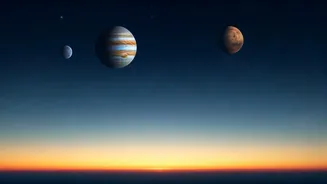
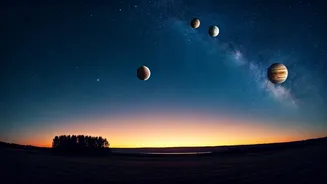
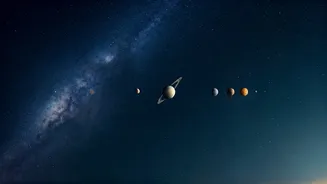
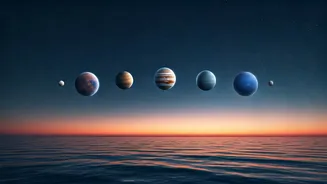
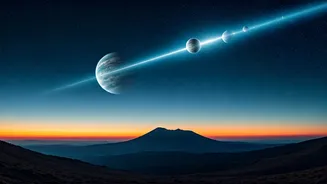
While the term 'planetary alignment' might conjure images of planets forming a perfectly straight line in space, the reality is a little different—but no less spectacular. In astronomy, an alignment, often called a planetary parade, occurs when several
planets appear in the same small section of the sky from our vantage point here on Earth. They aren't physically lined up in a row out in the solar system, but their orbits have brought them to a position where we can see them grouped together during a specific time. This particular event is notable because it involves six planets: Mercury, Mars, Jupiter, Saturn, Uranus, and Neptune. Seeing so many of our solar system neighbours at once is an infrequent treat.
Which Planets Can You See?
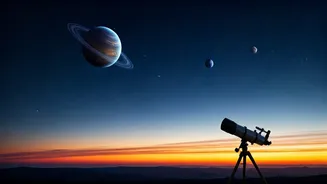
This celestial gathering features a mix of easy-to-spot and more challenging targets. Saturn, with its distinct yellowish hue, and Mars, with its recognisable reddish glow, will be the easiest to see with the naked eye. Mercury and Jupiter will also be visible without a telescope, but they present a challenge: they will be very low on the eastern horizon and only appear shortly before the sun rises, making them susceptible to being washed out by the dawn light. The final two planets, Uranus and Neptune, are much farther away and fainter. You will need a good pair of binoculars or a telescope to spot them. Uranus will be located near Mars, while Neptune will be closer to Saturn, but finding them will require patience and a dark sky.
Best Time and Place to Watch in India
Timing and location are everything for successful stargazing. The best window to view this planetary parade is in the hour just before sunrise. For most of India, this means looking to the eastern sky between approximately 4:30 AM and 5:30 AM IST in early June. The key is to find a location with an unobstructed view of the eastern horizon. Rooftops, open fields, or areas away from tall buildings and hills are ideal. The biggest enemy of stargazing is light pollution, so try to get as far away from city lights as possible. Even a short drive out of the city centre can make a huge difference, allowing your eyes to pick out the fainter planets like Mercury and reveal the subtle colours of Mars and Saturn.
Tips for the Best Viewing Experience
To make the most of this celestial event, a little preparation goes a long way. First, give your eyes time to adjust to the darkness—it can take up to 20 minutes for them to become fully adapted. Avoid looking at your bright phone screen. If you need a light, use a red torch, as red light is less disruptive to your night vision. To help identify which point of light is which planet, consider using a stargazing app on your phone (like Stellarium, SkyView, or Star Walk). You can point your phone at the sky, and the app will overlay the names of planets and constellations. Remember to be patient, especially when trying to spot Jupiter and Mercury near the horizon. They may only be visible for a very brief period before the sun's glare overwhelms them.
Is This Alignment Truly 'Epic'?
The word 'epic' gets used a lot, but is this event worthy of the title? From a purely visual standpoint, it's important to set expectations. The planets will be spread across a large arc in the sky, not huddled together in a tight, dramatic cluster. However, the rarity of having six planets visible in the same celestial neighbourhood at once is what makes this event special for astronomers and enthusiasts. It’s a powerful reminder of the grand, clockwork motion of our solar system. It’s an opportunity to see our cosmic neighbours with your own eyes and feel a connection to the vast universe around us. So, while it may not be a cinematic, perfectly straight line of planets, the chance to greet six worlds in one morning is, for many, an epic experience in itself.