




The Crumbling Edge of the World
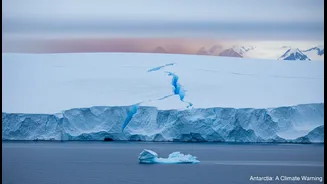
For decades, the story of Antarctica was one of relative stability, at least compared to the rapidly melting Arctic. But that narrative has shifted. Today, the continent's frozen coastline is actively retreating. Between 1992 and 2025, the continent lost
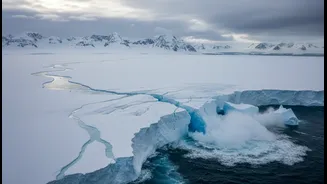
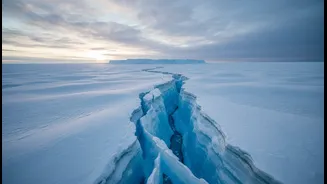
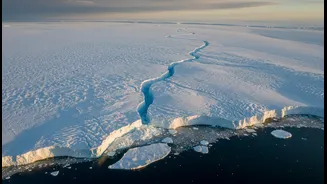
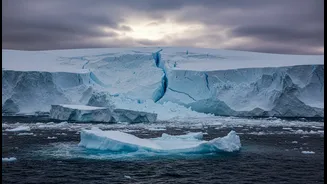
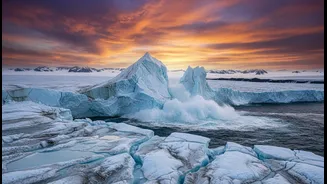
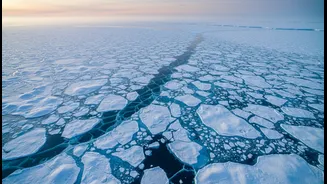
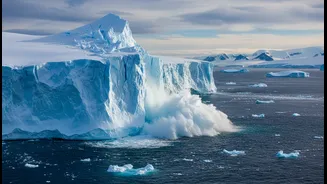
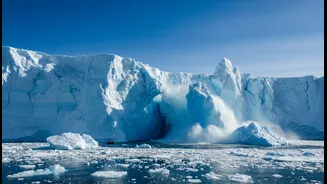
12,800 square kilometres of ice along its coastal grounding line—the critical zone where ice leaves the land and begins to float. This isn't a uniform melt; while about 77% of the coastline has remained stable, the 23% that is retreating is doing so dramatically. The most significant changes are concentrated in West Antarctica and parts of East Antarctica, where massive floating ice shelves are thinning, fracturing, and, in some cases, collapsing entirely. These shelves act like giant doorstops, holding back the continent's land-based glaciers. As they weaken, the glaciers behind them accelerate their march to the sea, a process that has sped up sixfold in the last thirty years.
An Unseen Attacker: The Warming Ocean
The primary culprit behind this coastal instability isn't warm air melting the ice from above, but warmer ocean water eating away at it from below. The Southern Ocean has absorbed a staggering amount of excess heat from global warming—by some estimates, as much as the Atlantic, Pacific, and Indian Oceans combined. This warmer water, particularly a layer known as Circumpolar Deep Water, is increasingly finding its way onto the shallow continental shelf and into deep troughs beneath the ice shelves. Studies have revealed that long grooves on the underside of ice shelves can trap this warmer water, creating hotspots of intense melting far from the open ocean. This sub-ice melting is destabilizing the grounding line, unpinning the glaciers from the seabed and allowing them to flow faster. The west coast of the Antarctic Peninsula is one of the fastest-warming places on Earth, with upper ocean temperatures there having risen by over 1°C since 1955.
Ground Zero: The 'Doomsday Glacier'
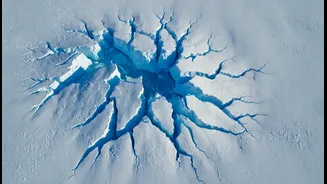
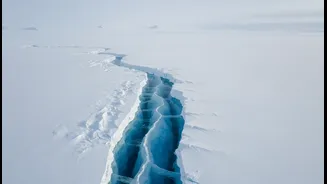
Nowhere is this process more alarming than at the Thwaites Glacier in West Antarctica. Nicknamed the 'Doomsday Glacier', this Florida-sized river of ice is particularly vulnerable because it rests on bedrock that slopes downward away from the coast, creating a risk of runaway collapse. Its melt already accounts for about 4% of global sea-level rise. Recent satellite imagery shows that its last remaining buttressing ice shelf is fracturing and is expected to disintegrate, potentially as soon as this year. The loss of this shelf will remove a critical brake, further accelerating the glacier's flow into the ocean. The complete collapse of Thwaites alone could raise global sea levels by about 65 centimetres (2.1 feet). More worryingly, it acts as a linchpin for the rest of the West Antarctic Ice Sheet, which holds enough ice to raise sea levels by over 3 metres.
The Ripple Effect on Global Sea Levels
The changes in Antarctica, thousands of kilometres away, have direct consequences for coastal communities around the world, including those in India. The net loss of ice from Antarctica is currently between 100 and 200 billion tons per year, a rate that is increasing. This contributes directly to sea-level rise, which is already accelerating. While Greenland is currently a larger contributor, Antarctica’s potential contribution is far greater. If the entire Antarctic Ice Sheet were to melt, it would raise global sea levels by a staggering 60 metres (nearly 200 feet). Even a partial collapse of the West Antarctic Ice Sheet, which some scientists fear is approaching an irreversible tipping point, could contribute several metres of sea-level rise over the coming centuries, threatening cities like Mumbai, Kolkata, and Chennai.
The Race to Understand
Scientists are in a race against time to understand these rapid changes. The International Thwaites Glacier Collaboration, a massive UK-US research effort, is using everything from ice-penetrating radar to autonomous underwater vehicles to study the glacier and the ocean beneath it. This research is crucial for improving climate models, which have historically struggled to predict the pace of Antarctic melt. Recent studies have highlighted how complex the system is; for example, after decades of expansion, Antarctic sea ice began a sudden and dramatic decline after 2016, a shift linked to changes in wind patterns that brought warm deep water to the surface. This new data helps explain why parts of the continent, once thought to be stable, are now showing signs of waking up.