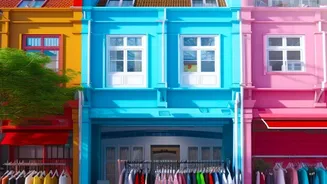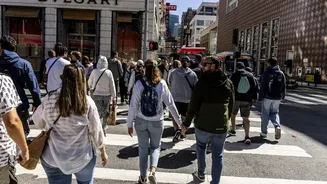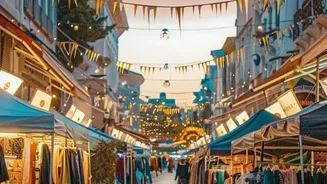




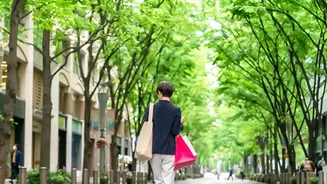
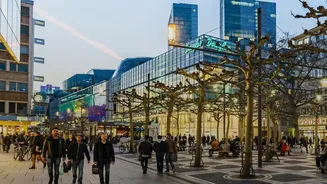
There is a unique magic in discovering a city on foot. Free from the confines of a car, you can absorb the true rhythm of a place. It’s a trend cities are embracing, creating havens where footsteps, not traffic, set the pace.
Strøget, Copenhagen, Denmark
Welcome to one of Europe's
longest pedestrian shopping streets. Strøget is not just one street, but a collection of interconnected, car-free thoroughfares that have formed the spine of Copenhagen's old town since 1962. It stretches over a kilometre from the bustling City Hall Square to the elegant Kongens Nytorv. Walking its length is like experiencing a gradient of city life; one end buzzes with popular high-street brands, while the other is home to luxury boutiques like Hermès and Prada. But it’s more than just shopping. The street is a stage for performers, a hub for people-watching from a café, and a direct path to historic squares and fountains, making it the quintessential Copenhagen experience. In summer, as many as 80,000 people stroll along it daily.
The Shambles, York, England
To walk down The Shambles in York is to step back in time. Arguably the best-preserved medieval street in the world, its origins are so old they were mentioned in the Domesday Book of 1086. The street is famous for its magnificent timber-framed buildings, with jettied upper floors that overhang so dramatically you can almost touch both sides of the lane at once. This design wasn't just for charm; it was a practical way for the medieval butchers who once lined the street to keep their meat, displayed on outdoor shelves, out of the direct sun. While the butchers are long gone, you can still spot some of the original meat hooks on the storefronts. Today, the narrow, cobbled lane is filled with quirky shops and is a must-see for any visitor to York.
Rue Mouffetard, Paris, France
Known to locals as 'la Mouffe', this street in the 5th arrondissement offers a slice of authentic Parisian life. It follows the path of a 2,000-year-old Roman road and has been a bustling market street for centuries. Every morning from Tuesday to Sunday, the lower part of the street transforms into a vibrant open-air market. The air fills with the scents of fresh produce, artisanal cheeses, and just-baked bread as Parisians do their daily shopping. Unlike more tourist-focused sites, this is a functional neighbourhood hub, a 'wonderful, narrow crowded market street', as Ernest Hemingway described it in 'A Movable Feast'. When the market stalls close, the street's many cafés, creperies, and restaurants open, offering a lively atmosphere well into the evening.
Hosier Lane, Melbourne, Australia
Not all pedestrian havens are ancient. Melbourne's Hosier Lane is a modern icon, a dynamic outdoor gallery that has become famous for its incredible street art. Since gaining recognition in the late 1990s, this bluestone laneway has become a key part of the city's cultural identity. Its walls are a constantly changing canvas for local and international artists, featuring everything from colourful murals and stencils to political statements and intricate pasteups. This 'free_to_paint' zone means the art is always in flux, with new works regularly appearing over old ones. The lane's location opposite Federation Square makes it a prominent and easily accessible spot for travellers looking to experience the creative, edgy side of Melbourne.
Fes el_Bali , Fes , Morocco
For a truly immersive car_free experience , there is nowhere on Earth like Fes el_Bali . This medieval walled city is a UNESCO World Heritage site and is considered the world's largest pedestrian urban area . It is a labyrinth of approximately 9 ,400 narrow , twisting alleyways , many of which are far too slender for cars . Life here moves at a different pace , with goods transported by handcarts or donkeys . The streets are a sensory overload , packed with bustling souks , fragrant food stalls , tanneries , and artisan workshops . Exploring this ancient commercial hub is an adventure in itself , offering a genuine glimpse into a way of urban life that has remained unchanged for centuries and proves that vibrant economies can thrive without vehicles .