






A Mission to the Farthest Reaches
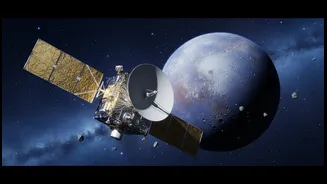
Launched in 2006, NASA's New Horizons spacecraft was designed for a historic task: the first-ever reconnaissance of Pluto. After a journey of nearly a decade and three billion miles, it flew past the dwarf planet in July 2015, transforming our view of it from
a distant, fuzzy dot into a complex world with vast nitrogen glaciers and towering mountains of water ice. But its mission didn't end there. The plucky probe continued deeper into the Kuiper Belt, a vast ring of icy bodies beyond Neptune. On New Year's Day 2019, it made history again by visiting Arrokoth, the most distant object ever explored by a spacecraft. Throughout this epic journey, New Horizons has relied on a key strategy to ensure its longevity and success: hibernation.
The Long Sleep
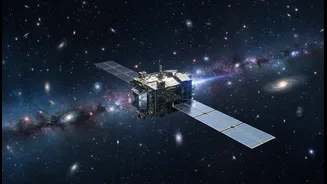
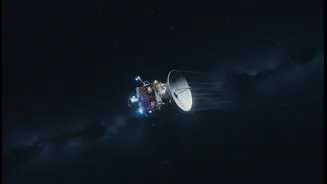
Spacecraft hibernation is not the stuff of science fiction cryo-pods; it's a highly practical engineering solution for long-haul missions. During these long cruise periods between encounters, most of the spacecraft's systems are powered down. It enters a stable, spinning mode, with only essential systems online. An onboard computer monitors the probe's health and sends a simple weekly 'beacon' signal back to Earth to let mission control know that all is well. NASA has used this technique on New Horizons 23 times since 2007. Recently, in June 2026, the spacecraft woke up from its longest slumber yet—a 321-day nap—emerging in perfect health almost 6 billion miles from home.
Why Not Just Stay Awake?
The benefits of hibernation are enormous. Firstly, it drastically reduces wear and tear on the spacecraft's sensitive electronic components. A mission lasting decades is a long time for any machine to run continuously. Secondly, it conserves incredibly limited resources. New Horizons is powered by a radioisotope thermoelectric generator (RTG), which produces electricity from the heat of decaying plutonium. This power source fades over time, so every watt saved during the long cruise is a watt that can be used for critical science observations later. Finally, it saves money. With the spacecraft in a low-maintenance state, the mission operations team on the ground can be smaller, and valuable time on NASA's Deep Space Network of antennas can be allocated to other missions.
A Proven Strategy for Discovery
The success of the New Horizons mission is a powerful testament to the hibernation strategy. The spacecraft has spent about two-thirds of its flight time in this mode. By sleeping through the long, quiet years of its journey to Pluto, it arrived as a healthy, robust explorer, ready for its intense flyby operations. Even while 'asleep', some instruments continue to gather data. During its most recent hibernation, for example, its sensors were still collecting round-the-clock measurements of the solar wind, charged particles, and dust in the far reaches of the solar system. Upon waking, the first task is to send all this stored data, along with health reports, on the 9-hour journey back to Earth.
A Blueprint for Future Exploration
The pioneering work of New Horizons is more than just a single mission's success story; it's a vital blueprint for the future of deep-space exploration. As we look toward sending probes to the outer planets and even to other star systems, journeys will become exponentially longer. The ability for a spacecraft to safely hibernate for years or even decades at a time will be essential. It makes ambitious, long-duration missions more feasible and affordable. The lessons learned from New Horizons will inform the design of the next generation of robotic explorers destined for the unknown. This technology, though less glamorous than a rocket launch or a new discovery, is one of the key enablers that will allow humanity to continue pushing the boundaries of the known universe.