







What is a Semicryogenic Engine?
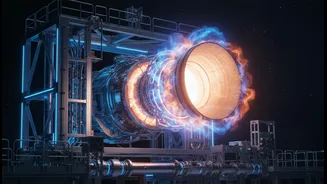
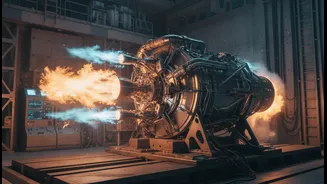
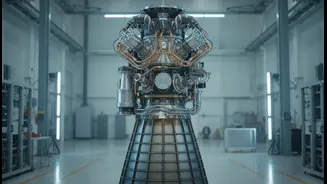
At its heart, a semicryogenic engine is a rocket motor that uses a specific fuel combination: a liquid fuel that can be stored at room temperature and a liquid oxidiser that must be kept at extremely cold, or cryogenic, temperatures. For its new SE2000
engine, ISRO is using a highly refined form of kerosene, dubbed 'Isrosene', as the fuel and liquid oxygen (LOX) as the oxidiser. This is different from fully cryogenic engines, like the one in the LVM3 rocket's upper stage, which uses both liquid hydrogen and liquid oxygen. The 'semi' in semicryogenic refers to the fact that only one of the propellants, the LOX, needs to be chilled to cryogenic levels. This might seem like a small change, but it has massive implications for performance and practicality.
The Fuel Advantage: Why Kerosene?
The choice of kerosene over liquid hydrogen is a strategic one. While liquid hydrogen is very efficient, it is also very difficult to handle. It is not dense, meaning it requires massive, heavily insulated fuel tanks to store, which adds significant weight and complexity to a rocket. Kerosene, on the other hand, is dense and can be stored at room temperature. This makes the rocket's fuel tanks smaller and lighter, simplifying the rocket's overall design. It also makes pre-launch preparations easier, faster, and cheaper, reducing both mission costs and dependence on complex cryogenic infrastructure. This combination gives the engine the power benefits of using liquid oxygen without the logistical headaches of handling liquid hydrogen.
Higher Thrust: A Game Changer for ISRO
The primary goal of the new semicryogenic engine is to generate immense power. The SE2000 is designed to produce 200 tonnes of thrust, a measure of engine power. This engine will power a new core stage, the SC120, for India’s heaviest rocket, the Launch Vehicle Mark-3 (LVM3). This upgrade will significantly boost the LVM3's lifting capacity. The rocket will be able to carry payloads of up to 10 tonnes to Low Earth Orbit, an increase from the current 8 tonnes, and up to 5 tonnes to the more distant Geostationary Transfer Orbit, up from 4 tonnes. This 'higher thrust' capability means ISRO can launch heavier communication satellites, deploy multiple satellites in a single mission, or send more ambitious robotic missions deeper into space. It is a critical building block for future projects like the Gaganyaan human spaceflight mission and the proposed Bharatiya Antariksh Station.
The Latest Test: A Major Milestone
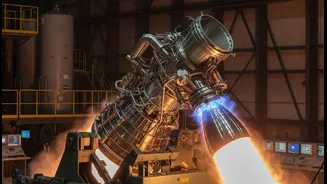
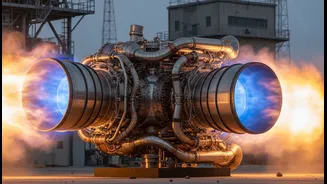
On June 24, 2026, ISRO achieved a major milestone by successfully conducting a hot test of the engine's Power Head Test Article (PHTA) at its Propulsion Complex in Mahendragiri, Tamil Nadu. The PHTA contains the most complex parts of the engine, including the gas generator, pre-burner, and powerful turbopumps, but excludes the main combustion chamber. In this eighth test of the series, the system was fired successfully and demonstrated stable operation at a thrust level of 175 tonnes, which is about 88% of its full intended power. According to ISRO, all parameters performed as expected, giving the agency immense confidence to proceed towards testing the fully integrated engine at its maximum 200-tonne thrust level.