


The Rise of a Neutral Norm
For decades, the push toward refined oils was framed as a step toward modernity. These oils are mass-produced by subjecting seeds to high heat, chemical solvents, and processes like bleaching and deodorizing. This industrial method is efficient, yielding
a product that is cheap, has a long shelf life, and possesses a neutral flavour and high smoke point. However, this standardisation comes at a cost. The very processes that make refined oils stable and neutral also strip them of their natural colour, aroma, and, most importantly, the nutrients and antioxidants inherent in the original seeds. Over time, Indian kitchens, which once celebrated a diverse palette of regional oils, began to adopt these anonymous, characterless fats. This shift didn't just change an ingredient; it subtly erased a layer of our culinary identity, making dishes from different regions taste more uniform.
The Ancient Wisdom of the Ghani
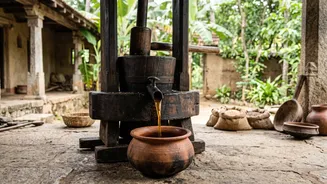
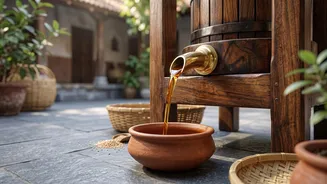
In stark contrast to industrial refining is the ancient method of the 'ghani', also known as 'kolhu' or 'chekku'. A wooden ghani is a traditional press where a large wooden pestle rotates slowly, crushing oilseeds like sesame. This slow, friction-limited process generates very little heat, which is why the oil is often called 'cold-pressed'. Because no chemicals or high temperatures are used, the oil that is extracted is pure, unadulterated, and nutritionally intact. It retains the seed's natural colour, robust aroma, and distinctive flavour. This method preserves vital nutrients like Vitamin E and natural antioxidants such as sesamol and sesamin, which are otherwise destroyed during refining. Choosing wooden-ghani oil is not just a preference; it's a decision to use an oil that is alive with the character of its source.
Sesame Oil in India's Culinary History
Sesame oil, or 'til ka tel', is not just any oil; it is arguably the oldest cooking oil used in India, with evidence of its use dating back to the Indus Valley Civilization. For thousands of years, it has been a cornerstone of cuisine, medicine, and ritual. In South India, it is known as 'nallennai' (good oil) and is indispensable for its rich, nutty flavour in dishes like Vatha Kuzhambu, various chutneys, and as a finishing drizzle over idli podi. Its high smoke point also makes it ideal for tempering spices, a foundational technique in Indian cooking. Beyond the south, it is the traditional choice for making pickles across many regions, as its natural antioxidants help preserve the food while imparting a deep, complex flavour that matures over time.
Restoring Flavour, Reviving Tradition
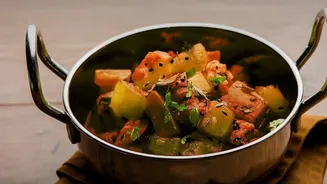
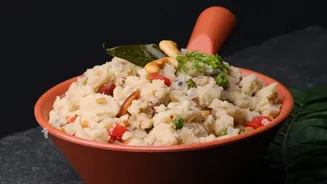
When you use a neutral refined oil, you are merely using a fat to transfer heat. When you cook with wooden-ghani sesame oil, you are adding a foundational layer of flavour. The authentic taste of a fiery Andhra pickle, the nutty depth of a Tamil kuzhambu, or the aromatic tempering on a dal is intrinsically linked to the character of the oil used. Using a refined substitute mutes this identity. By reintroducing wooden-ghani sesame oil into our kitchens, we are doing more than just choosing a healthier fat. We are reconnecting with the tastes and smells that defined our regional cuisines for centuries. It is an act of reclaiming the sensory details that industrialisation erased. Each dish cooked with this traditional oil becomes a more faithful rendition of its original recipe, restoring a piece of our culinary heritage one meal at a time.