




Peering into Cosmic Cradles
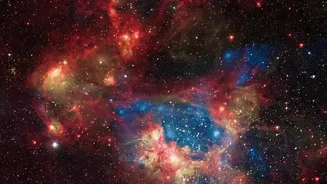
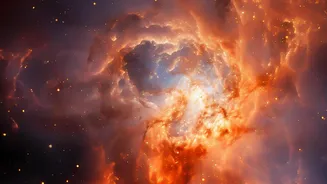
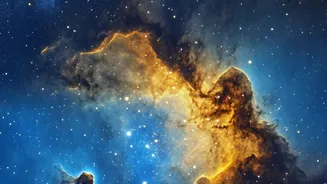
Across the universe, new stars are born inside vast, cold clouds of gas and dust. These stellar nurseries, or nebulae, are the birthplaces of not just stars, but entire planetary systems. For ages, however, these regions have remained shrouded in mystery,
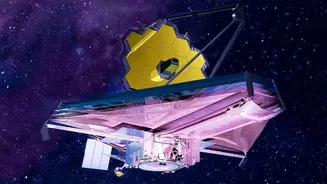
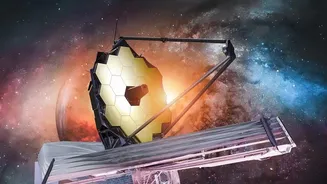
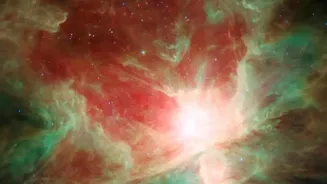
their dense dust blocking most telescopes from seeing the action within. They are the cosmic equivalent of a locked delivery room. But the James Webb Space Telescope was built for exactly this challenge. Its powerful instruments are designed to detect infrared light, a wavelength that can pass through the thick dust, allowing scientists to witness the very first steps of creation.
A Glimpse of Planetary Birth
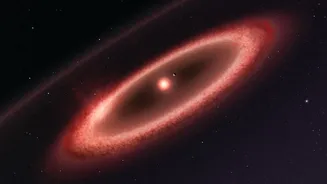
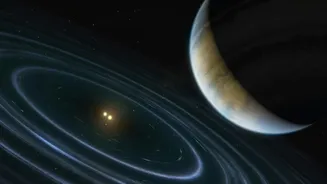
In a series of stunning observations, Webb has peered into these nurseries, such as the Rho Ophiuchi and Perseus star-forming regions, and captured images of what scientists call protoplanetary disks. Think of these as giant, spinning platters of gas and dust circling a newborn star. This is the raw material from which planets are made. Recent findings in a nursery called NGC1333, about 1,000 light-years away, revealed several infant worlds, some just a few times the mass of Jupiter. One of the smallest of these objects was even surrounded by its own dusty disk, a feature that could one day form moons. This is a crucial discovery, providing a real-world look at the processes that theorists have long believed lead to the formation of planets.
The Power of Infrared Vision
What makes Webb so revolutionary is its ability to see what was previously hidden. Where the Hubble Space Telescope sees opaque clouds of dust, Webb sees the delicate structures within. It can detect the faint heat glow of newly forming objects and analyse the chemical composition of the gas and dust. In one young system, HOPS-315, scientists used Webb combined with the ALMA telescope to spot silicate monoxide gas beginning to condense into solid mineral grains. This is a direct observation of the very first 'seeds' of rocky planets, the initial step in building worlds like Earth, Mars, and Venus.
Rewriting the Rules of Planet Formation
These discoveries are doing more than just providing pretty pictures; they are refining our understanding of how planetary systems evolve. For instance, astronomers used to believe that protoplanetary disks were relatively short-lived, lasting only about 10 million years before being blown away by the young star's radiation. But Webb has found disks around small stars that are much older, up to 30 million years old, suggesting that planets in these systems have a much longer window in which to form. The telescope has also revealed incredible details like rings, gaps, and spirals within these disks, which are considered strong evidence of newly formed planets carving out their orbits.
A Baby Picture of Our Own Solar System
By studying these infant systems, we are getting a glimpse into our own distant past. The processes happening hundreds or thousands of light-years away are likely a close parallel to what occurred in our corner of the Milky Way some 4.6 billion years ago. The mix of chemicals, the time it takes for dust to clump together, and the way planets migrate within their disks are all puzzle pieces that help us understand how Earth came to be. Every observation of these foreign nurseries provides a new page in the story of our own origins, showing us the chaotic, beautiful, and complex sequence of events that leads from a cloud of dust to a habitable world.