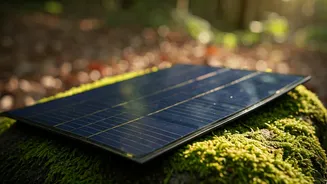










What Are Solar Sheets?
When you hear ‘solar panel’, you probably picture the large, rigid glass-and-metal rectangles on rooftops. Portable solar sheet technology is the super-flexible, lightweight cousin of that. Instead of bulky glass, these chargers use thin-film photovoltaic
cells printed or laminated onto a flexible backing, often a durable fabric like canvas. This allows them to be rolled up or folded into a compact package that fits easily into a backpack. They are designed for one main purpose: to give you personal power on the go, freeing you from the wall socket. Think of it not as a replacement for your home electricity, but as a personal power plant for your essential gadgets when you're away from it.
How Does It Actually Work?
The science is the same as any solar panel, just miniaturised and made portable. The photovoltaic cells on the sheet absorb photons from sunlight, which excites electrons and creates a direct current (DC). This current is then channelled to one or more USB ports built into the panel. You can plug your smartphone, headphones, GPS unit, or any other USB-powered device directly into the solar sheet to charge it. However, a much more efficient method is to pair the solar sheet with a power bank. Charge the power bank during the sunniest parts of the day, and then use the stored energy in the bank to charge your devices later, even at night or on a cloudy day. This provides a stable, consistent current and acts as a buffer against intermittent sunlight.
The Real-World Benefits
The most obvious benefit is freedom. For trekkers in Himachal, campers in the Western Ghats, or anyone on a long road trip, it means not having to ration phone usage. You can navigate, take photos, and stay in touch without worrying about finding a charging point. In urban India, it’s a powerful backup during increasingly common power cuts, especially during monsoon season. It’s a silent, clean, and sustainable way to keep your essentials running. For digital nomads and remote workers, it opens up the possibility of truly working from anywhere—a beach in Goa, a quiet homestay in the hills—as long as there’s sunlight. It’s about self-reliance in a world that runs on battery power.
Understanding the Limitations
Portable solar is amazing, but it's not magic. Its effectiveness is entirely dependent on direct, bright sunlight. A cloudy day will drastically reduce charging speed, and it produces zero power at night. Charging a smartphone directly from a small panel can take several hours even in perfect sun, which is much slower than a wall charger. That's why using a power bank as an intermediary is highly recommended. Furthermore, the rated wattage can be optimistic; real-world output is often 70-80% of the number on the box, at best. You won't be powering a laptop or a mini-fridge with these compact sheets. They are designed for small electronics, so it's important to manage your expectations and see them as a tool for topping up, not for heavy-duty power needs.
What to Look For When Buying
If you're ready to invest, here are four key things to consider. First, Wattage (W): This is its power output. A 10W panel is a good starting point for charging a single smartphone. For charging a power bank or multiple devices, look for 20W or more. Second, Portability: Check the weight and folded dimensions. The goal is to be portable, so it shouldn't feel like a burden to carry. Third, Durability: Look for panels with a high-durability fabric and some level of weather resistance (often indicated by an IP rating, like IP65), which protects against dust and rain. Finally, Ports: Ensure it has the ports you need. Most come with standard USB-A ports, but newer models include USB-C, which offers faster charging for compatible devices. Some even have a built-in controller to prevent overcharging and optimise power delivery.