




From Transaction to Experience
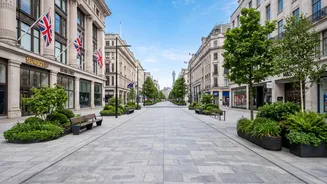
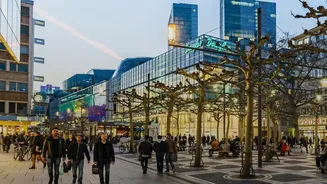
The way a street is designed fundamentally changes how we behave as consumers. When cities prioritise people over cars, they transform shopping from a purely transactional activity—get in, buy, get out—into a holistic experience. Removing vehicles reduces
noise and pollution, lowers stress, and increases a feeling of safety, all of which encourages people to slow down. This is the core principle of pedestrianisation. Instead of rushing, shoppers linger. They are more likely to make impulse buys, stop for a coffee, or meet friends, turning a simple errand into a social outing. Studies have shown that this 'dwell time' is crucial; the longer people comfortably spend in an area, the more they are likely to spend. It shifts the focus from mere consumption to community, leisure, and discovery.
Copenhagen's Strøget: A Pioneer's Success Story
One of the earliest and most famous examples of this philosophy is Strøget in Copenhagen. In 1962, against fierce opposition from business owners who feared losing customers, the city converted its main commercial street into a car-free zone. The experiment was a resounding success. Businesses quickly realised that the absence of cars did not mean an absence of customers; in fact, it led to more. The city embarked on a gradual transformation, replacing curbs with continuous paving, adding public furniture, and creating spaces for cafes and performances. Foot traffic increased, and retail turnover improved significantly. Strøget proved that a people-first environment is not just good for public life, but also a powerful engine for local retail, inspiring hundreds of other cities worldwide.
Barcelona's La Rambla: A Cultural Artery
Stretching over a kilometre to the sea, La Rambla in Barcelona is less a single street and more a living, breathing part of the city. It cleverly inverts typical street design by placing a wide pedestrian boulevard in the middle, flanked by narrow service lanes for vehicles. La Rambla is a vibrant mix of commerce, culture, and community. It's lined with flower kiosks, street performers, historic buildings like the Liceu Opera House, and the bustling Boqueria Market. It serves as a social hub for both locals and tourists, a place to see and be seen. The design encourages a leisurely pace, allowing people to soak in the atmosphere, watch the crowds from a cafe terrace, and discover the shops and sights that branch off into the adjoining Gothic Quarter and Raval neighbourhoods.
Tokyo's Ginza: The 'Pedestrian Paradise'
Even in one of the world's most densely populated megacities, the value of pedestrian space is clear. On weekend afternoons since 1970, the main thoroughfare of Tokyo's upscale Ginza district transforms into a 'Hokōsha Tengoku', or 'Pedestrian Paradise'. The eight-lane avenue is closed to traffic, allowing thousands of people to walk freely down the middle of one of the planet's most expensive stretches of real estate. This policy was originally a response to traffic and pollution problems in the 1960s, but it has since become a beloved cultural institution. It creates a unique, festival-like atmosphere where high-end shopping at department stores like Wako and Mitsukoshi combines with the simple pleasure of strolling without constraints, proving that even the most modern, fast-paced urban centres benefit from carving out room for people.
The Undeniable Economic Benefit
The fear that removing cars and parking will kill business is a common, yet consistently disproven, narrative. Research from around the world shows a clear positive correlation between walkability and economic health. Pedestrian-friendly improvements have been linked to increased retail sales, higher property values, and lower commercial vacancy rates. One study found that pedestrians and cyclists tend to make more frequent shopping trips and spend more money monthly than those who drive. By creating environments that are safe, attractive, and engaging, cities don't just improve quality of life; they make a sound economic investment that fosters thriving, resilient local business districts.