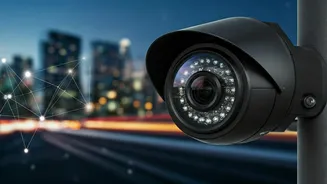









From Passive Surveillance to Active Service
For years, CCTV cameras were silent observers, their footage mostly reviewed after an incident occurred. That paradigm is now collapsing. Across India, under the Smart Cities Mission, urban surveillance is being transformed from a reactive tool into a proactive
service. Cities like Ahmedabad, Delhi, and Mumbai are integrating their vast camera networks with artificial intelligence to provide real-time information directly to the public or to authorities who can act instantly. These are not just recordings anymore; they are live data feeds that can analyze traffic flow, detect crime, and monitor crowd density. The goal is to create an intelligent ecosystem where data drives decision-making, turning passive cameras into active participants in urban management.
How Smart Cameras 'Think'
The magic behind these updates lies in AI-powered video analytics. This is the intelligent software layer that processes live feeds from thousands of cameras simultaneously. The AI is trained to recognize specific patterns and anomalies. For traffic, this could be identifying congestion and automatically updating navigation apps. For public safety, it might mean detecting unattended baggage, unusual crowd movements like sudden panic, or even acts of aggression, and instantly alerting the nearest police command centre. In cities like Pimpri-Chinchwad and Chandigarh, these systems use Automatic Number Plate Recognition (ANPR) to issue e-challans for violations in real-time, enforcing rules without constant human intervention. It’s a shift from just watching to actively understanding and flagging events as they happen.
The Promise of a Safer, Smarter City
The benefits of this technological leap are compelling. Proponents argue it leads to more efficient, safer, and responsive cities. Integrated Command and Control Centres (ICCCs), the nerve centres of these smart cities, can coordinate emergency services faster during accidents or disasters. AI analytics can help optimize traffic signals to ease congestion, suggest alternative routes, and reduce commute times. In Ahmedabad, an AI-linked surveillance system has been credited with everything from managing stray animals to improving overall cleanliness and traffic flow. Some cities are also deploying these systems to enhance women's safety, using AI to detect signs of distress and alert authorities for rapid intervention. The vision is a city that anticipates problems and responds proactively, rather than just reacting to them.
The Unblinking Eye and Privacy Fears
However, this constant, intelligent monitoring comes with significant privacy concerns. As cities like Delhi become some of the most surveilled in the world, critics worry about the creation of a permanent surveillance infrastructure. The same AI that detects traffic violations can also be used for facial recognition and large-scale profiling. Digital rights advocates argue that without a robust legal framework, this data can be misused, leading to discriminatory targeting or a chilling effect on free expression. While India has moved to regulate CCTV hardware to prevent security backdoors, especially in foreign-made devices, the laws governing data usage remain a grey area. The fundamental question is a difficult one: how much privacy are citizens willing to trade for safety and convenience?
Balancing Progress and Protection
The move towards AI-powered surveillance is irreversible, with massive projects expanding in cities like Mumbai and Noida. The challenge for India is not whether to use this technology, but how to govern it. Currently, there is no single, specific law for CCTV usage, with regulations spread across different acts that critics say are not sufficient for the age of AI. Legal experts and human rights organizations argue for a clear framework that meets the tests of legality, necessity, and proportionality, as mandated by the Supreme Court's recognition of the right to privacy. This would involve transparent policies on what data is collected, who can access it, how it's used, and robust oversight to prevent abuse. Without these safeguards, the line between a smart city and a surveillance state becomes dangerously thin.