







Jodhpur: The Sun City's Indomitable Guardian
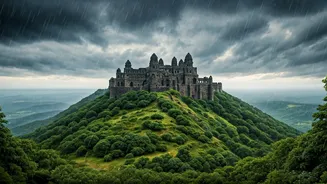
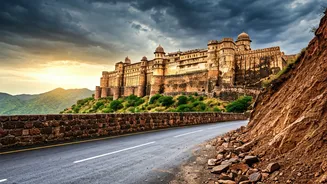
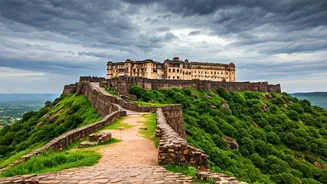
Forget treacherous mountain roads; the journey to Jodhpur in Rajasthan is one of stable, arid plains. Dominating the skyline is the magnificent Mehrangarh Fort, perched on a 122-metre-high rocky hill, not a landslide-prone mountain. Founded in 1459 by
Rao Jodha, its massive walls, which are up to 36 metres high, have stood impregnable for centuries. Inside, you can explore a stunning complex of palaces like the Moti Mahal (Pearl Palace) and Phool Mahal (Flower Palace), each a testament to Rajput grandeur. The fort’s museum houses an incredible collection of royal artifacts, from palanquins to weaponry. The true appeal lies in its location and structure; built on solid rock, Mehrangarh offers breathtaking panoramic views of the famous Blue City below, providing a sense of immense history and safety, even in the middle of the monsoon season.
Gwalior: The Pearl Among Fortresses
In the heart of Madhya Pradesh lies Gwalior, home to a fort so impressive that the Mughal emperor Babur described it as "the pearl amongst the fortresses of Hind." Situated on a wide, isolated hill of sandstone, Gwalior Fort's defenses are legendary, earning it the nickname "Gibraltar of India." Its history stretches back to at least the 6th century, having been ruled by dynasties like the Tomars, Mughals, and Scindias. The fort complex is vast, containing remarkable structures like the Man Mandir Palace with its vibrant blue tiles, the 9th-century Chaturbhuj Temple which contains one of the world's oldest inscriptions of 'zero', and the towering Teli Ka Mandir. Its location on a stable, broad-topped hill makes it an ideal destination for history buffs who want to immerse themselves in stories of valor and architectural genius without worrying about the geological instability often associated with monsoon travel.
Chittorgarh: A Saga of Rajput Valour
Spread over a staggering 700 acres on a high hill, Chittorgarh Fort is not just a fort but a symbol of Rajput pride, sacrifice, and resilience. As one of the largest forts in India and a UNESCO World Heritage site, it tells stories of epic sieges and the legendary jauhar (mass self-immolation) performed by its women to avoid dishonor. The fort complex, perched on a 180-meter-high plateau, is a small city in itself, housing palaces, temples, and memorials. Key sites include the Vijay Stambha (Tower of Victory), Rana Kumbha's Palace, and the beautiful palace of Rani Padmini. Located in the plains of Rajasthan, Chittorgarh offers an intense historical experience, free from the landslide risks of Himalayan destinations. A visit here is a journey through the heart of Mewar's heroic and often tragic past.
Hyderabad: The Diamond Capital's Citadel
In the southern plains, near Hyderabad, lies the majestic Golconda Fort, a fortress city renowned for its history as a diamond trading center. Originally a mud fort from the 12th century, it was later fortified by the Qutub Shahi dynasty into the sprawling granite complex we see today. The fort is an engineering marvel, famous for its incredible acoustics; a clap at the Fateh Darwaza entrance can be heard at the highest point of the citadel nearly a kilometer away, a feature used for security warnings. Golconda is built on a 120-meter-high granite hill, a solid and secure foundation. Exploring its grand halls, mosques, and royal quarters offers a glimpse into a time of immense wealth and power, all while being conveniently located near a major city and far from any mountainous dangers.