




The Sun’s 11-Year Heartbeat
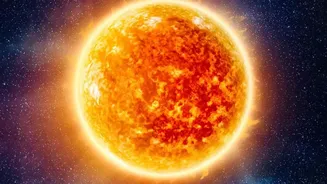
The sun operates on an approximately 11-year cycle, a rhythm that dictates its level of activity. This cycle transitions from a quiet period, known as the solar minimum, to a turbulent peak called the solar maximum, before calming down again. We are currently
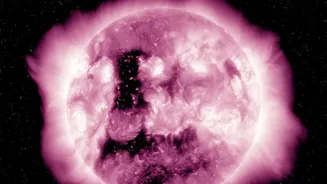
in Solar Cycle 25, which officially began in December 2019. During solar minimum, the sun is placid, with very few sunspots. As the cycle progresses towards maximum, the sun's magnetic field becomes more complex and unstable, leading to a dramatic increase in sunspots, solar flares, and colossal eruptions of solar material. These phenomena are the primary drivers of space weather that affects Earth.
Understanding Solar Maximum
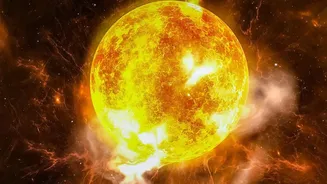
Solar maximum is the period of greatest solar activity during the 11-year cycle. Early predictions for Solar Cycle 25 suggested a peak around July 2025. However, the sun's activity has ramped up much faster than anticipated, leading scientists to revise their forecasts. More recent data indicates the peak actually occurred in late 2024. While the headline points to 2026, scientific consensus now suggests we are in a period of heightened activity that has already peaked but will see strong, lingering effects through 2025 and into 2026 as part of a potential 'double-peak' or extended maximum phase. This phase is marked by a high number of sunspots—dark, magnetically intense regions on the sun's surface that are the launchpads for major solar events.
Journey of a Solar Storm
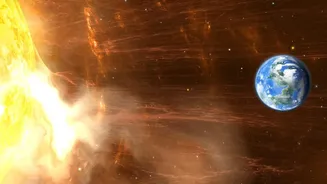
The key players in this cosmic drama are solar flares and Coronal Mass Ejections (CMEs). A solar flare is an intense burst of radiation from the sun's surface. A CME, often associated with a flare, is a much larger event—a massive bubble of plasma and magnetic field that is hurled into space. Not all CMEs affect us, but when one is aimed at Earth, it travels through space carrying billions of tonnes of energised particles. This cloud of solar material journeys for one to three days before it can reach our planet and interact with our protective magnetic shield, the magnetosphere.
The Making of a Geomagnetic Storm
When a powerful CME slams into Earth's magnetosphere, it transfers a massive amount of energy into our planet's magnetic environment. This disturbance causes the magnetic field to fluctuate wildly, creating what is known as a geomagnetic storm. These storms temporarily distort our planet's magnetic shield, allowing charged solar particles to penetrate deeper into the upper atmosphere, particularly near the magnetic poles. The interaction generates powerful electrical currents in both space and on the ground, leading to a host of effects felt here on Earth.
The Beautiful and the Disruptive
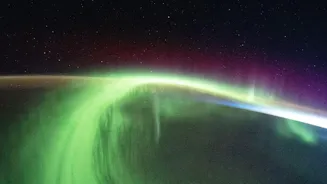
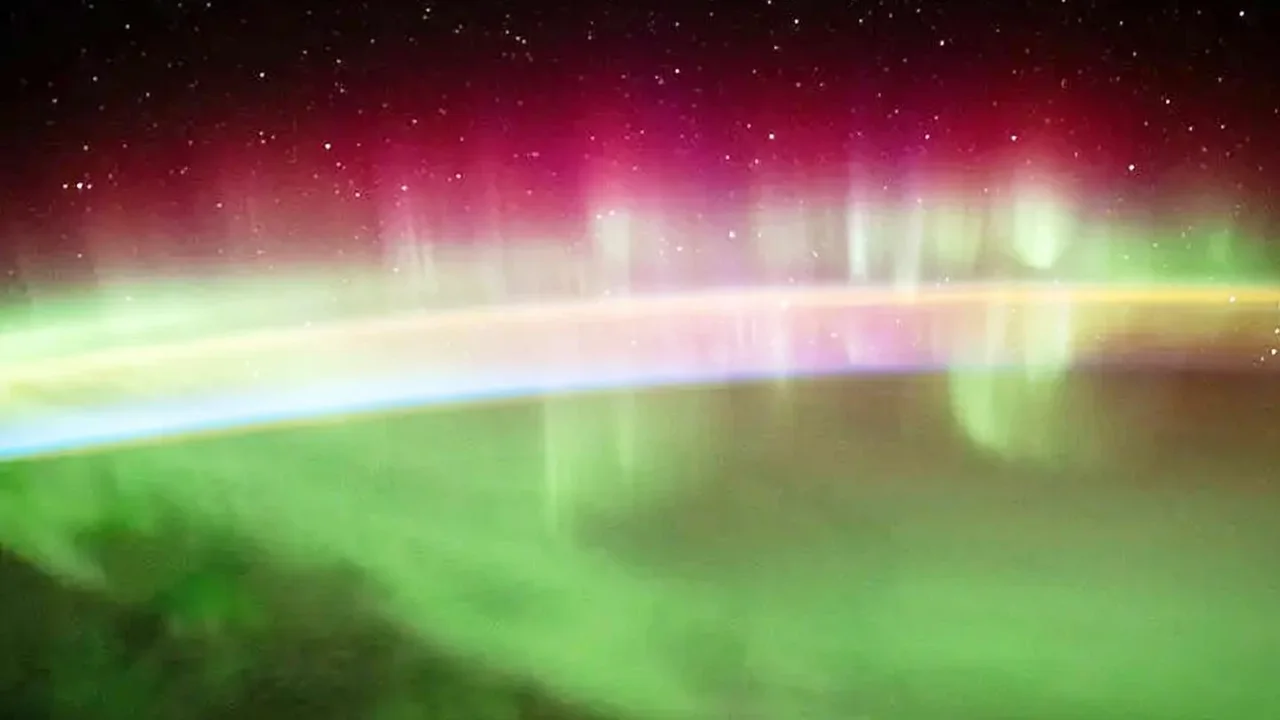
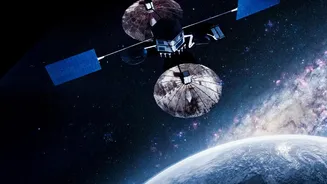
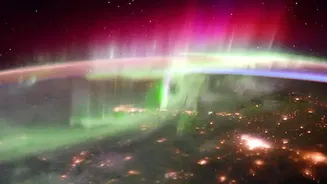
The most beautiful consequence of a geomagnetic storm is the aurora. When the energised particles from the sun collide with oxygen and nitrogen atoms in our upper atmosphere, they excite these atoms, causing them to glow. This creates the spectacular, dancing ribbons of light we know as the aurora borealis (northern lights) and aurora australis (southern lights). During intense storms, these displays can be seen at much lower latitudes than usual. However, geomagnetic storms also pose a significant technological risk. They can induce electrical currents in power grids, potentially leading to widespread blackouts. They can also disrupt satellite operations, affecting GPS navigation, communications, and broadcasting services. The increased atmospheric drag can also alter the orbits of low-orbiting satellites.
Impacts and Outlook for India
While seeing a full-blown aurora from mainland India is highly improbable due to our latitude, very intense storms have historically pushed auroras to lower latitudes, meaning there is a remote possibility of a faint glow being visible from the higher Himalayas. The more practical concern for India is the potential impact on our increasingly sophisticated technological infrastructure. A strong geomagnetic storm could pose a risk to our power grids, satellite networks like the NavIC system, and telecommunication backbones. Scientists at centres like the Center of Excellence in Space Sciences India (CESSI) are actively monitoring the sun to provide advance warnings of such events, helping to mitigate the potential damage from this turbulent period of solar activity.