



An Ancient Art Born of Necessity
The practice of smoking tea is a story of ingenuity, believed to have begun by accident centuries ago. In regions like China's Wuyi Mountains, the legend goes that tea producers, rushed by advancing armies or looming deadlines, needed to dry their harvests
quickly. They turned to the fastest method available: drying the leaves over open fires made from local pine. What should have been a ruined crop turned into a celebrated discovery. The smoke from the fires infused the tea leaves, creating a bold, aromatic flavour that became highly sought after, eventually giving birth to the world-famous Lapsang Souchong. A similar tradition exists in Northeast India, where the Singpho tribe has long prepared a smoked tea called 'Phalap'. Freshly harvested leaves are heated, dried, and then packed into bamboo tubes, which are smoked over a hearth for days to develop a uniquely rich and smoky character.
The Soul of the Himalayas: Botanicals and Smoke
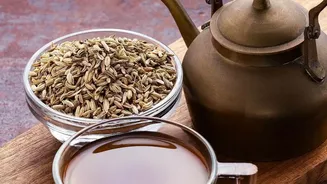
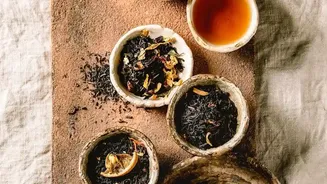
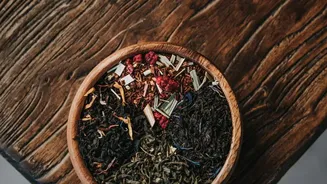
While tea leaves form the base, the spirit of these smoked beverages often comes from the diverse array of botanicals native to the Himalayan region. These are not just random additions; they are ingredients deeply woven into the local culinary and cultural fabric. Artisans may use wild peppers like Sohmarit Khlaw from Meghalaya, which offer a unique mix of heat and citrus, or the intensely aromatic black cardamom (Amomum Subulatum) from Sikkim. In some blends, the bright, zesty notes of Khasi mandarin and Kaji Nemu, an indigenous lemon, are used to cut through the smokiness. Other traditional infusions might feature herbs like wild nettle, chamomile, hibiscus, and even rhododendron flowers, each lending a distinct character reflective of its specific microclimate. The smoke itself is a crucial ingredient, often derived from pine wood, which imparts a resinous, campfire-like aroma.
The Delicate Process of Smoking
Smoking tea is a craft that requires immense precision. The goal is not to overwhelm the leaves but to gently infuse them with aroma. Traditionally, the process involves placing withered and rolled tea leaves in bamboo baskets, which are then hung over smouldering fires. This can be a 'cold smoke', where leaves are processed for hours in a smoke-filled room, or a more intense 'hot smoke' during the final drying phase. The duration and proximity to the fire are carefully controlled to achieve the desired flavour profile. In some methods, like those used by the Singpho and Tangsa tribes, the leaves are pan-roasted to halt enzymatic breakdown before being packed into hollow bamboo stems for smoking and aging. This not only infuses flavour but also helps preserve the tea for long periods.
A Symphony of Flavour in a Cup
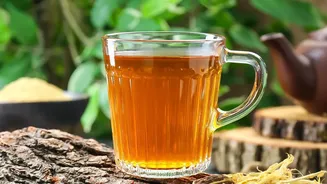
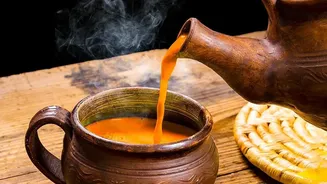
The result of this meticulous process is a tea with a flavour profile unlike any other. While 'smoky' is the dominant characteristic, the taste is far from one-dimensional. A well-made smoked tea delivers an initial bold, campfire aroma that can evolve into notes of pine resin, toasted earthiness, and even a subtle sweetness that balances the intensity. Depending on the botanicals used, you might detect bright citrus notes, the warmth of spices like cardamom, or the delicate floral finish of added flowers. Unlike the sometimes sharp bitterness of other strong teas, a good smoked tea has a surprisingly smooth and velvety texture. The flavour is often described as full-bodied and robust, with a lingering finish that continues to develop long after the first sip, making it a favourite among those who appreciate the complexity of a fine whisky or dark coffee.