




A Brewing Concern Over Plastics
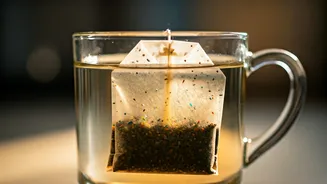
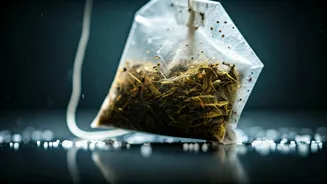
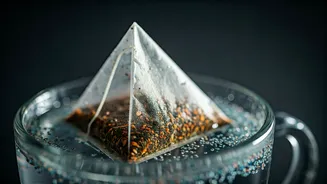
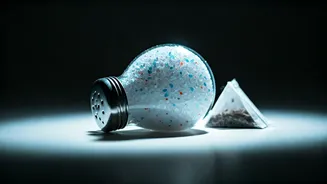
The conversation around microplastics in our daily lives isn't new, but its connection to tea has startled many. The main culprits are not the traditional paper tea bags most of us grew up with, but a newer, often premium variety: the 'silken' pyramid
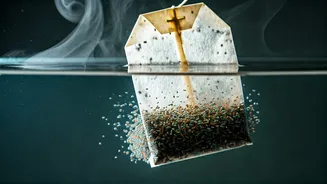
tea bags. While they look elegant and are marketed as giving tea leaves more room to infuse, many are made from plastics like nylon or polyethylene terephthalate (PET). Groundbreaking research from McGill University in Canada brought this issue to the forefront. Scientists found that when these plastic tea bags are steeped in hot water, they can break down, releasing a shocking amount of plastic particles.
The Billion-Particle Question
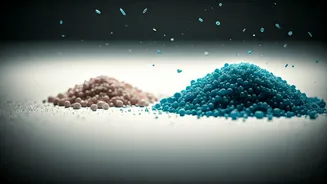
The numbers are staggering. The McGill study, published in the journal Environmental Science & Technology, found that a single plastic tea bag steeped at a brewing temperature of 95°C could release approximately 11.6 billion microplastics and 3.1 billion even smaller nanoplastics into a single cup. To put that into perspective, this is thousands of times higher than the levels previously reported in other foods and beverages, including bottled water. These particles are invisible to the naked eye, shed from the very fabric of the bag as it comes into contact with boiling water. While these bags may be made from 'food-grade' plastic, the materials were not necessarily tested for their stability when submerged in boiling liquid.
Not All Tea Bags Are Created Equal
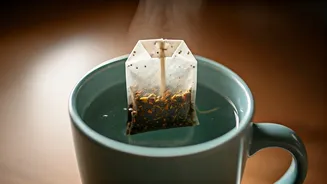
It's crucial to understand that this issue does not apply to all tea bags. The main concern is with those made from plastic mesh. Many traditional, flat tea bags are made primarily of paper or natural cellulose fibres derived from plants like the Abaca. However, even some paper bags use a small amount of polypropylene as a heat sealant to keep the bag from falling apart in hot water. This has led to a push for greater transparency from tea companies. Many brands are now actively marketing their products as "plastic-free" or biodegradable. Some use staples to seal their paper bags, while others have switched to materials like polylactic acid (PLA), a bioplastic derived from corn starch, which is compostable under industrial conditions.
What Does This Mean For Your Health?
This is the question on every tea drinker's mind. Currently, the full, long-term effects of ingesting microplastics on human health are not yet fully understood and are an area of active scientific research. However, studies have raised concerns. Microplastics can contain chemical additives, and they also have the potential to absorb harmful chemicals from their environment, which could then be released in the body. Some research has linked microplastic exposure to issues like inflammation, endocrine disruption, and other negative health effects in animal studies. While there's no need to panic, the findings serve as an early warning and highlight the need for more investigation into the chronic effects on humans.
How to Brew a Plastic-Free Cup
The good news for tea lovers is that avoiding plastics in your brew is relatively simple. The most effective way is to switch to loose-leaf tea. Using loose leaves with a metal or silicone infuser, a French press, or a traditional teapot completely eliminates the tea bag from the equation. This not only avoids plastic but also often results in a more flavourful cup of tea. If you prefer the convenience of bags, look for brands that explicitly state they are plastic-free. Many companies, including several popular in India, now offer staple-sealed paper bags or bags made from unbleached, biodegradable materials. Check the packaging or the company's website for information on what their bags are made of.