





Deconstructing the Concept
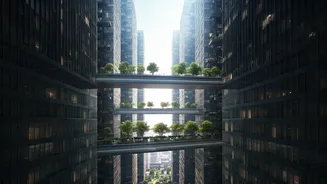
At first glance, the term 'multi-tiered vertical wall bridges' sounds like something out of science fiction. Let's break it down. We're not just talking about a simple skywalk connecting two office buildings. Instead, picture a network of wide, inhabitable
bridges stacked at various levels between multiple skyscrapers. The 'multi-tiered' aspect means these connections exist on several floors, creating horizontal streets in the sky. The 'vertical wall' component suggests they are more than just bridges; they are integrated extensions of the buildings themselves, forming a cohesive, three-dimensional urban grid. This transforms a collection of separate towers into a single, interconnected mega-structure, allowing residents to live, work, and socialise without ever having to descend to the congested ground level.
Creating Vertical Neighbourhoods
The true innovation lies in what these bridges can contain. Forget narrow, windswept corridors. These structures could house parks, jogging tracks, cafes, small retail shops, libraries, and co-working spaces. By creating shared amenities and green spaces dozens of storeys up, they foster a sense of community that is often lost in high-rise living. This approach effectively creates 'vertical neighbourhoods.' A person living in Tower A could walk across a garden bridge on the 30th floor to visit a friend in Tower C or grab a coffee on a different bridge at the 45th floor. It decentralises urban life from the ground floor up, turning the sky into a new plane for public life and interaction. The goal is to create a richer, more convenient, and more socially connected living experience.
Inspiration from Global Innovators
While the full vision is still futuristic, pioneering projects around the world have already demonstrated the power of this thinking. The 'Linked Hybrid' complex in Beijing, designed by Steven Holl Architects, features a series of elevated, enclosed bridges that connect eight towers. These 'sky-loops' contain swimming pools, fitness centres, and cafes, creating a vibrant public space for residents. Similarly, The Interlace in Singapore, designed by OMA, is a 'vertical village' of apartment blocks stacked hexagonally, creating a network of shared courtyards and rooftop gardens that encourage communal living. These examples prove that linking vertical structures horizontally is not just feasible but can dramatically enhance the quality of urban life, providing a blueprint for future developments.
A Solution for Indian Megacities?
The potential for this concept in India's hyper-dense cities like Mumbai, Bengaluru, and Delhi is immense. In cities where land is prohibitively expensive and every square foot is precious, building 'across' offers a new frontier. Such structures could help alleviate pressure on ground-level infrastructure. Imagine if a significant portion of pedestrian traffic and social activity moved upward. This could free up congested streets below, allowing for the creation of more green parks, wider pedestrian zones, and improved public transport corridors. For residents of towering apartment complexes, it would mean access to amenities and green spaces that are currently a rare luxury, fundamentally improving their well-being and daily convenience.
The Engineering and Policy Hurdles
Of course, implementing such a vision is not without significant challenges. The engineering complexities are substantial, requiring advanced solutions to account for building sway, wind loads, and seismic activity. Security within these elevated public spaces would need careful planning to ensure they remain safe and accessible. Furthermore, current urban planning regulations and zoning laws are not designed for such three-dimensional cities. A new policy framework would be required to govern air rights, public access, and maintenance responsibilities for these shared vertical spaces. Overcoming these technical and bureaucratic hurdles will require immense political will, financial investment, and a collaborative effort between developers, architects, and city planners.