







Beyond the Basic Poncho
Remember the rain jacket of yesterday? It was likely a noisy, plastic-feeling shell pulled from a backpack only in emergencies, or a bulky, unflattering coat that screamed function over form. For decades, men’s rainwear was an afterthought, a purely utilitarian
garment designed with a single purpose: to repel water. Style, comfort, and breathability were distant concerns. This often meant enduring a 'boil in the bag' experience, where the jacket kept rain out but trapped sweat in. The choice was stark: arrive at your destination soaked from rain or soaked from perspiration. That era, thankfully, is behind us. A quiet but significant evolution has transformed the market, turning the humble raincoat into a legitimate style statement.
The Gorpcore Influence
A major catalyst for this upgrade is the rise of “gorpcore,” a trend named after the hiker’s snack “Good Ol' Raisins and Peanuts.” [5] This aesthetic sees high-performance outdoor gear, traditionally worn on mountains and trails, repurposed for urban life. [5, 9] Brands like Arc’teryx, The North Face, and Patagonia have become staples in city environments, worn by fashion-forward individuals, not just seasoned mountaineers. [5, 6] This cultural shift has normalised the sight of technical fabrics and functional details in everyday settings. [13] It pushed brands to consider not just how a jacket performs in a downpour, but how it looks with a pair of jeans on the way to a cafe. The result is a fusion of outdoor functionality and urban style sensibility. [9, 19]
Smarter, Greener Materials
The technological advancements in fabrics are at the heart of this rainwear renaissance. While Gore-Tex remains a gold standard for its waterproof and breathable membrane, a host of innovative competitors and proprietary technologies have emerged. [8, 12] Brands are now using multi-layer fabrics that are lighter, softer, and quieter than their predecessors. [1, 7] Look for terms like 2.5-layer or 3-layer construction, which offer varying degrees of durability and breathability. [3, 7] Moreover, there’s a significant push towards sustainability. Many leading brands now use recycled materials and are moving away from PFC-based durable water repellent (DWR) coatings, which are harmful to the environment. [1, 10, 11] Companies are even developing bio-based waterproof films, proving that high performance doesn't have to come at the planet's expense. [21]
From Trail to Trench Coat
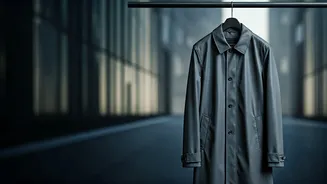
This fashion-forward shift isn't just about the materials; it's also about the silhouettes. The upgrade in rainwear means you no longer have to look like you're about to summit a mountain just to stay dry on your commute. Classic menswear staples are being reimagined with technical fabrics. You can now find sophisticated trench coats and macs, once made from cotton gabardine, crafted from fully waterproof, seam-sealed materials. [8, 12] Brands like Rains from Denmark have built a following with minimalist, stylish parkas and jackets that blend seamlessly into a modern wardrobe. [6, 15] This versatility is key—a modern rain jacket should be stylish enough for the office, comfortable enough for a weekend walk, and functional enough for an unexpected storm. [4]