




A Crisis Unfolding in the Southern Ocean
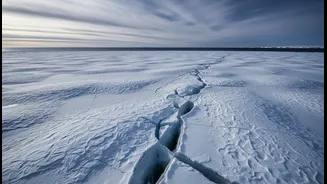
For decades, Antarctic sea ice behaved differently from its Arctic counterpart, even showing periods of expansion. That stability abruptly ended around 2016. Since then, and especially since the record-shattering low of 2023, the continent's sea ice has
failed to recover. At its peak loss, an area of floating ice larger than Western Europe had vanished, a deviation so extreme it shocked the scientific community. This isn't just a minor dip; researchers believe it may be a fundamental 'regime shift'—a flip to a new, persistent state of diminished ice. This is deeply concerning because Antarctic sea ice is a critical regulator of the global climate system, and its sudden absence signals that a major shift is underway.
The Science Behind the Disappearance
Scientists are now piecing together the complex reasons for this dramatic decline. It appears to be a 'triple whammy' of interacting forces. First, decades of greenhouse gas emissions strengthened the winds circling Antarctica. These powerful winds began to churn the ocean, pulling warmer, saltier water from the deep ocean up to the surface. This warmer water began melting the ice from below. Once this process started, a dangerous feedback loop kicked in. With less bright, white ice to reflect sunlight back into space, the darker ocean water absorbed more heat, further warming the ocean and making it even harder for new ice to form. This cycle of warming and melting has become a self-reinforcing process, locking the region into its current low-ice state.
From Antarctica to India's Coastlines
While Antarctica may seem a world away, its problems do not stay at the South Pole. The loss of sea ice has direct and indirect consequences for India. A crucial distinction is between sea ice and land ice. While the melting of floating sea ice does not directly raise ocean levels, the process is linked to the melting of land-based ice sheets and glaciers, which does. The same warm ocean waters eating away at sea ice are also flowing beneath massive glaciers, like the Thwaites 'Doomsday' Glacier, accelerating their slide into the ocean. The complete collapse of the West Antarctic Ice Sheet, which these glaciers hold back, would raise global sea levels by several metres, which would be catastrophic for India's densely populated coastal cities like Mumbai, Kolkata, and Chennai. The loss of sea ice also removes a protective barrier that shields land-based ice shelves from damaging ocean waves, further destabilising them.
The Global Weather Connection
The changes in Antarctica can also disrupt global weather patterns, including those that govern the Indian monsoon. The Southern Ocean is a key engine of global ocean circulation, moving heat around the planet. Altering its temperature and salinity can have ripple effects worldwide. Research has established teleconnections, or long-distance linkages, between Antarctic sea ice and the strength of the Indian summer monsoon. Changes in ice cover can influence major pressure systems, like the Mascarene High, which plays a role in driving the monsoon winds towards India. While the exact nature of this relationship is complex and still under intense study, the rapid, unprecedented changes happening now introduce a new level of uncertainty into the weather systems that millions of Indian farmers depend on for their livelihoods. Some research also links declining sea ice to an increase in extreme weather events globally.