







The Misunderstood Foundation
For decades, Indian conservation policy has heavily focused on forests. Open landscapes with few trees were often misclassified as 'wastelands' and targeted for development or afforestation projects, sometimes with non-native species. However, these vast
grasslands are ancient, complex ecosystems in their own right. From the 'shola-grassland' mosaics of the Western Ghats to the vast floodplain 'chaurs' in the Terai region, these habitats are vital. They are crucial for recharging groundwater and their deep root systems act as massive carbon sinks, storing carbon more securely than forests in some cases because it is held underground, safe from fires. These ecosystems are not degraded forests; they are the natural and necessary foundation for a specific kind of biodiversity.
Building a Strong Prey Base
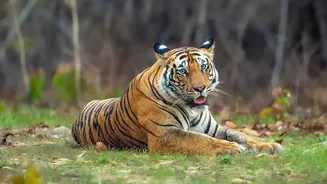
A thriving tiger population requires one key ingredient: a dense and healthy population of prey animals. Apex predators cannot survive in a vacuum. A single tiger needs to eat around 50 large ungulates, like deer or wild pigs, every year. To sustain this without depleting the prey population, a tiger's territory must support a herd of roughly 500 such animals. This is where native grasslands excel. Unlike dense forests or land overrun with invasive plants, healthy grasslands provide abundant, high-quality forage for herbivores such as chital (spotted deer), sambar, nilgai (blue bull), and wild pigs. This nutritional boost leads to healthier animals, higher breeding rates, and ultimately, a much higher density of the prey animals that tigers depend on. In short, better grass means more grazers, and more grazers mean more food for tigers.
The Restoration Playbook
Restoring these vital grasslands is a meticulous process. A major challenge is the removal of invasive plant species like Lantana camara, Prosopis juliflora, and Mikania micrantha, which outcompete native grasses and are often unpalatable to local wildlife. In reserves like Sariska and Similipal, forest departments have established nurseries to cultivate and harvest the seeds of local grass varieties. These native seeds are then sown across barren patches of land. Other techniques include the managed, controlled burning of grasslands, which helps clear out woody encroachment and encourages fresh, nutritious grass growth. It also involves protecting the areas from livestock overgrazing to allow the native ecosystem to recover. The goal is to rebuild the habitat from the ground up, creating a resilient and self-sustaining environment.
Success Stories from the Field
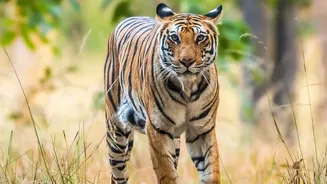
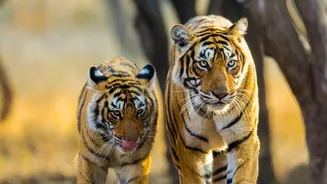
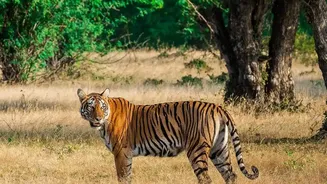
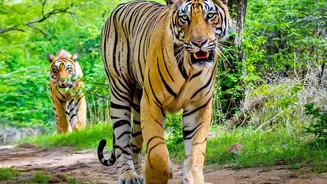
The results of this strategy are proving to be a game-changer for tiger conservation. In Panna Tiger Reserve, which had lost all its tigers by 2009, a successful tiger reintroduction program was built on the back of habitat restoration, including improving the prey base. Today, the reserve has a thriving tiger population. In Bihar's Valmiki Tiger Reserve, the closure of mining operations allowed riverine grasslands to reclaim the land. As the grasses returned, so did the herbivores, and subsequently, the tigers. The reserve's tiger occupancy expanded significantly, and it is now able to provide tigers for translocation to other reserves, such as Buxa in West Bengal. Similarly, Sariska Tiger Reserve, which also suffered a local extinction, has seen its reintroduced tiger population grow, supported by efforts to develop herbivore-friendly grasslands over hundreds of hectares.