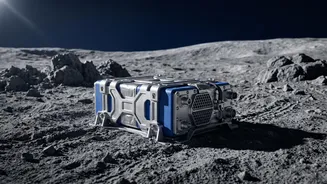



The Unforgiving Lunar Night
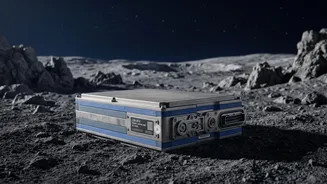
Surviving on the Moon is a tale of two extremes. During the day, temperatures can soar well above the boiling point of water. But during the lunar night, which lasts for 14 Earth days, the surface plunges into an unfathomable cold, reaching temperatures as low
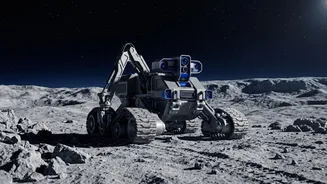
as minus 173 degrees Celsius. For rovers, landers, and future habitats, this is a catastrophic problem. Conventional lithium-ion batteries, like those in our phones and electric cars, cannot function in such deep-freeze conditions. Their internal liquid electrolytes freeze solid, stopping the flow of charge and causing permanent damage. Until now, the only solution has been to equip lunar hardware with bulky, energy-intensive heaters to keep the batteries warm. This parasitic power drain consumes a huge portion of a mission's energy budget, limiting the amount of science that can be done and the duration of the mission itself.
Introducing SPEARS Technology
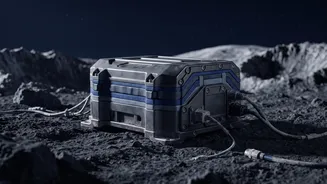
Enter the SPEARS project, a forward-thinking initiative funded by NASA. SPEARS stands for 'Solid-state Power for Extreme and Rewarming Surviving'. The project, led by researchers at the University of California San Diego, is focused on developing a completely new class of battery designed to conquer the lunar night. Unlike conventional batteries, these are solid-state, meaning they don't contain the liquid electrolytes that freeze and cause failure. Instead, they use solid materials to transport ions. This fundamental design change is the first step toward creating a power source that is inherently more resilient to extreme temperatures. NASA is investing in this research because it represents a potential paradigm shift in how we power long-term missions, moving from a brute-force heating approach to one of elegant, built-in resilience.
How Do They 'Restart'?
The true innovation of the SPEARS battery is its ability to not just survive the cold, but to gracefully shut down and then restart upon rewarming. Instead of fighting the cold with heaters, these batteries are designed to embrace it. As the temperatures drop, the battery's functions would simply pause. When the sun rises 14 days later and the surface warms, the battery is engineered to seamlessly come back to life and begin recharging, with no degradation in performance. Researchers are experimenting with specialized materials that can withstand the stress of extreme temperature cycles. One promising approach involves using a sulfur-based cathode, which is not only energy-dense but also less prone to the damage that cripples other battery chemistries in the cold. This 'hibernation' capability is the game-changer, as it means hardware could power down for the lunar night and reboot fully functional, ready for the next two weeks of daylight operations.
A Game-Changer for Artemis
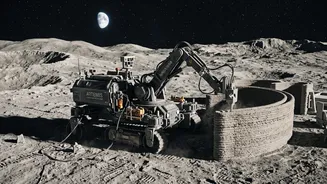
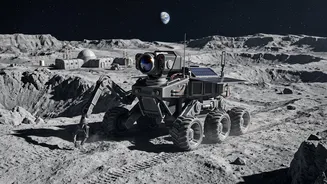
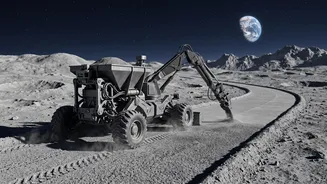
For NASA's Artemis program, which aims to establish a sustainable human presence on the Moon, a technology like SPEARS is not just an upgrade—it's an enabler. By eliminating the need for heavy heating systems, landers and rovers can be lighter, meaning more room for scientific instruments or other critical cargo. The energy saved could be redirected to power more experiments, extend exploration range, and support the infrastructure needed for a permanent lunar base. This technology would allow for continuous operation of scientific stations, enabling them to collect data across the full day-night cycle. It unlocks the ability to explore the lunar poles, where sunlight is scarce but water ice may be abundant. In short, these batteries could fundamentally alter the economics and logistics of lunar exploration, making longer, more ambitious missions feasible.
Potential Beyond the Moon
While the primary goal is to power the next generation of lunar explorers, the implications of this research could be felt much closer to home. Imagine batteries in electric vehicles that don't lose a significant portion of their range in the dead of winter. Think of power grids in remote, cold-climate regions that can store energy more reliably. The technology could also be deployed in deep-sea autonomous vehicles, which face similar challenges of extreme cold and the need for long-duration power without intervention. Even consumer electronics could benefit from batteries that are more robust and resilient to temperature fluctuations. The extreme environment of the Moon is serving as the ultimate testing ground for a technology that could solve some of Earth's most challenging energy storage problems.