


1. Chandrayaan-3: The South Pole Pioneer
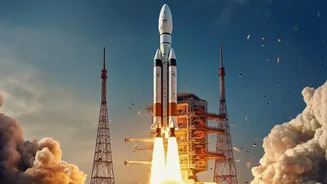
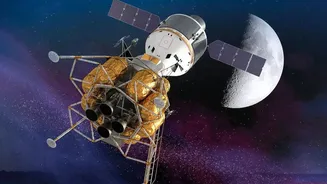
In August 2023, India made history by becoming the first nation to successfully soft-land a spacecraft near the Moon's south pole. The Chandrayaan-3 mission wasn't just a technical triumph; it was a geopolitical statement. Landing in a treacherous but
resource-rich region that other space powers were targeting, ISRO proved it could execute high-stakes, high-reward missions. This success, watched by millions globally, cemented India's reputation as a top-tier spacefaring nation and a leader in the new lunar race, achieving what others had not.
2. Mangalyaan: The Frugal Trailblazer
The Mars Orbiter Mission (MOM), or Mangalyaan, captured the world's imagination in 2014. ISRO became only the fourth space agency to reach Mars and, remarkably, the first to succeed on its maiden attempt. But the real headline was its stunning cost-effectiveness. With a price tag of around $74 million, the mission cost less than the Hollywood movie 'Gravity' and was a fraction of what other nations spent on similar missions. Mangalyaan was primarily a technology demonstrator, proving that ISRO could conduct complex interplanetary missions with extreme frugality, a model that has become its global calling card.
3. Gaganyaan: The Leap to Human Spaceflight
Sending humans to space is the ultimate demonstration of a nation's technological prowess. The Gaganyaan mission, India's ambitious human spaceflight program, aims to do just that. The goal is to send a crew of three astronauts to a Low Earth Orbit of 400 km for a three-day mission and bring them back safely. Upon success, India will join the elite club of nations—the US, Russia, and China—capable of independent human spaceflight. The program is not just about national pride; it’s about mastering critical technologies for future ambitions like building an Indian space station.
4. PSLV: The Commercial Workhorse
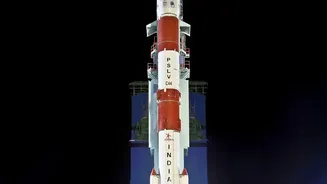
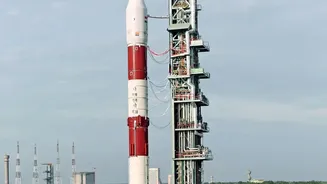
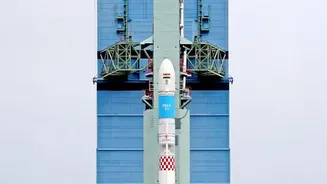
Sometimes, ambition is best measured by how much others trust you. The Polar Satellite Launch Vehicle (PSLV) is the reliable workhorse that turned India into a major player in the global satellite launch market. Since 1999, this versatile rocket has launched hundreds of foreign satellites for dozens of countries, including the USA, UK, and Canada. Its combination of reliability and affordability has made it a preferred choice for commercial operators worldwide. In 2017, a single PSLV mission deployed a record 104 satellites, showcasing its capability and cementing ISRO’s commercial clout on the world stage.
5. NISAR: The Landmark NASA Partnership
Nothing says 'global player' like a major collaboration with NASA. The NASA-ISRO Synthetic Aperture Radar (NISAR) mission is a flagship partnership between the two space agencies. It's one of the most expensive Earth-imaging satellites ever built, designed to monitor changes in Earth's land and ice surfaces in unprecedented detail. ISRO is not a junior partner here; it provided the S-band radar, the spacecraft bus, and the launch vehicle, while NASA provided the L-band radar. This mission demonstrates ISRO's evolution into a trusted and equal collaborator on cutting-edge scientific projects.
6. Aditya-L1: A Place in the Sun
After conquering the Moon and Mars, ISRO set its sights on the Sun. Aditya-L1 is India's first dedicated solar observatory, placed at a unique vantage point 1.5 million km from Earth. This strategic location at the Sun-Earth Lagrange Point 1 allows for an uninterrupted view of the Sun. The mission aims to study the solar corona, solar wind, and the drivers of space weather, contributing crucial data to a global scientific effort. Launching such a complex observatory places India in a select group of nations capable of advanced solar research, showcasing its scientific ambitions.
7. Chandrayaan-1: The Harbinger of Ambition
India's first mission to the Moon in 2008 was a sign of things to come. While an Indian mission, its approach was inherently global. Chandrayaan-1 carried instruments from multiple international partners, including NASA and the European Space Agency. It was NASA's instrument on board, the Moon Mineralogy Mapper, that provided the definitive confirmation of water molecules on the lunar surface, a landmark discovery. This mission demonstrated ISRO's willingness to host international payloads and contribute to global scientific knowledge, setting the stage for the more ambitious collaborations and explorations that would follow.