







Your Body's Built-In Air Conditioner
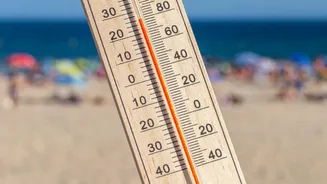
Your body is remarkably good at maintaining a stable core temperature, typically around 37°C. When you get hot, whether from the sun or physical activity, your primary cooling mechanism kicks in: sweating. As sweat is released onto your skin, it evaporates.
This process of evaporation is what actually cools you down, as it transfers heat away from your body and into the air. In dry conditions, this system is incredibly efficient. Sweat evaporates quickly, providing consistent and effective cooling.
Why Humidity Is the Real Enemy
The cooling process relies entirely on sweat being able to evaporate. During the monsoon, the air is not just rainy; it is saturated with moisture, meaning relative humidity is very high. When the air already holds a lot of water vapour, there is little room for the sweat on your skin to go. Evaporation slows down dramatically or stops altogether. As a result, sweat simply drips off your body without providing its cooling benefit. Your body continues to produce more sweat in a futile attempt to cool down, leading to that sticky, uncomfortable feeling and putting you at risk.
The Deceptive Danger of Humid Heat
This is why a 30°C day during the monsoon can feel more oppressive and be more dangerous than a 40°C day in a dry climate. The 'feels like' temperature, or heat index, combines air temperature and humidity to give a better sense of the stress on your body. Because your cooling system is compromised, your core body temperature can rise to dangerous levels without you realising the severity of the threat. The body tries to compensate by working the heart harder to pump more blood to the skin, which puts significant strain on the cardiovascular system. This can accelerate dehydration and quickly escalate to more serious conditions.
Know the Warning Signs of Overheating
It's crucial to recognise the early symptoms of heat-related illness, which can progress from mild to life-threatening. The first stage is often heat exhaustion. Symptoms include heavy sweating, cool and clammy skin, a weak but rapid pulse, headache, dizziness, nausea, and muscle cramps. If these signs are ignored, heat exhaustion can advance to heatstroke, which is a medical emergency. The key signs of heatstroke are a very high body temperature (above 103°F or 39.4°C), hot and red skin that may be dry or damp, a rapid and strong pulse, confusion, and potential loss of consciousness. A person with heatstroke may stop sweating, which is a critical sign their body's temperature regulation has failed.
How to Stay Safe During the Monsoon
Protecting yourself from humid heat requires a different approach than just seeking shade. Stay hydrated by drinking plenty of water throughout the day, even if you don't feel thirsty. If you're sweating a lot, supplement with drinks that contain electrolytes. Wear lightweight, loose-fitting, and light-coloured clothing made from breathable fabrics like cotton to help any possible evaporation. Avoid strenuous activity during the hottest and most humid parts of the day, typically between 11 a.m. and 4 p.m. If possible, spend time in air-conditioned spaces to give your body a break. Taking cool showers or baths can also help lower your body temperature.