
The Problem with the Calendar
Many new plant parents believe consistency is key, so they designate a specific day—say, every Sunday—as watering day. It seems logical, but it's a common mistake that can lead to problems like root rot or chronic underwatering. Plants are living things
whose needs change based on their environment. A fixed schedule ignores crucial variables like the season, the amount of light in your home, indoor humidity, and even the type of pot the plant is in. A plant that needs water every seven days in a bright, hot summer might only need it every 14 or 21 days during a cooler, darker winter. Sticking to the calendar means you’re either drowning the roots in winter or parching them in summer, both of which stress the plant.
Become a Plant Detective
Instead of relying on a schedule, the goal is to water only when your plant actually needs it. This requires becoming a bit of a detective and learning to read the signals from your plant and its soil. The most reliable way to do this is by checking the soil moisture directly. There are several easy, tool-free methods. The classic finger test is popular for a reason: simply insert your finger about one to two inches into the soil. If it feels dry at that depth, it’s time to water. If you feel any dampness, you should wait a few more days and check again. Another method is using a simple wooden chopstick or skewer. Push it into the soil and pull it out. If it comes out clean and dry, the soil is dry; if it has moist soil clinging to it, the plant has enough water for now. For smaller pots, you can even learn to judge by weight, as a well-watered pot is significantly heavier than a dry one.
Reading the Leaves: Signs of Distress
Your plant's leaves are a great indicator of its health. Unfortunately, the signs of overwatering and underwatering can sometimes look confusingly similar, which is why checking the soil first is so important. Both conditions can cause wilting or drooping leaves. However, with underwatering, the leaves will often feel dry and crispy, whereas with overwatering, they might feel soft and limp. Yellowing leaves are another common sign. If you see older, lower leaves turning yellow and dropping, it could be a sign of overwatering. Brown, crispy leaf edges often point to underwatering. If you see soft, mushy stems or a foul smell coming from the soil, you’re almost certainly dealing with overwatering and potential root rot, the most common killer of houseplants.
The Art of Watering Properly
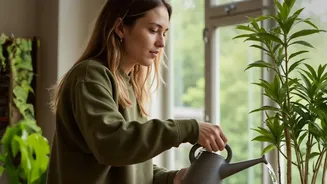
Once you've determined your plant is thirsty, how you water also matters. It's better to water deeply and thoroughly rather than giving frequent, shallow sips. When you water, do so until water freely drains from the bottom of the pot. This ensures the entire root ball is hydrated and encourages roots to grow deeper and stronger. After a thorough watering, be sure to empty any excess water from the saucer, as letting a plant sit in a puddle can suffocate the roots and lead to rot. Deep, infrequent watering creates more resilient plants that are better able to withstand periods of dryness. In contrast, frequent, light watering keeps the roots clustered near the surface, making the plant more vulnerable.
The Benefits of Listening
Switching from a calendar-based routine to a moisture-based one might feel like more work initially, but it quickly becomes an intuitive habit. You'll not only have healthier, more vibrant plants, but you'll also conserve water by only using it when necessary. More importantly, this mindful approach helps you develop a stronger connection with your plants. You'll start to notice subtle changes and understand their needs on a deeper level. This skill is far more valuable than any rigid schedule and is the true secret to cultivating a thriving indoor garden. You’ll save plants from the stress of being over or under-watered, prevent common diseases, and become a more confident and successful plant parent in the process.