





A Terrifying Plunge Over the Desert
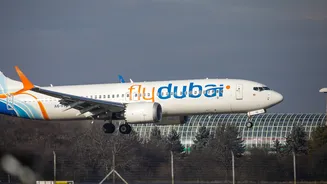
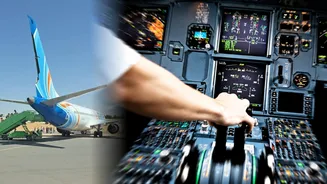
On September 30, 2026, passengers aboard Flydubai flight FZ1073 from Dubai to Tel Aviv experienced every flyer's worst nightmare. About two hours into the flight, the Boeing 737 MAX entered a terrifyingly steep dive, dropping nearly 17,000 feet in under
a minute. On the flight deck, a violent altercation had broken out. According to Israeli officials and passenger accounts, the co-pilot allegedly attacked the captain and was attempting to crash the aircraft. As the plane behaved erratically, the crew sent out emergency signals, including one for unlawful interference, prompting Israeli forces to scramble fighter jets. The flight’s Indian captain, Smit Machchhar, though seriously injured in the attack, managed to unlock the reinforced cockpit door—an act of incredible presence of mind that would prove decisive.
The Human Backup System
What happened next was not the result of an automated system or a pre-programmed emergency protocol, but of sheer chance and human expertise. Onboard the flight, traveling as passengers, were two other Flydubai pilots. As chaos unfolded and with the original flight crew incapacitated, these off-duty pilots entered the cockpit, took control of the aircraft, and stabilized its flight path. Aided by other crew and passengers who rushed forward to restrain the attacker, they averted a catastrophe. These pilots, commonly referred to as 'deadheading' as they were repositioning for a future flight, became the ultimate backup system. They manually flew the damaged plane and executed a safe emergency landing in Tabuk, Saudi Arabia, saving the lives of all 174 people on board.
Redundancy Beyond Wires and Hydraulics
In aviation, redundancy is a core principle. Critical systems like hydraulics, electronics, and navigation have multiple backups to ensure that a single failure doesn't lead to disaster. The industry learned this lesson from past tragedies, such as the 1989 United Airlines Flight 232, where a catastrophic engine failure disabled all hydraulic systems, forcing pilots to steer using only engine thrust. That incident led to redesigned systems to prevent such a complete loss of control. The Flydubai incident, however, highlights a different kind of redundancy: the human element. While a malicious pilot is one of the most difficult risks to mitigate, the presence of other trained professionals on the same flight provided an unplanned but highly effective safeguard. It underscores that the safety net in aviation extends beyond the machinery and into the training and preparedness of its entire workforce.
Training for the Unthinkable
Pilots undergo thousands of hours of rigorous training, much of it focused on handling unexpected events. This includes Upset Prevention and Recovery Training (UPRT), which prepares them to handle loss of control scenarios through intense simulator and in-flight exercises. The goal is to develop the skills and mental fortitude to recover from complex, high-stress situations. While this training is typically geared toward technical malfunctions or environmental hazards like weather, its principles apply to any crisis. The off-duty pilots on flight FZ1073 were able to step in precisely because their training had prepared them to assess a chaotic situation, take manual control, and fly the aircraft under extreme pressure. Their actions were a testament to how deeply ingrained this knowledge becomes, allowing pilots to act decisively even when faced with a scenario far beyond what any simulator could have programmed.