



The Balcony Watering Dilemma
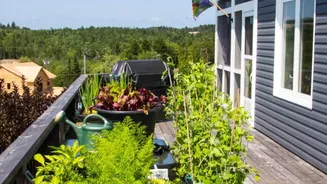
Every container gardener knows the feeling. Is the soil dry an inch down but soggy at the bottom? Are the drooping leaves a sign of thirst or a cry for help from waterlogged roots? Balcony and rooftop pots dry out much faster than garden beds due to sun
and wind exposure, but their limited volume also makes them incredibly susceptible to overwatering. This delicate balance turns a simple task into a source of daily anxiety. For years, the go-to solution has been the classic moisture meter—a simple device with two metal prongs. These tools, known as resistive sensors, work by measuring the electrical resistance between the probes. Wet soil conducts electricity more easily than dry soil. While helpful, they have limitations, often providing a basic wet-or-dry reading that doesn't capture the full picture of soil health.
Beyond a Simple Wet-or-Dry Reading
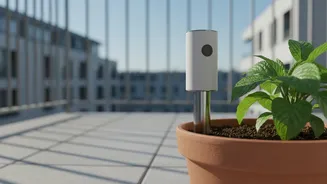
Enter the next generation of soil sensors. While the headline mentions 'microbial' probes, the technology is less about measuring microbes directly and more about measuring the conditions that allow them to thrive. Research shows that some advanced sensors, known as Soil Microbial Fuel Cells (SMFCs), can use bacteria to generate a weak electrical signal that corresponds to moisture levels. However, for home gardeners, the more accessible technology is the capacitive soil moisture sensor. Unlike older resistive models, these sensors don’t pass a current directly through the soil, making them far less prone to corrosion and providing a longer lifespan. They measure the soil's ability to store an electrical charge, which is directly related to its water content, giving a more accurate and stable reading.
What 'Microbial Health' Really Means for Soil
The term 'microbial' in this context points to a more holistic view of soil. Healthy soil is a living ecosystem teeming with beneficial bacteria and fungi. These microbes are essential for breaking down organic matter, making nutrients available to plant roots, and creating good soil structure. This microbial life flourishes only when conditions are right—specifically, when there is an optimal balance of moisture and air. Too dry, and the microbes go dormant; too wet, and the soil becomes anaerobic, killing off the beneficial organisms and promoting root rot. Therefore, a sensor that accurately measures volumetric water content is, by extension, helping you maintain the perfect environment for a thriving microbial community. Some advanced agricultural probes even measure soil temperature and electrical conductivity (a proxy for salinity), giving a comprehensive picture of the environment your plant's roots are living in.
The Smart Solution for Container Gardens
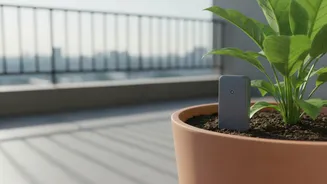
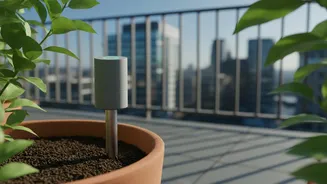
For a balcony garden, this level of precision is a game-changer. Capacitive sensors provide a more nuanced understanding of the moisture gradient in a pot. By placing a probe in the plant's active root zone—typically a few inches deep for most container plants—you get real-time data on the conditions that matter most. This helps you avoid the common pitfall of a dry surface hiding a waterlogged base. These smarter probes can prevent over- and under-watering, leading to stronger root systems, lusher foliage, and more resilient plants. By maintaining consistent moisture, you're not just keeping the plant alive; you're fostering the unseen microbial allies that contribute to its long-term health and vitality. This leads to more efficient water use—a bonus for both the environment and your utility bill.