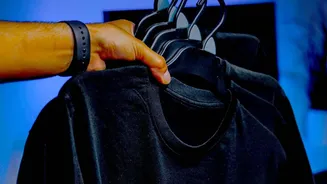






Not long ago, a hoodie with a tech company logo was a status symbol. Now, for employees at some of the world's most powerful AI firms, it's becoming a risk. A new, discreet trend is emerging, driven by fears of everything from public hostility to espionage.
From Badge of Honour to Target
In the bustling tech hubs of Silicon Valley and beyond, company 'swag' has long been more than just free clothing; it’s a public declaration of identity and success. But for employees at the forefront of the artificial intelligence boom, that visibility is now being discouraged. Recent reports indicate that high-profile companies, including OpenAI and Anthropic, are advising their staff to avoid wearing company-branded merchandise or displaying logos in public. This marks a significant cultural shift from the days when a Google or Meta t-shirt was a badge of honour. Instead of proudly displaying their affiliation, these AI pioneers are being told to blend in, swapping conspicuous logos for a more anonymous presence. This isn't about a new minimalist fashion trend; it's a direct response to a complex and often tense environment surrounding the AI industry. The guidance ranges from verbal warnings to formal security training sessions aimed at reducing employees' public profiles.
Safety, Spies, and Public Scrutiny
The primary driver behind this move is employee safety. As AI becomes more powerful and integrated into society, public anxiety has grown alongside it. This has unfortunately translated into real-world hostility. There have been protests outside AI company offices and, in more extreme cases, direct attacks targeting executives like OpenAI's CEO Sam Altman. An employee wearing a company logo becomes an easily identifiable target for individuals who may harbour resentment over job displacement fears or ethical concerns about AI's development. Beyond physical threats, there is a growing concern about corporate espionage. Reports detail security briefings where employees are warned about strangers approaching them in public settings, from playgrounds to cafes, in attempts to glean confidential information. These approaches can range from casual conversation to more sophisticated tactics involving offers of money, friendship, or even romantic interest, turning a simple coffee run into a potential security risk.
The Social Burden of Working in AI
Even when not facing overt threats, employees at top AI firms report a significant social burden. Being a walking billboard for a company at the center of global debate invites constant and often unwanted attention. An investor in both OpenAI and Anthropic noted that 'everyone wants to find out about developments and information at the cutting edge of technology'. This can make normal social interactions difficult. Employees find themselves fielding unsolicited business pitches, defending their company's ethics at social gatherings, or struggling to determine if new acquaintances are interested in them personally or in their employer. The father of one AI worker described the difficulty in his son forming genuine connections, noting that people often focus on the company and perceived wealth rather than the individual's character. Hiding the logo is a way to reclaim a degree of personal privacy and navigate the world without the constant weight of their professional identity.
A New Era for Tech Culture
This trend of corporate discretion stands in stark contrast to the tech culture of the last two decades. The hoodies, backpacks, and stickers were part of a recruitment and branding strategy that projected an image of a cool, exclusive, and world-changing club. It fostered a sense of belonging and was a powerful enough marketing tool. The move by AI firms to go low profile suggests a new phase for the tech industry. It reflects a world where tech influence is no longer just celebrated but is also feared and contested. While companies like Anthropic and OpenAI are at the extreme end due to the transformative nature of their work it signals a broader maturation. The industry is grappling with its immense power and the societal backlash that comes with it. The disappearance of these logos from public view is a telling sign that the era of uncritical tech optimism may be over replaced by a more cautious and defensive posture.