




The Official Selection Process
On paper, the process for choosing the world's top diplomat is straightforward. Article 97 of the UN Charter states that the Secretary-General “shall be appointed by the General Assembly upon the recommendation of the Security Council.” In practice, this
means the 15-member Security Council first selects a single candidate to recommend. That name is then passed to the 193-member General Assembly for a final vote of approval, which is usually a formality. Since 2016, the process has become more transparent, with candidates nominated by member states, submitting vision statements, and participating in public dialogues with the General Assembly. This has shed some light on what was once a completely opaque affair.
The Decisive Power of the P5
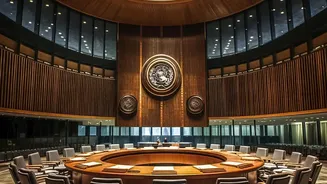
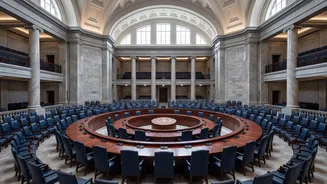
The real power, however, lies not with the 193 members of the General Assembly but with the five permanent members of the Security Council (P5): China, France, Russia, the United Kingdom, and the United States. Any of these five nations can veto a candidate, effectively ending their campaign. This means a successful candidate must be, at a minimum, acceptable to all five global powers. The selection process involves multiple rounds of secret 'straw polls' within the Security Council, where members vote to 'encourage' or 'discourage' candidates. In later rounds, the ballots are colour-coded to distinguish votes from permanent and non-permanent members, revealing whether a candidate faces a potential veto. As a result, the race is often less about finding the most qualified person and more about finding the least objectionable one.
Unwritten Rules and Political Realities
Beyond the P5 veto, several informal customs shape the contest. One is the principle of regional rotation, which suggests the job should cycle between different parts of the world. It is widely felt that it is the turn of the Latin American and Caribbean region, which has only held the post once before. There are also strong calls for the UN to appoint its first-ever female Secretary-General. These unwritten rules add layers of complexity. For instance, the 1981 selection saw China cast a record 16 vetoes against Kurt Waldheim's bid for a third term, ultimately leading to the selection of a Latin American candidate and reinforcing both the two-term limit and the regional rotation principle. Similarly, the United States vetoed a second term for Boutros Boutros-Ghali in 1996.
The Perils of a Narrow Victory
This brings us to the core of the issue: a Secretary-General who secures the position solely through a backroom deal with one or two powerful nations is hamstrung from the start. The effectiveness of the UN's leader is built on their perceived independence and moral authority. If they are seen as a proxy for a particular country or bloc, their ability to mediate conflicts, build global consensus, or speak truth to power is critically undermined. A leader viewed as beholden to Washington, Beijing, or Moscow cannot act as an honest broker in international disputes. Their appeals for peace, human rights, and multilateral cooperation will ring hollow. The legitimacy of the office itself depends on the occupant being seen as a servant of all 193 member nations, not just the powerful few who control the Security Council.
A Stalemate in a Fractured World
The current geopolitical climate makes finding a consensus candidate exceptionally difficult. Deep divisions among the P5, particularly between Western nations and Russia and China, have intensified the deadlock in the 2026 selection. As of late November 2026, after nine straw polls, no candidate has managed to secure the necessary support without also receiving 'discourage' votes from permanent members, indicating potential vetoes. The leading contender, Rebeca Grynspan of Costa Rica, reportedly faces opposition from both the US and Russia. This stalemate is a stark reflection of a fragmented world, where great-power competition can paralyze even the most critical international functions. The risk is not just a delayed appointment but the selection of a 'lowest common denominator' candidate unable to provide the strong leadership the world needs.