


An Outpost at the Edge of the World
Vardø is not just a location; it's an experience. As Norway's easternmost town, it exists in the extreme, connected to the mainland by the country's first undersea tunnel. The landscape is treeless and windswept, a testament to the harsh Arctic climate
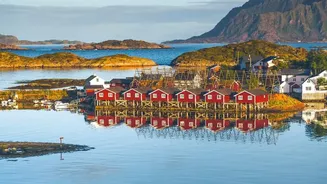
where the sun doesn't set for over two months in summer and disappears entirely for the winter. This raw, elemental setting has shaped a town of colourful wooden houses that stand defiant against the grey sea and sky. It's a place that feels like the edge of the world but has for centuries been a vital centre for fishing, defence, and international trade.
Haunting Histories and a Fortress of Stars
Vardø's history is as dramatic as its landscape. In the 17th century, it was the epicentre of some of Europe's most brutal witch trials, where 91 people were convicted and burned at the stake. This dark chapter is powerfully commemorated at the Steilneset Memorial, a collaboration between artist Louise Bourgeois and architect Peter Zumthor. The monument consists of a long memorial hall, with a window and story for each victim, and the 'Flame House', a moving installation that ensures this history is never forgotten. Nearby stands Vardøhus Fortress, the world's northernmost fortress. The current star-shaped structure dates to the 1730s, but fortifications have existed here since the 1300s to assert Norwegian sovereignty. Though it rarely saw direct combat, it has been a constant symbol of Norwegian presence in the High North.
Hornøya: A Paradise for Birdwatchers
Just a ten-minute boat ride from Vardø's harbour lies Hornøya, one of Europe's most significant and accessible seabird colonies. The island, a protected nature reserve, is home to over 80,000 seabirds during the nesting season. The cliffs teem with life as Atlantic puffins, razorbills, common and Brünnich's guillemots, shags, and kittiwakes raise their young. Visitors can walk along a marked path that offers incredibly close views of the birds on their nesting ledges. The sheer density of birds, the noise, and the raw energy make it an unforgettable wildlife encounter. The island is a premier destination for photographers and nature lovers, offering a rare glimpse into the thriving life of the Arctic Ocean.
The Pomor Trade and Arctic Culture
For centuries, Vardø was a bustling hub of the 'Pomor Trade', a lively barter system between Northern Norwegians and Russian traders from the White Sea region. From the 18th century until the Russian Revolution, hundreds of Russian vessels would arrive each summer, trading grain and flour for fish. At its peak, Vardø was the capital of this trade, with a Russian consulate and the ruble used as common currency. This legacy is explored at the Pomor Museum and celebrated during the annual Pomor Festival. This cross-cultural connection is also reflected in the town's modern art scene, from vibrant street art murals to the striking 'Drakkar Leviathan', a sculpture resembling a whale's skeleton and a Viking ship.
Planning Your Arctic Adventure
Reaching Vardø is an adventure in itself. Visitors can fly into the small local airport at Svartnes (VAW) via Widerøe airlines or fly into the larger airports at Kirkenes (KKN) or Vadsø (VDS) and continue by car. The iconic Hurtigruten coastal steamer also calls at the port. A visit to Hornøya is essential, though access is now managed through licensed tour operators and requires advance booking. Beyond the main sights, visitors can enjoy king crab safaris, explore the rugged Varanger Peninsula, and experience the midnight sun in summer or the northern lights in winter. A stop at Nordpol Kro, Northern Norway's oldest pub, is a must for a taste of local atmosphere.