


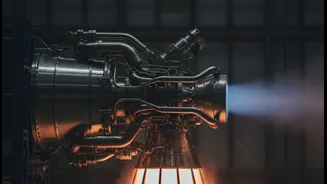




The Heart of India's Rocket Power
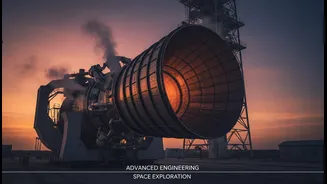
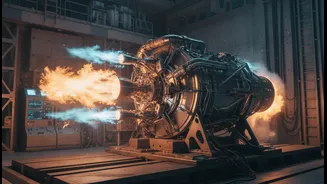
The ISRO Propulsion Complex (IPRC) at Mahendragiri is the critical hub where India's rocket engines are assembled, tested, and proven ready for flight. For decades, this facility has been the proving ground for the engines that have powered landmark missions,
from the reliable Polar Satellite Launch Vehicle (PSLV) to the mighty Launch Vehicle Mark-3 (LVM3), which took Chandrayaan to the Moon. Every liquid and cryogenic engine in ISRO's arsenal, including the Vikas engine and the CE-20, undergoes rigorous hot-fire tests here to ensure it performs flawlessly when it matters most. Now, IPRC is at the centre of developing the next generation of power for India's space ambitions.
Meet the SCE-200: The New Powerhouse
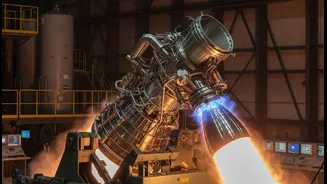
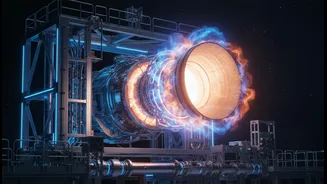
The star of the show is the SCE-200, a 2000-kilonewton (kN) thrust class semi-cryogenic engine. Unlike fully cryogenic engines that use super-cooled liquid hydrogen and liquid oxygen, a semi-cryogenic engine uses liquid oxygen as the oxidiser but pairs it with a refined, rocket-grade kerosene (called 'Isrosene' by ISRO). This has several advantages. Kerosene is denser than liquid hydrogen and can be stored at normal temperatures, making it easier to handle and allowing for more propellant to be packed into a same-sized tank. This combination offers a powerful thrust, making it ideal for the heavy-lifting required for future missions.
A Quantum Leap in Thrust
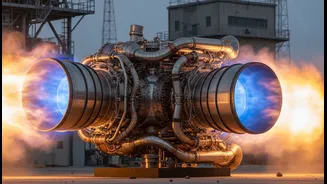
The SCE-200 represents a massive upgrade in power. It is designed to produce around 200 tonnes of thrust. To put that in perspective, the two Vikas engines currently used in the core stage of the LVM3 rocket produce a combined thrust that is significantly less. In fact, a single SCE-200 engine is designed to replace the twin Vikas engine configuration of the LVM3's liquid core stage, providing more power from a single source. Recent tests at Mahendragiri have seen the engine's power head successfully fired at 175 tonnes of thrust, demonstrating that development is reaching an advanced stage.
Upgrading the 'Bahubali' Rocket
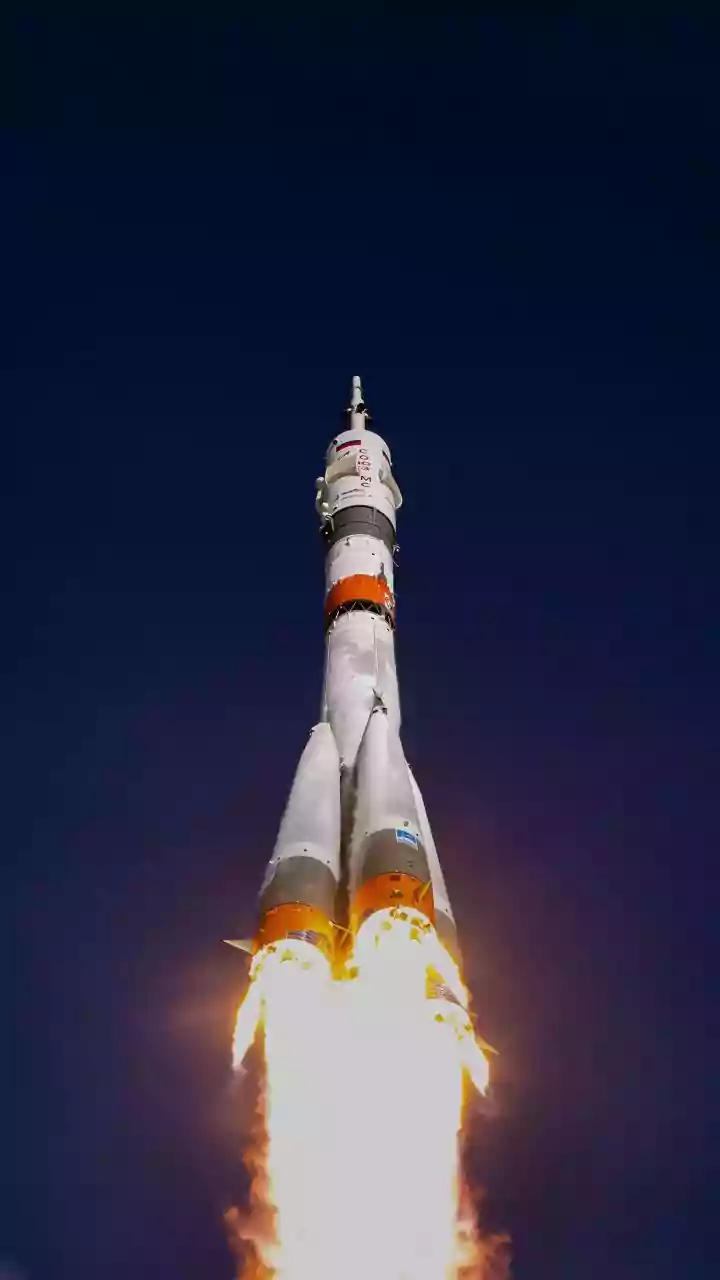
The first and most immediate application for this new engine will be on India's most powerful rocket, the LVM3, often nicknamed 'Bahubali'. The plan is to replace the existing L110 core stage, which uses two Vikas engines, with a new SC120 stage powered by the SCE-200 engine. This upgrade is a crucial step in boosting the LVM3's payload capacity. The current LVM3 can carry up to 4 tonnes to the Geostationary Transfer Orbit (GTO), which is the standard orbit for large communication satellites. With the new semi-cryogenic stage and an uprated cryogenic upper stage, this capacity is expected to increase substantially, potentially to over 5 tonnes.
Enabling Heavier Satellites and Bolder Missions
This increase in lifting power is not just a number; it's a strategic capability. A more powerful LVM3 means India can launch heavier, more advanced communication satellites for itself, reducing dependence on foreign launch providers. It is also essential for the future of the Gaganyaan human spaceflight programme, as a more powerful rocket provides greater safety margins. Beyond that, this technology is a building block for ISRO's future ambitions, including the Next Generation Launch Vehicle (NGLV) which will be designed for even heavier payloads, and future missions to the Moon and Venus.