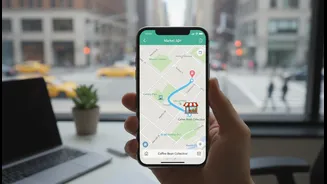

The Challenge of the Micro-Break
The modern workday is a marathon of focus, but our brains are built for sprints. Research consistently shows that short, frequent breaks are crucial for maintaining productivity, reducing stress, and preventing burnout. A brief pause helps reset your
focus and can even spark creativity. Yet, these micro-breaks—typically 5 to 20 minutes—are often squandered. The effort of deciding where to go, searching for a place, and figuring out the route can feel like another task. Many professionals end up staying at their desks, scrolling through their phones, which fails to provide the true mental and physical reset needed. Actually leaving the office is proven to be more restorative, but friction gets in the way.
A Smarter Way to Navigate Your Break
Enter “conversational route planning.” It sounds technical, but it’s an incredibly simple practice you likely already have the tools for. It means using natural language voice commands with your smartphone’s assistant—like Google Assistant or Siri—to find a destination and get directions. Instead of typing “coffee shops near me” into a map application, you simply ask: “Hey Google, find a quiet café within a 5-minute walk.” The system handles the search, filtering, and navigation, giving you an instant, actionable plan. This hands-free, conversational approach removes the decision fatigue and planning time that often discourages people from taking a proper break.
Speed, Spontaneity, and Discovery
The primary advantage for a time-crunched professional is efficiency. A single spoken sentence replaces several minutes of typing, scrolling, and comparing options. This speed makes a 15-minute break feel expansive enough for a real change of scenery. Beyond just saving time, this method injects a dose of spontaneity into a structured day. By asking for “a new café” or “a coffee shop with outdoor seating,” you offload the choice to your device, which often leads to discovering hidden gems in your own work neighborhood. This element of novelty and exploration is a powerful way to mentally detach from work tasks, making your break far more effective at refreshing your mind.
Your Step-by-Step Guide to a Better Break
Ready to try it? It’s as easy as talking. First, ensure your phone's voice assistant is enabled. Then, the next time you have a spare 15 minutes, simply activate it and speak your request. The key is to be conversational but specific. Instead of just “coffee,” try adding constraints that matter to you. Here are a few examples to get you started: “Hey Siri, where is the closest coffee shop?” “Ok Google, find a café with good ratings that’s on the way to the metro station.” “Hey Siri, navigate to a quiet place to read within a 10-minute walk.” “Ok Google, show me juice bars that are open now.” The assistant will present one or more options, and you can simply say “navigate to the first one” or tap your choice. The entire process, from query to walking out the door, can take less than 30 seconds.
More Than Just Cafés
While a quick coffee is a classic break, this method works for any brief escape. The goal is to change your environment and give your mind a rest. You can use the same conversational planning to find a nearby park bench, a local bookstore, a quiet spot by a fountain, or even a public art installation. The possibilities are limited only by what's in your vicinity. By turning local discovery into a seamless, voice-activated process, professionals can transform their fragmented break times from wasted moments into small, restorative adventures that power them through the rest of the workday.