

A Prime Suspect for Alien Life
For decades, Jupiter's moon Europa has been a focal point for scientists searching for habitable environments beyond Earth. Slightly smaller than our own Moon, its surface is a stark, frozen landscape of water ice, crisscrossed by mysterious reddish-brown
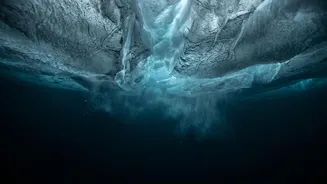
streaks. But the real excitement lies beneath. Data from past missions, particularly NASA's Galileo spacecraft in the 1990s, provided strong evidence for a global ocean. The key clue was a disruption in Jupiter's magnetic field around Europa, which suggested the presence of a deep layer of electrically conductive fluid—most likely a salty ocean. This hidden sea is estimated to be vast, and its existence makes Europa one of the most compelling places in our solar system to look for life.
The Three Ingredients for Life
The intense focus on Europa stems from the belief that it possesses the three critical ingredients necessary for life as we know it. First and foremost is liquid water, which Europa appears to have in abundance. Second are the essential chemical elements—carbon, hydrogen, nitrogen, oxygen, phosphorus, and sulfur—which scientists believe are present on the moon. The third ingredient is a source of energy. Too far from the sun for significant solar heating, Europa generates its own warmth through a process called tidal heating. The constant gravitational tug-of-war with massive Jupiter causes Europa's interior to flex, generating heat that keeps its ocean from freezing solid and could potentially power hydrothermal vents on the seafloor, similar to those that support vibrant ecosystems in Earth's deep oceans.
The Robotic Detective: Europa Clipper
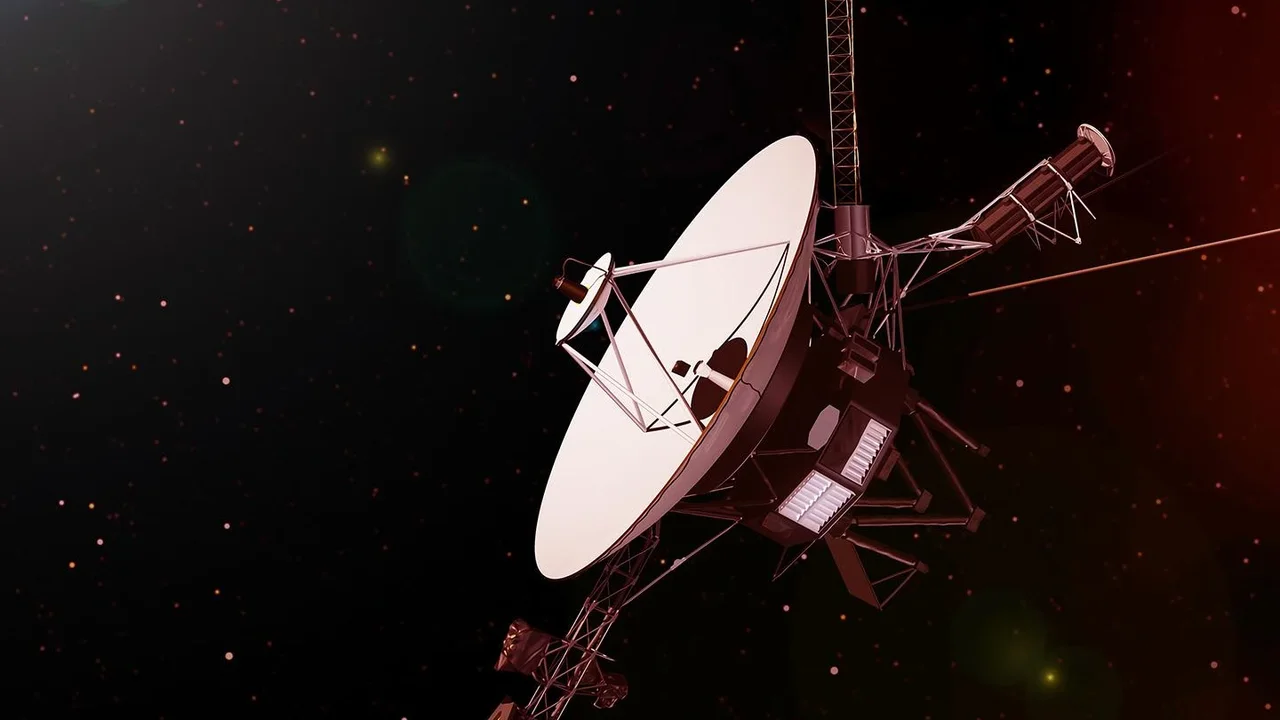
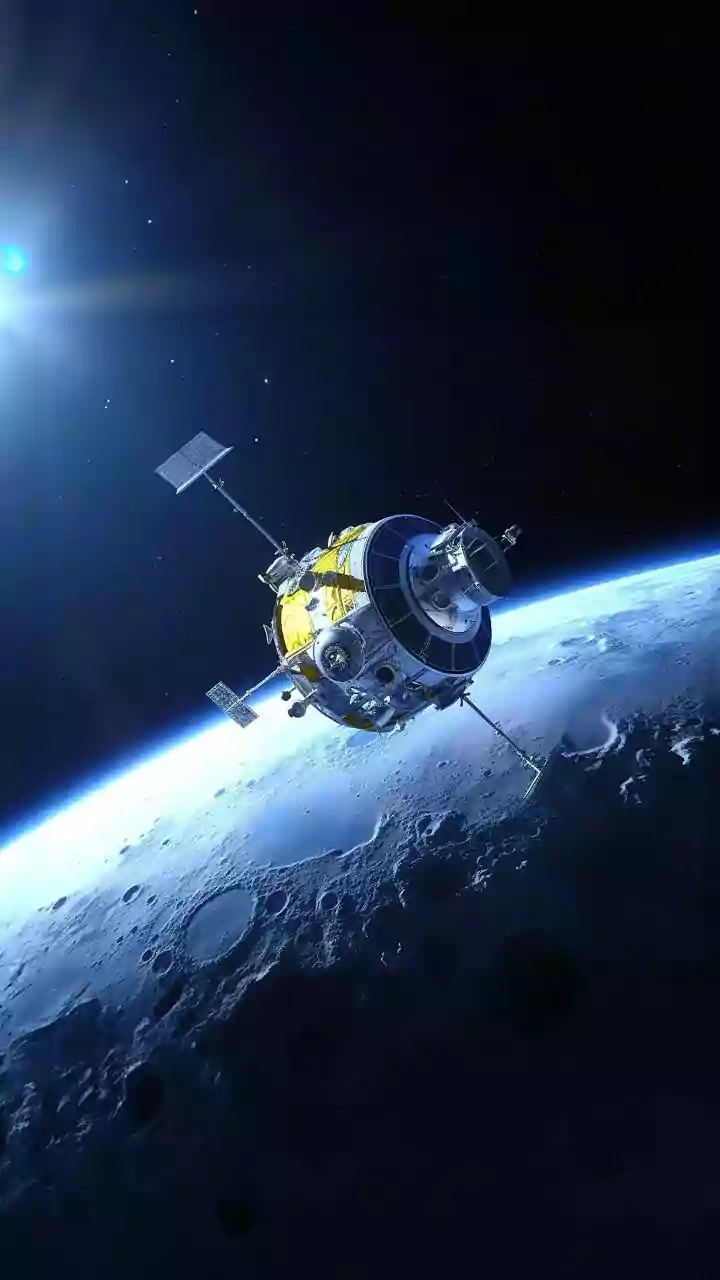
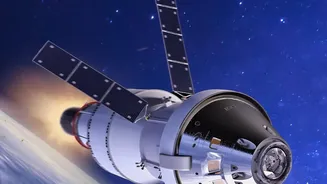
To investigate these tantalizing possibilities, NASA has dispatched the Europa Clipper mission, its largest-ever planetary spacecraft, which launched in October 2024 and is set to arrive in the Jupiter system in 2030. Europa Clipper is not a life-detection mission itself, but an astrobiology mission designed to determine if Europa has the conditions to support life. To do this, it will perform dozens of close flybys, some as low as 25 kilometers above the surface. It is equipped with a powerful suite of nine science instruments, including ice-penetrating radar to measure the thickness of the ice shell, spectrometers to analyze the chemical composition of the surface, and a magnetometer to confirm the ocean's existence, depth, and salinity. The mission will essentially perform a detailed reconnaissance of this ocean world.
Overcoming Extreme Challenges
Exploring Europa is not for the faint of heart. The moon is located within Jupiter's intense radiation belts, which can damage a spacecraft's sensitive electronics. To protect its vital systems, Europa Clipper's core electronics are housed within a heavily shielded vault made of aluminum and titanium. The mission's trajectory is also cleverly designed to minimize time spent in the harshest radiation zones, with the spacecraft orbiting Jupiter and making rapid, sweeping flybys of Europa rather than orbiting the moon directly. Powering such a large craft so far from the sun is another hurdle. Europa Clipper is equipped with enormous solar arrays that span over 30 meters—the length of a basketball court—to capture enough sunlight to operate.
The Next Frontier: Landing on the Ice
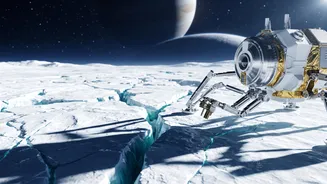
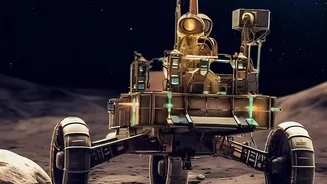
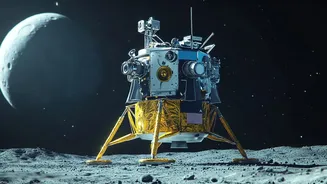
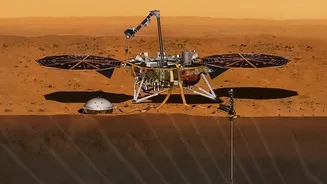
While Europa Clipper will provide an unprecedented look at the moon from orbit, the ultimate goal is to land on the surface and directly search for signs of life, or biosignatures. Mission concepts for a future Europa Lander are already being studied. Such a mission would face incredible challenges, including a limited battery life and the need for a high degree of autonomy to operate without real-time commands from Earth. A lander would likely be designed to collect samples from about 10 centimeters beneath the surface, a depth sufficient to protect any potential organic molecules from Jupiter's harsh radiation. This robotic explorer would essentially be a miniature laboratory, analyzing the ice and dirt for the chemical fingerprints of life, potentially solving one of science's most profound questions.